Asian Dessert Franchise Opportunities in Southern California (2026)
Asian dessert franchise opportunities in 2026 cluster around a few repeatable formats - tea and boba, Korean bingsu and shaved ice, Japanese-style soft serve, and modern Asian bakery - and the ones drawing investor attention share two traits: one recognizable hero product and a build that does not need a full restaurant kitchen. That combination is why the category keeps appearing on shortlists next to much larger food brands. Below is what actually distinguishes these concepts, which ones are franchising in Southern California, how to evaluate one, and what an Oakobing bingsu cafe is estimated to cost. The Oakobing franchise page is the direct route if you want the short version first.
What Makes Asian Dessert Franchise Opportunities Different in 2026?
They are dessert-first destinations rather than add-on counters, and that changes almost every operating assumption. Five differences matter to an investor:
- One hero product carries the store. Guests come for a specific item, not a broad menu, which keeps prep, inventory, and staff training narrow.
- The visit is the product. Groups sit, share, and photograph. Dwell time is an asset in this category rather than a throughput problem to solve.
- Cultural storytelling does the marketing. These formats travel on word of mouth and social feeds because they are genuinely unfamiliar to many first-time guests.
- The build is a cafe build. Assembly and finishing rather than cooking means fewer mechanical systems, and fewer systems means a simpler plan check and a smaller footprint than a full restaurant kitchen.
- Sharing formats raise the size of the order naturally. A bowl built for two to four people is ordered differently from a single-serve cup.
None of those traits belong to a single brand, and a candidate should not treat them as a differentiator on their own. What actually separates one opportunity from another in this category is execution - and execution here mostly comes down to two things: who controls the hero product, and how simple the store is to run on a Tuesday night without the owner standing behind the counter.

Which Asian Dessert Formats Are Franchising in Southern California?
Four broad groups, and they compete less directly than the label suggests:
- Tea and boba. The most established group in the region, and the most familiar to landlords.
- Korean bingsu and shaved ice cafes. A newer entrant to the American franchise conversation, built around a shared bowl and a seated visit.
- Japanese-style soft serve and crepes. Small-footprint, high-visibility counters that lean heavily on foot traffic.
- Asian bakery, pastry, and mochi retail. Grab-and-go economics with a different daypart than the seated formats.
The practical consequence of that split is that the four groups want different real estate. Grab-and-go counters chase transit and pedestrian corners. Seated dessert formats want an evening trade area with parking, restaurants nearby, and a landlord who understands that guests will stay for forty minutes. A site that would be wrong for one of these concepts can be right for another, which is why the format decision should come before the site search rather than after it.
Brands inside each group publish different disclosure documents, and the only honest comparison is a document-to-document one. For anything not published, contact the franchisor for current details. If you are weighing the category as a whole rather than a single brand, the companion piece on Asian dessert franchising and where Korean bingsu fits covers the growth argument in more depth.
What Is a Bingsu Cafe Actually Selling?
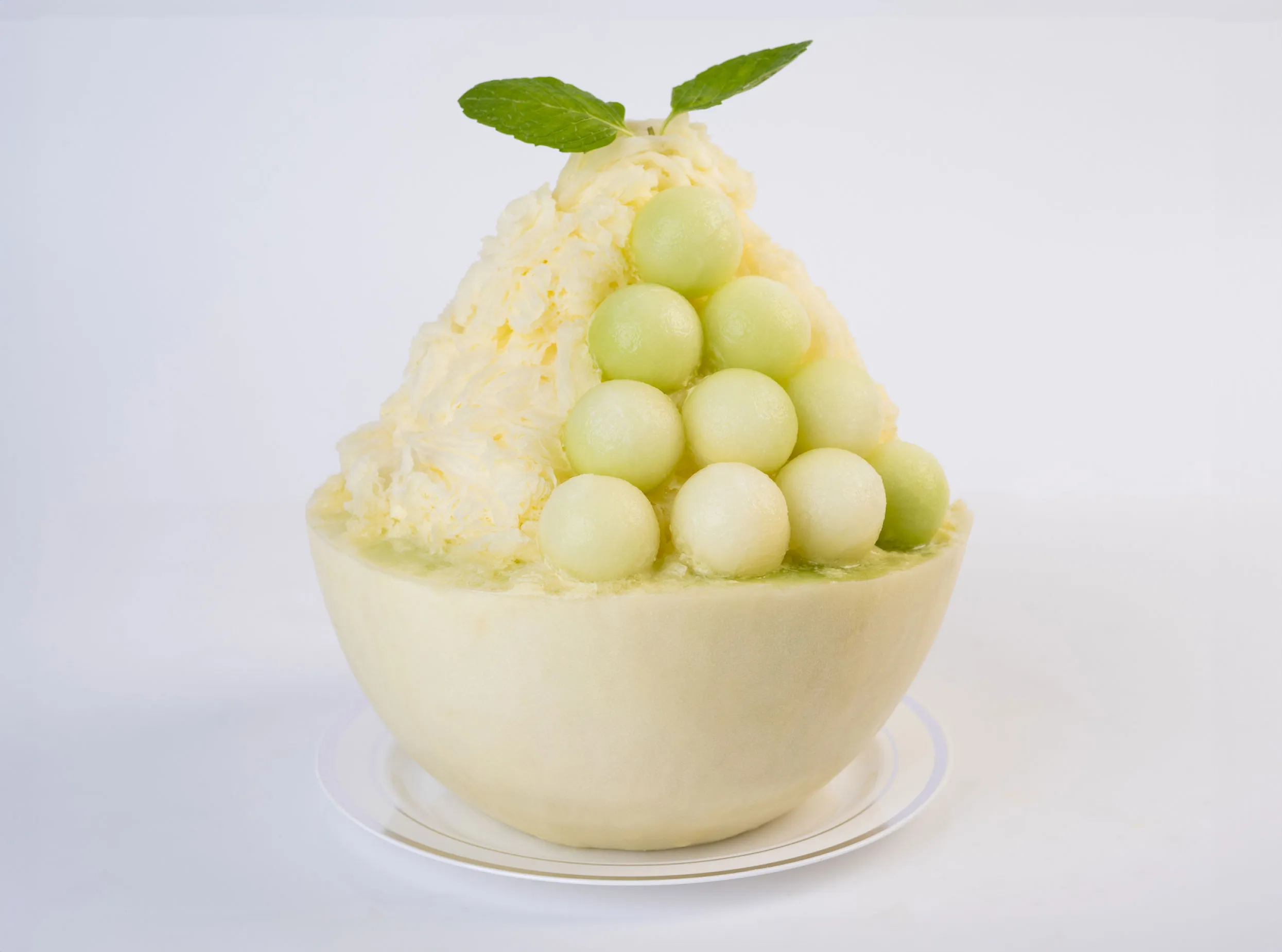
A modern adaptation of Korean shaved ice built for the American market, not an attempt to recreate a Seoul dessert exactly. Four specifics define what a guest experiences at Oakobing:
- Flavor is infused into the ice itself. Ice blocks are produced in Oakobing's own facility with flavor built into the block, rather than a plain block with syrup poured over the top.
- Milk drizzle arrives on the side. Guests adjust texture and sweetness themselves instead of receiving a pre-sweetened bowl.
- Portions are built for sharing. A Large is a two-to-four-person bowl, which is how groups order once they sit down.
- The positioning is light, fresh, and guilt-free. It reads as a lighter dessert, which is what brings guests back more than once in a warm season.
The brand name carries the same idea - shaved ice inside a jade jar. Oakobing opened its first store on West 6th Street in Koreatown in 2016 and has operated the concept ever since, which is the difference between buying a system and joining an idea being tested.
.png)
The supply arrangement is the part investors tend to underweight. Because the hero product is manufactured centrally and delivered to stores, a franchisee is not running product development at the store level. See the Oakobing menu for how the rest of the counter is arranged around that item.
What Does an Asian Dessert Franchise Opportunity Cost with Oakobing?
The estimated total initial investment for a single Oakobing unit is $200,000 to $500,000, which includes a $35,000 initial franchise fee. This is only an estimate. Actual costs may vary. The range covers:
- The license and the operating system
- Leasehold improvements and buildout
- Equipment and installation
- Opening inventory
- Signage and exterior work
- Working capital to carry the store through its opening period
Two notes for anyone building a budget from that. First, the spread is wide because site condition drives it - taking over a space already built for food service is a different project from starting with a shell. Second, working capital is the line first-time owners most often underestimate, because a store has to be staffed and stocked before it is busy.
Oakobing does not publish agreement details or performance projections in blog content, and no candidate should budget from one. FDD Item 7 itemizes the estimate; every other number belongs to your own advisors.
For the version of this comparison framed by budget rather than by cuisine, see affordable dessert franchise opportunities.
How Should You Evaluate an Asian Dessert Franchise Opportunity?
Six questions separate a real opportunity from a good-looking one. Ask them of every brand in the category, including this one:
- Who makes the hero product? Central production means consistency and a simpler store. Store-level production means you are the manufacturer.
- What does the build actually require? A hot line and a heavy ventilation package change the cost, the plan check, and the space you can lease.
- How does the format handle the full calendar? Ask what the counter sells on a cool weeknight, not only on a hot Saturday.
- Is the trade area a genuine fit? Density, evening foot traffic, and an existing dessert habit matter more than raw population.
- Does the disclosure document match the pitch? Read Item 7 and Item 11 with a franchise attorney and an accountant. Anything a salesperson says that is not in the document is not a commitment.
- Who will run the store day to day? Partnerships that have not settled the operator question stall at every later stage.
A candidate who can answer all six before the first call moves through qualification quickly. For the process itself rather than the evaluation, the walkthrough on opening a Korean dessert franchise in California covers the sequence.
Where Is Oakobing Franchising in 2026?
Southern California, with the strongest fits in the Los Angeles metro, Orange County, the San Gabriel Valley, and the San Fernando Valley. These are dense suburban markets with the Asian American density and the evening dessert habit this format depends on, and the Los Angeles area holds one of the largest Korean American communities in the country - which is where a concept like this proves itself first and then crosses over.
Company stores in Koreatown Los Angeles and Pasadena are open to visit - see locations - and a store visit remains the most useful thing a candidate can do before starting any process. Area availability is handled case by case, so the franchise team is the right place to begin.
Oakobing is currently franchising in Southern California.
Frequently Asked Questions
What are the main Asian dessert franchise opportunities in 2026?
The category is concentrated in a handful of formats: tea and boba shops, Korean bingsu and shaved ice cafes, Japanese-style soft serve and crepe counters, modern Asian bakeries, and mochi or packaged dessert retail. What they share is a single recognizable hero product and a build that leans on assembly and finishing rather than a full cooking line. What separates them is how the hero product is supplied, how much of the year it sells well, and how much space the format needs. Anyone comparing brands should ask each franchisor for its current disclosure document rather than working from category generalizations.
How much does an Oakobing bingsu franchise cost?
The estimated total initial investment for a single Oakobing unit is 200,000 to 500,000 dollars, and that includes a 35,000 dollar initial franchise fee. This is only an estimate. Actual costs may vary. The range covers the license and operating system, leasehold improvements and buildout, equipment, opening inventory, signage, and working capital to carry the store through its opening period. FDD Item 7 itemizes the estimate, and reading it with your own accountant and a franchise attorney is the only responsible basis for a budget.
Is a bingsu cafe a seasonal business?
Shaved ice does have a warm-season peak, and any candidate evaluating this category should treat that as a planning question rather than a surprise. In Southern California the warm season is long, which softens the swing compared with colder markets. The practical answer is menu construction: an Oakobing store also serves drinks and coffee, so the counter has something to sell on a cool evening. Ask any Asian dessert franchisor you speak with how its stores are arranged across the calendar, and visit one outside peak season before deciding.
Do I need restaurant experience to open an Asian dessert franchise?
Not with Oakobing. Candidates are evaluated on capital, operating commitment, and market fit rather than on a hospitality resume, and training covers the product and the daily store routine for a first-time owner. The format helps as well, because the flavored ice is produced in Oakobing's own facility and supplied to stores, so a franchisee is not developing or manufacturing the core product. Being present in the store through the opening period matters more than prior restaurant background.
Where can I see an Oakobing store before starting the process?
Oakobing has company stores in Koreatown Los Angeles and in Pasadena, both open to the public, so a candidate can watch the counter flow, the seating, and how groups order a large shared bowl before signing anything. A store visit during a busy evening is the single most useful step in evaluating this category, because dwell time and group ordering are a large part of how the format works. The franchise team can also walk through a target area in Southern California once you have seen the concept in person.
You might also like...
Stories about Korean desserts, bingsu culture, and more.