How Much Does a Bingsu Franchise Cost in 2026?
A bingsu franchise costs an estimated $200,000 to $500,000 in total initial investment for a single Oakobing unit in 2026, including the $35,000 initial franchise fee, according to the current FDD Item 7 - this is only an estimate and actual costs may vary. That total covers buildout, equipment, inventory, and opening costs, not just the fee. Below is the direct breakdown of a bingsu franchise cost, how single- and multi-unit pricing compare, and why a bingsu concept costs less than a full restaurant. Request the complete figures on the Oakobing franchise page.
How Much Does a Bingsu Franchise Cost? (Quick Answer)
Here is the bingsu franchise cost at a glance, straight from the 2026 FDD Item 7 (issued January 16, 2026, as amended June 15, 2026):
Initial franchise fee: $35,000
Single-unit total investment: $200,000 - $500,000
Multi-unit (3-5 shops) development area fee: $30,000 - $60,000
Multi-unit total estimated investment: $230,000 - $560,000
This is only an estimate and actual costs may vary (FDD Note 15). One important detail: the multi-unit total covers the development fees plus the opening of your first shop - each additional shop then requires its own initial investment (FDD Item 7, Note 3). The franchise fee is the entry ticket; the full range is the real budget - these are the numbers you need to plan against.
.png)
For a broader cost breakdown, see the Korean dessert franchise cost guide.
What Does the Bingsu Franchise Investment Include?
The $200,000 to $500,000 total investment covers everything required to open a single bingsu cafe. The main categories are:
Buildout and construction - converting the space, which is the single largest line item.
Equipment - shaved-ice machines, refrigeration, POS, and small wares.
Initial inventory - flavored shaved-ice blocks and toppings for opening stock.
Furniture, fixtures, and signage - the customer-facing fit-out.
Opening costs and working capital - permits, training, grand-opening marketing, and a cash reserve.
.png)
Buildout is where the range widens most: a second-generation food space with existing plumbing costs far less to convert than a raw shell. That one factor explains much of the gap between the low and high end of the estimate.
Why Is a Bingsu Franchise Cheaper Than a Restaurant Franchise?
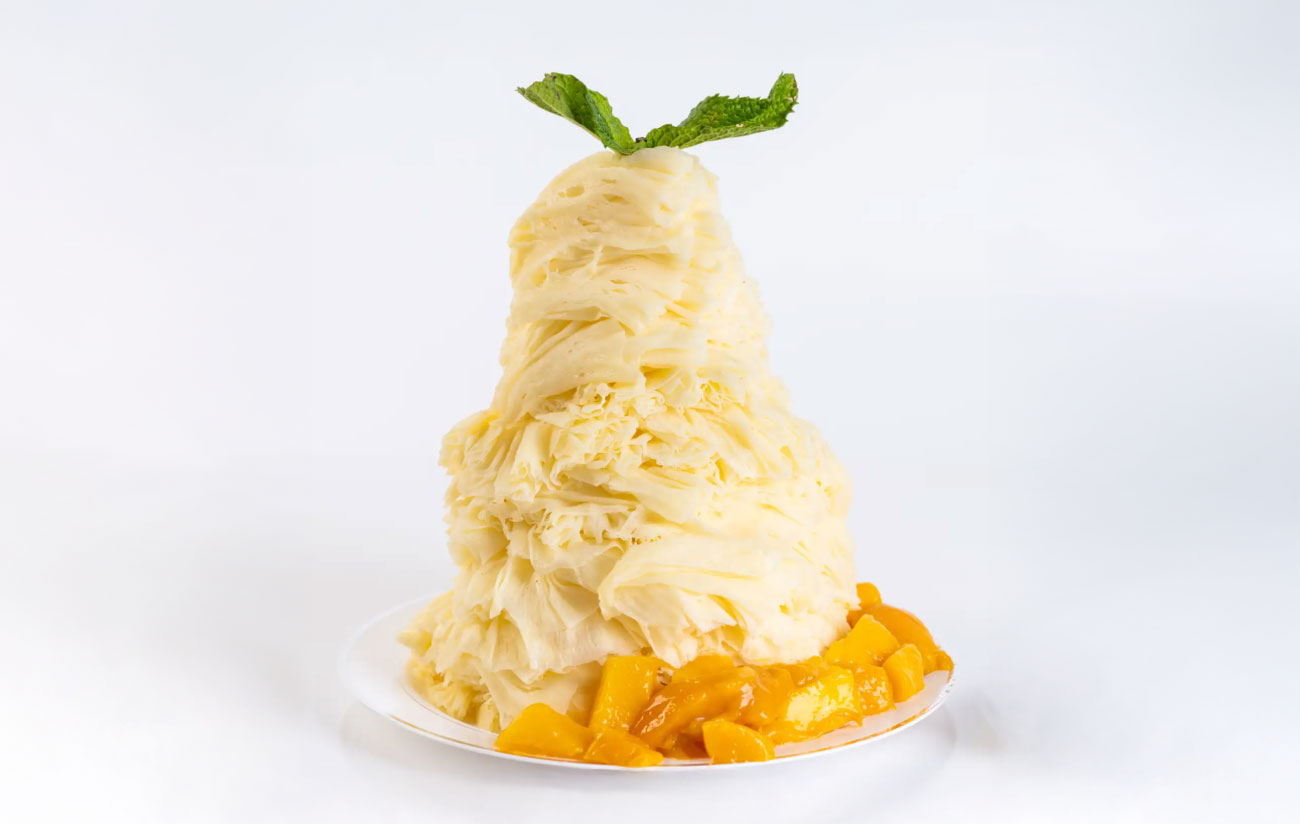
A bingsu franchise generally costs less than a full-service restaurant because the menu is focused and the kitchen is simpler. Bingsu is assembled from prepared, flavored shaved-ice blocks and toppings rather than cooked to order, so a store avoids the hoods, ranges, and large kitchen that drive up restaurant buildouts. For comparison, many Korean full-service restaurant franchises run well into the high six or seven figures, while a bingsu cafe stays in the $200,000 to $500,000 band - a smaller footprint than a full-service restaurant concept.
That lower entry point is part of why bingsu is an attractive category for first-time franchisees.
What Are the Ongoing Costs of a Bingsu Franchise?
Beyond the initial investment, an Oakobing bingsu franchisee pays an ongoing royalty of 7% of gross sales, and is required to spend at least 2% of gross sales on local marketing within their territory, per Item 6 of the 2026 FDD. The FDD also provides for a Brand Development Fund contribution of up to 2% of gross sales, which is currently not assessed; Oakobing reserves the right to implement it in the future. When you model the full cost, budget for:
Rent and utilities.
Labor for a small, trainable team.
Cost of goods (ice blocks, toppings, cups, packaging).
The 7% royalty and the required 2% local marketing spend.
A reserve for slower months.
Modeling both the one-time investment and the ongoing fees is what separates a prepared operator from a hopeful buyer. A simple rule of thumb is to build a twelve-month cash-flow projection before you sign, so you can see exactly how the royalty, rent, and labor lines interact with your expected sales rather than relying on the headline investment figure alone.
How Do You Finance a Bingsu Franchise?
Most franchisees combine personal capital with financing, and an established franchise is generally easier to finance than an independent concept because lenders view a proven system as lower risk. Common routes include personal capital, SBA-backed small-business loans, and partner or home-equity financing. Lenders will typically ask for the FDD, a personal financial statement, and a simple plan with a location. Because the total sits in the $200,000 to $500,000 range, a common structure is a meaningful cash contribution plus financing for the balance - but the right mix depends on your own finances. To learn who qualifies, read the bingsu franchise requirements.
How Does Bingsu Franchise Cost Compare to Other Dessert Franchises?
A bingsu franchise sits in the mid range of dessert franchise costs - higher than a small kiosk concept, but well below a full-kitchen restaurant franchise. Dessert franchises broadly run anywhere from roughly the low six figures to around $600,000 depending on format, and Korean full-service restaurant brands can reach well over $1,000,000. A bingsu cafe's $200,000 to $500,000 range reflects a focused, dessert-only model:
Kiosk / small dessert concepts - often lower, but with limited menu and seating.
Bingsu cafe (Oakobing) - $200,000 to $500,000, a sit-down dessert experience with a focused menu.
Full-service Korean restaurant franchises - frequently high six or seven figures due to full kitchens.
The advantage of the bingsu model is that it delivers a genuine cafe experience and a differentiated, photogenic product without carrying the cost of a full restaurant kitchen. For first-time franchisees, that combination of moderate cost and strong category growth is the core of the appeal. Weigh it against the wider category in the shaved ice franchise opportunity analysis.
Is a Bingsu Franchise Worth the Cost?
For the right operator, the cost buys entry into a fast-growing category with a differentiated product and supply-chain support. Bingsu demand has grown sharply in the US, and Oakobing already ranks at or near the top of Korean dessert and bingsu searches across LA and Orange County - the largest Korean American market in the country. A mid-six-figure investment in a fast-growing category that's still being introduced neighborhood by neighborhood across much of the region, the kind of timing experienced franchisees look for.
The market context strengthens the case. California's Los Angeles County and Orange County together are home to more than 341,000 Korean Americans (U.S. Census Bureau, American Community Survey 2020-2024 5-Year Estimates) - the largest Korean American population center in the country. Orange County suburbs such as Irvine, Fullerton, Buena Park, Anaheim, and Cerritos pair strong demand with high household income, and year-round warm weather suits an icy dessert. For an operator, that means opening into proven demand rather than trying to create a market from scratch - which is exactly what lowers the risk behind the investment number. Compare the full picture on the franchise page and review the step-by-step launch process. This is not an offer to sell a franchise; an offer is made only through the FDD.
Frequently Asked Questions
How much does a bingsu franchise cost in 2026?
A bingsu franchise with Oakobing costs an estimated $200,000 to $500,000 in total initial investment for a single unit, which includes the $35,000 initial franchise fee, based on the 2026 FDD Item 7. The total covers buildout, equipment, inventory, and opening costs. This is only an estimate and actual costs may vary.
What is the franchise fee for a bingsu franchise?
The initial franchise fee for an Oakobing bingsu franchise is $35,000. It is a one-time fee paid at signing and is included within, not added on top of, the $200,000 to $500,000 total investment range.
How much does a multi-unit bingsu franchise cost?
A multi-unit development of three to five bingsu shops carries a development area fee of $30,000 to $60,000, with a total estimated investment of $230,000 to $560,000. That total covers the development fees plus the opening of the first shop - each additional shop requires its own initial investment (2026 FDD Item 7, Note 3). The specifics are set in the FDD.
Is a bingsu franchise cheaper than a restaurant franchise?
Generally yes. A bingsu franchise runs a focused menu built from prepared shaved-ice blocks, so it needs less kitchen equipment than a full-service restaurant. That keeps the total investment in a $200,000 to $500,000 range, below many full-kitchen franchise concepts.
What ongoing fees does a bingsu franchise have?
Beyond the initial investment, an Oakobing bingsu franchisee pays an ongoing royalty of 7% of gross sales, and is required to spend at least 2% of gross sales on local marketing within their territory, per Item 6 of the 2026 FDD. The FDD also provides for a Brand Development Fund contribution of up to 2% of gross sales, which is currently not assessed; Oakobing reserves the right to implement it in the future. Owners should also budget normal operating costs like rent, labor, and supplies.
You might also like...
Stories about Korean desserts, bingsu culture, and more.