Multi-Unit Dessert Franchise: Development Area Fee Explained (2026)
A multi-unit dessert franchise is an agreement to open several stores inside one defined territory on a set schedule, and the development area fee is what reserves that territory - with Oakobing, $30,000 to $60,000 for a 3-to-5 shop program, inside an estimated total initial investment of $230,000 to $560,000. This is only an estimate. Actual costs may vary. That sits alongside the single-unit route, estimated at $200,000 to $500,000 including a $35,000 initial franchise fee. Here is what the development area fee actually buys, how the multi-unit math differs from simply repeating a single store, and who the structure genuinely suits. The current opportunity is on the Oakobing franchise page.
What Is a Development Area Fee, and What Does It Buy?
It buys territory and time, not stores. A development area fee is paid once, for the right to develop an agreed number of units inside a defined geographic area on an agreed timetable. Per FDD Item 7, Table B, Note 1, Oakobing prices it at $15,000 for each Dessert Shop beyond the first one authorized by the Franchise Agreement - $30,000 for a 3-shop program (two additional shops) up to $60,000 for a 5-shop program (four additional shops). The buildout and equipping costs for each additional store still apply as it comes online, but you do not pay another $35,000 initial franchise fee for shops beyond the first - that fee is charged once, with the Franchise Agreement for the first shop. Put plainly, the development area fee answers a different question than the franchise fee does:
- The initial franchise fee licenses one store to operate under the brand.
- The development area fee reserves an area so a competing franchisee cannot take the next corridor while you are still building your first shop.
That distinction matters because the second risk is the one that quietly ruins good multi-unit plans. An operator who identifies four strong retail corridors and then opens one store has protected nothing - by the time the second lease is signed, the market may have moved. The fee converts a plan into a claim, and it is the reason the structure exists at all.
What Are the Multi-Unit Numbers for a Bingsu Franchise in 2026?
Here are the figures as Oakobing states them in its 2026 Franchise Disclosure Document, Item 7:
StructureReservation or license feeEstimated total initial investmentSingle unitInitial franchise fee $35,000$200,000 - $500,000Multi-unit, 3 to 5 shopsDevelopment area fee $30,000 - $60,000$230,000 - $560,000
This is only an estimate. Actual costs may vary. Two things in that table are worth reading carefully rather than quickly. First, per FDD Item 7, Table B, Note 3 (and Table A, Note 15), the $230,000 to $560,000 multi-unit total covers the development area fee plus the investment to open only the first Dessert Shop - it is not the total cost of opening every store in the program. Each additional shop needs its own separate $200,000 to $500,000 initial investment as it comes online: a 3-shop program runs roughly $30,000 plus three times $200,000 to $500,000, or about $630,000 to $1,530,000 in total, and a 5-shop program runs roughly $60,000 plus five times $200,000 to $500,000, or about $1,060,000 to $2,560,000 in total. Second, the ranges are wide because they describe real projects in real spaces, and local construction pricing moves the total as much as anything the franchisor controls.
The practical consequence is that the multi-unit decision is a cash-flow decision more than a pricing one. You are committing to fund store two while store one is still finding its neighborhood, so the honest question is not what does this cost but what happens if the first opening quarter runs slow. For the single-unit breakdown line by line, read the Korean dessert franchise cost guide, and price your own buildout with a local contractor before you commit to three of them.
Why Would a Bingsu Concept Suit a Multi-Unit Structure?
Because the unit is small, repeatable, and light on production. Three characteristics of the format make replication realistic rather than aspirational:
- A light kitchen. No hot line, no grease interception, no heavy ventilation. A compact inline retail unit works, which keeps each additional buildout within reach.
- A supplied core product. Oakobing produces its flavor-infused ice blocks at its own facility and supplies them to stores. A multi-unit owner is not scaling a manufacturing process, only a service operation - and that is the difference between three stores and three problems.
- A single hero item. The menu is built around one shareable centerpiece dessert, so staff training, inventory, and equipment stay consistent from store to store.
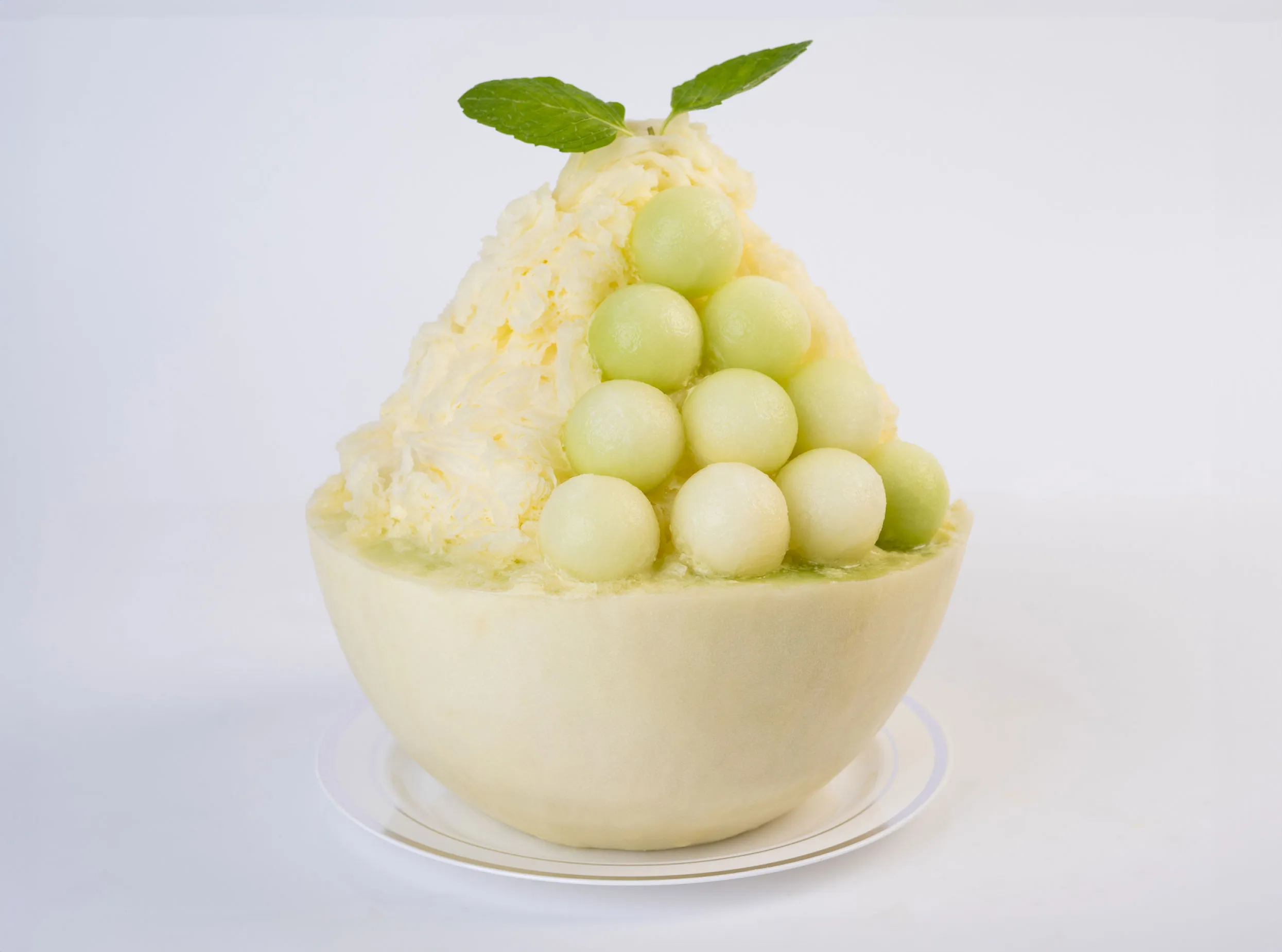
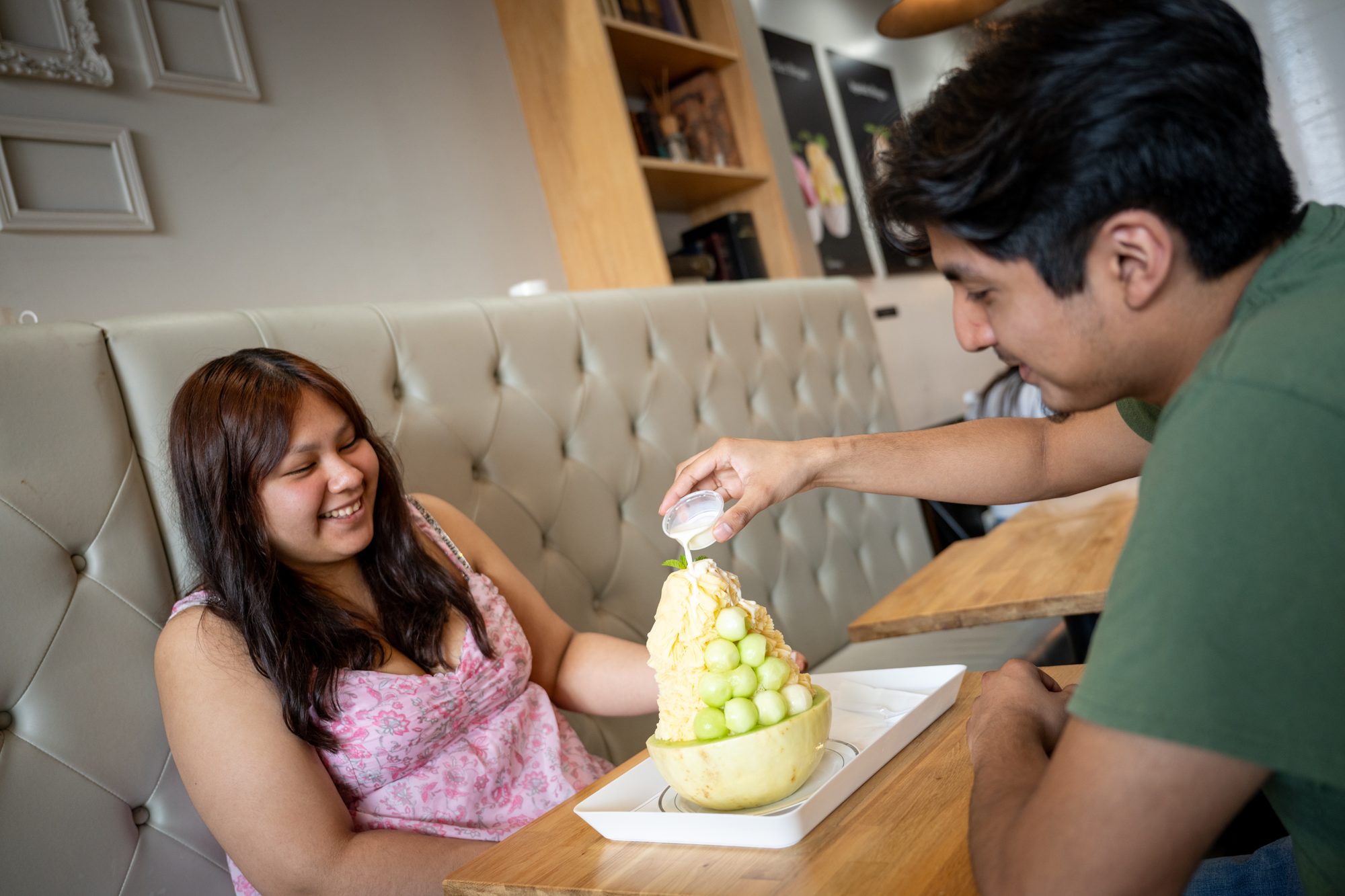
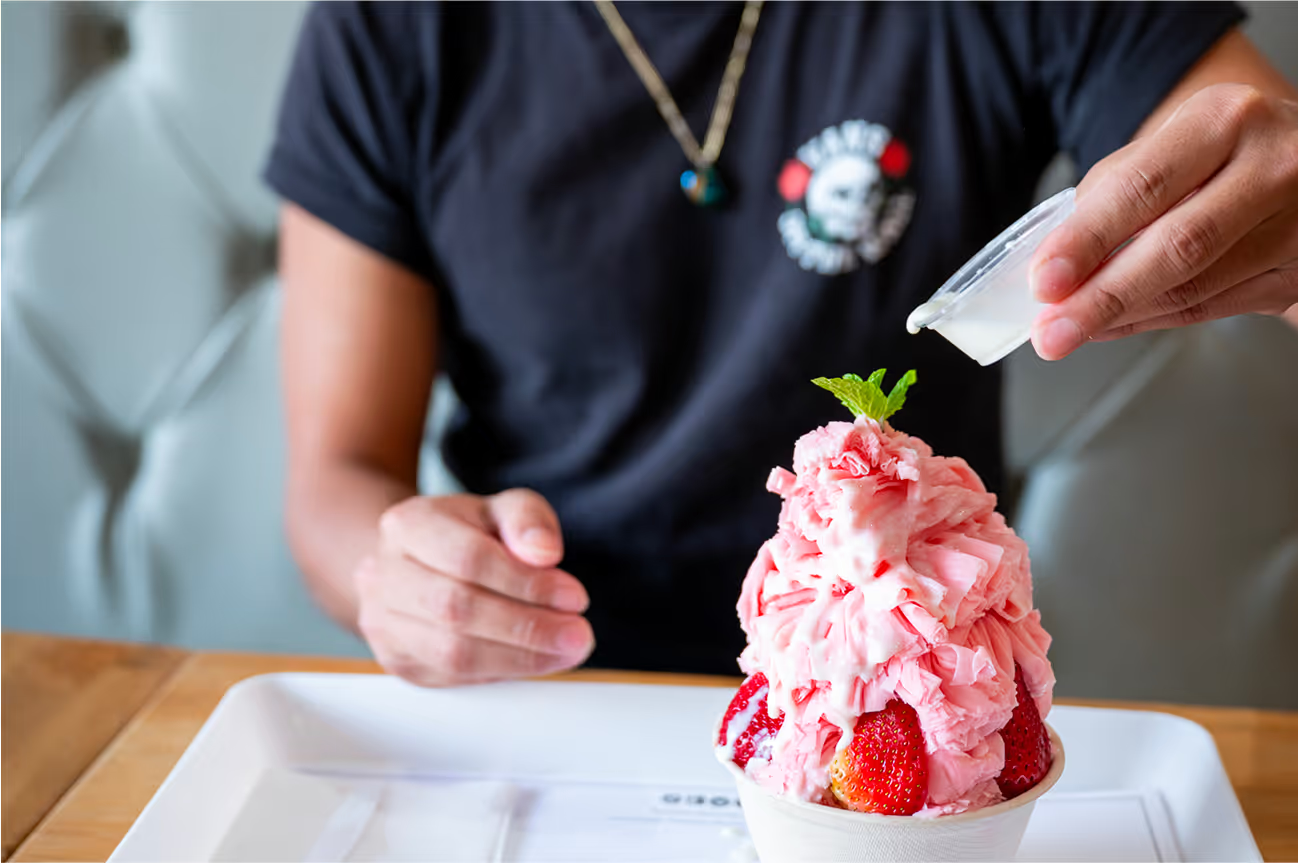
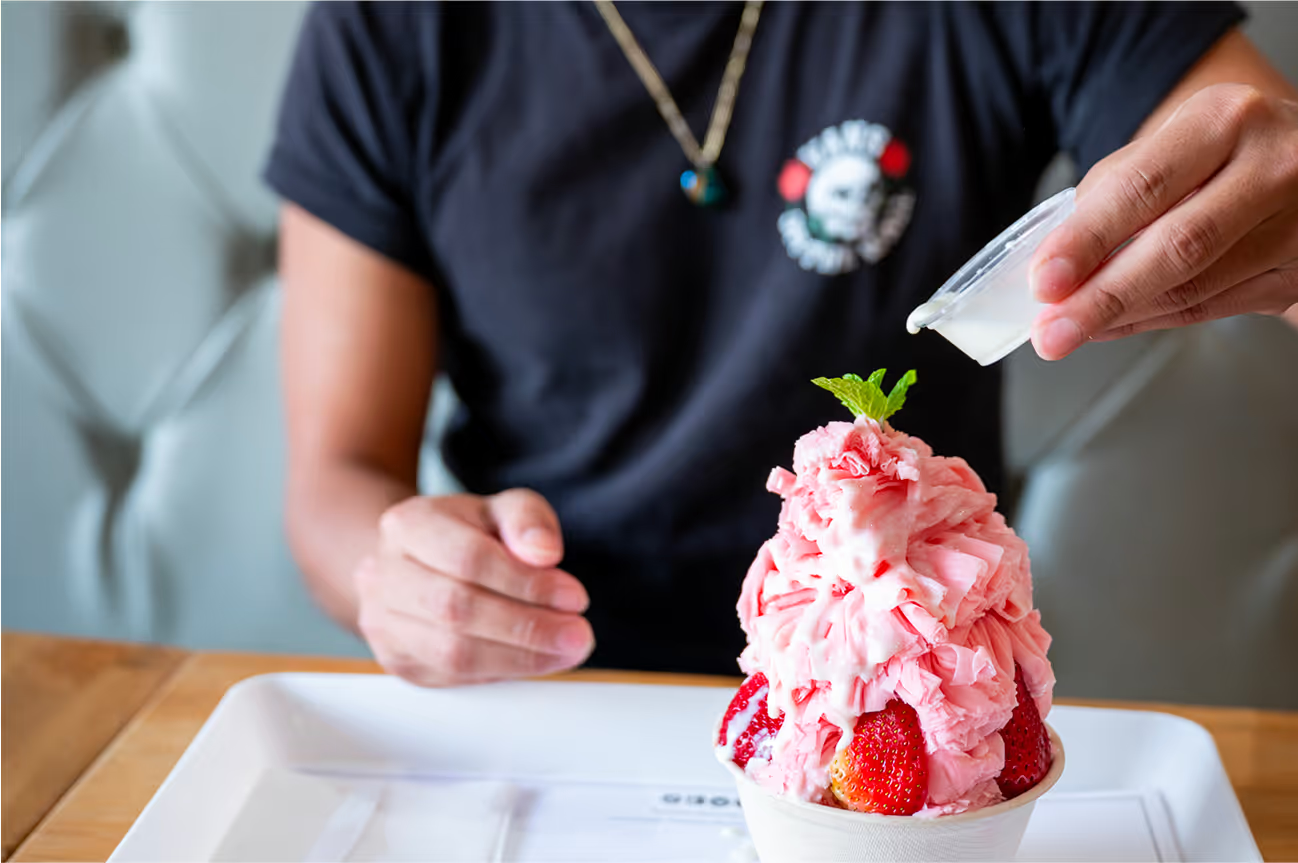
Oakobing is a modern adaptation of Korean shaved ice for the American market rather than an attempt to recreate a Seoul dessert exactly, and four specifics separate it from a generic shaved ice counter: the flavor is infused into the ice block itself rather than poured over the mound; the milk drizzle is served on the side so guests control sweetness and texture; a Large is portioned for two to four people; and the positioning is light, fresh, and guilt-free. The brand name carries the same idea, shaved ice inside a jade jar. Note that none of this is a discount on the first store.
Density is what makes the structure pay off operationally. Stores within a reasonable drive of each other can share management attention, cover each other on staffing, and build local recognition faster than three scattered shops ever would. That is the actual argument for territory, and it is why the format is built the way it is - a Large that two to four people share is how groups actually order dessert.
.png)
Where Do Multi-Unit Dessert Franchises Work Best in California?
They work best in regions with several distinct retail corridors close enough to manage from one base. Oakobing is currently franchising in California, and the strongest fits are the Los Angeles metro, Orange County, the San Gabriel Valley, and the San Fernando Valley. Each contains multiple separate trade areas with the parking, visibility, and evening traffic a shareable dessert concept depends on, which is exactly the geography a development area is meant to capture.
The market backdrop supports it. Los Angeles County and Orange County together are home to more than 341,000 Korean Americans (U.S. Census Bureau, American Community Survey 2020-2024 5-Year Estimates) - the largest Korean American population center in the United States, and the wider region carries high Asian American density, so a bingsu cafe does not spend its first year explaining what it sells. The long warm season also stretches the selling window well past a summer peak. Oakobing opened its first store on West 6th Street in Koreatown in 2016 and has been operating for over a decade since, with company stores in Koreatown Los Angeles and Old Pasadena - both on the locations page, and both worth visiting on a busy evening before you model anything.
Who Should Actually Consider a Multi-Unit Agreement?
An operator, not an investor. The structure fits someone who has run a business before, has people they can promote into store management, and holds capital that survives a slow quarter without forcing a decision. It fits poorly a first-time owner who wants a single store to learn on, and it fits poorly anyone looking for a passive holding, because three stores need more owner attention than one, not less.
A useful test before signing anything:
- Can you fund store two if store one opens slowly? Model it as a real scenario, not a footnote.
- Do you have a manager for store one already? A multi-unit owner cannot also be a full-time counter operator.
- Have you walked all your candidate corridors? On a weekday and a Saturday evening.
- Have the franchisor's team - and, as the system grows, existing franchisees - told you what month three felt like? The FDD lists them. Call several.
- Have your advisors read the development schedule clauses? Missing a milestone has consequences written into the agreement.
If the answer to any of the first three is not yet, starting with a single unit and adding a development agreement later is the more responsible path - how to open a bingsu shop covers that sequence, and franchise financing and SBA loans covers funding either route. You can also see how the product line is structured on the Oakobing menu.
This article is a general overview and not legal or financial advice. Request the Franchise Disclosure Document, read Items 5, 6, and 7 with your own accountant, review the development schedule with your own attorney, and speak with the franchisor's team - and, as the system grows, existing franchisees - before making any decision. Oakobing is currently franchising in California.
Frequently Asked Questions
What is a development area fee in a franchise agreement?
A development area fee is what a franchisee pays for the right to develop an agreed number of units inside a defined geographic area on an agreed schedule. It is separate from the initial franchise fee charged for each individual store, and it is the fee that reserves the territory. With Oakobing the development area fee for a 3 to 5 shop program is 30,000 to 60,000 dollars. This is only an estimate. Actual costs may vary. The exact terms, including the development schedule, are set out in the Franchise Disclosure Document.
How much does a multi-unit bingsu franchise cost in total?
Oakobing estimates the total initial investment for a 3 to 5 shop multi-unit program at 230,000 to 560,000 dollars, which includes the development area fee of 30,000 to 60,000 dollars. For comparison, a single unit is estimated at 200,000 to 500,000 dollars including a 35,000 dollar initial franchise fee. This is only an estimate. Actual costs may vary. Both ranges are itemized in FDD Item 7, which is the section to review with an accountant before building any budget.
Does a multi-unit franchise mean all the stores open at once?
No. A multi-unit agreement commits the franchisee to a development schedule, meaning the units open in sequence over an agreed period rather than simultaneously. That staging is deliberate, because it lets the first store prove the site model and generate operating experience before capital is committed to the next one. The specific schedule and the consequences of missing it are written into the franchise agreement, so read those clauses closely with your own attorney.
Should a first-time owner start with a multi-unit dessert franchise?
Usually not. A first store teaches an owner things no document can, including how the local trade area actually behaves by day and by hour, and it is far cheaper to learn that on one lease than on three. The multi-unit structure suits an operator who already runs businesses, has staff they can promote into management, and has capital that survives a slow opening quarter. Many multi-unit owners begin with a single unit and add a development agreement afterward.
Can a multi-unit dessert franchise territory cover several California cities?
A development area is defined geographically in the agreement, so it can cover more than one city where the trade areas support separate stores. Oakobing is currently franchising in California, and the strongest fits are the Los Angeles metro, Orange County, the San Gabriel Valley, and the San Fernando Valley, each of which contains multiple distinct retail corridors. How your specific area is drawn, and what exclusivity it carries, is defined in the Franchise Disclosure Document rather than negotiated informally.
You might also like...
Stories about Korean desserts, bingsu culture, and more.