
Bingsu Franchise Supply Chain: Where the Ice and Ingredients Come From (2026)
The bingsu franchise supply chain in 2026 comes down to one question: who makes the ice. In the Oakobing system the flavored ice bases are produced at the company's own facility and delivered to stores, where the franchisee's team shaves them to order and builds the bowls. That single design choice shapes training, daily labor, product consistency and even which territories a franchisor can realistically support. Here is how the chain actually works, and what a prospective owner should check before signing anything.
What Does a Bingsu Franchise Supply Chain Actually Include?
Four components, and they are not equally difficult. Most of a bingsu supply chain looks like any other cafe supply chain. One piece does not.
- The ice base. The block that gets shaved into the bowl. This is the product, and it is the hard part.
- Toppings and fruit. Fresh fruit, red bean, rice cake, cookie crumb, roasted grain powder. Sourced regularly, handled like any perishable cafe inventory.
- Packaging and branded materials. Cups, bowls, spoons, lids, signage. Standardized across the system so stores look and feel the same.
- Equipment. The shaving machine, refrigeration and holding equipment, plus the counter setup for building bowls to order.
Three of those four are solved problems. Any competent operator can order fruit and cups. The ice base is the one that determines whether a franchise system produces the same dessert in every store or twelve slightly different desserts, and it is the first thing a serious investor should ask about.
Why Does Oakobing Make Its Own Ice Bases?
Because consistency in shaved ice is a production problem, not a training problem. This is the part that is easy to underestimate from outside the category.
A bingsu bowl is mostly ice, so the ice is not a neutral carrier for flavor the way a cone is for a scoop. How the block is frozen determines the size and softness of the flakes it produces. How the flavor is distributed through the block determines whether the tenth spoonful tastes like the first. Getting both right is a manufacturing discipline with controlled conditions, not something a cafe team can reliably reproduce between the morning rush and the evening one.
Oakobing's approach is to move that step out of the store entirely:
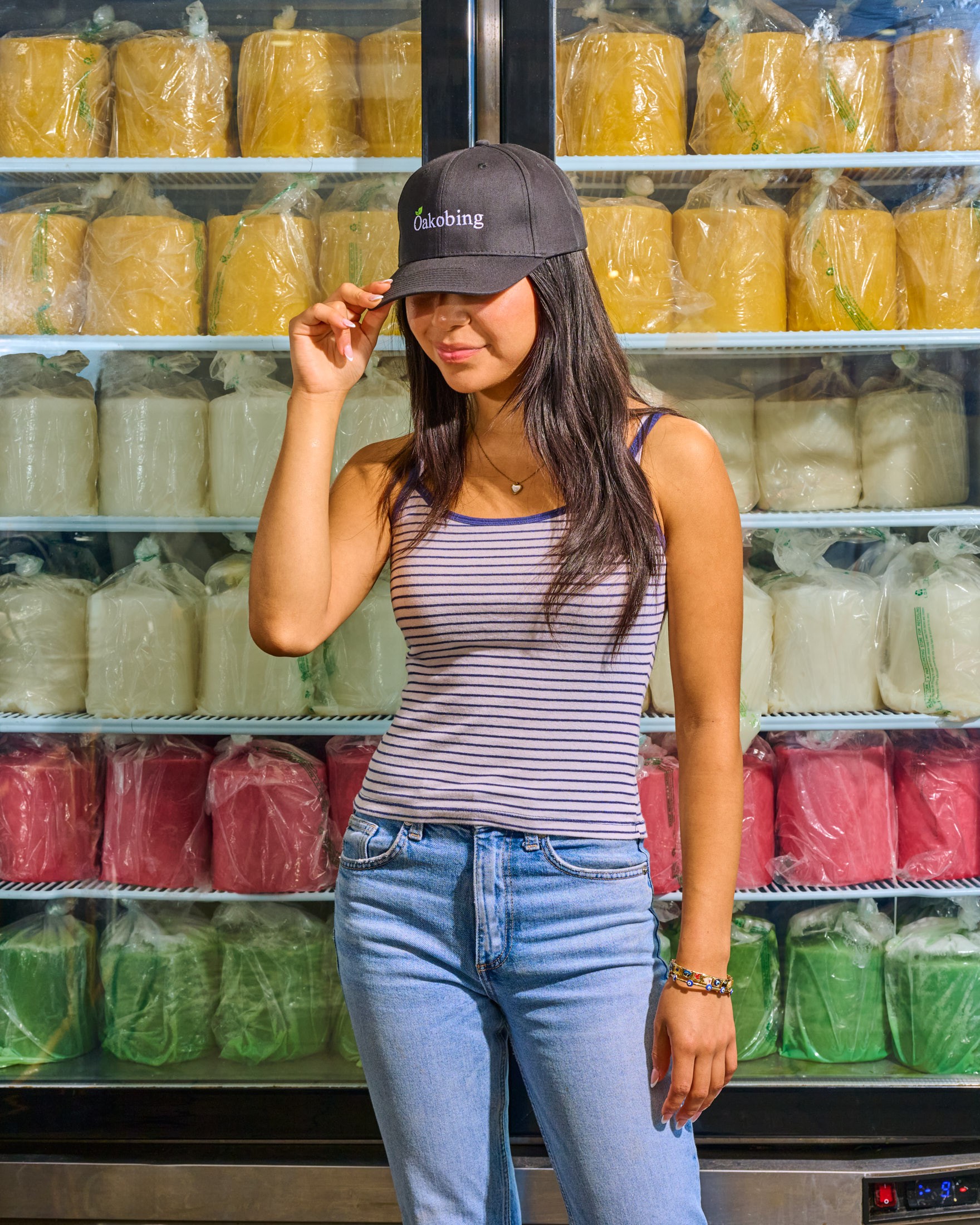
- The flavor is infused into the ice block itself, rather than applied as syrup over plain white ice at the counter. The taste is built in before the base reaches the store.
- Production happens at the company's own facility, under the Chief Manufacturing Officer, one of the three founders, rather than being outsourced to a co-packer.
- Stores receive finished bases and handle shaving, assembly and service.
The effect on a franchisee is concrete: the hardest quality variable in the business arrives already solved, and the store's job becomes execution and hospitality instead of production. The consumer-facing version of this explanation, if you want the detail on the process itself, is in how bingsu is made.
What Does the Supply Chain Mean for a Franchisee's Day?
It shortens it. A store that does not manufacture its own core product has a different opening routine, a different labor profile and a different set of ways the day can go wrong.
.avif)
What the store still owns:
- Receiving and cold storage. Bases and perishables have to be checked in and held correctly. This is the single most important daily discipline in the model.
- Shaving and assembly. Bowls are built to order at the counter, which is where speed during a rush is won or lost.
- Fresh prep. Fruit and toppings are prepared in store on the day.
- Inventory forecasting. Ordering ahead of weekend and seasonal peaks, since centrally produced items arrive on a delivery schedule rather than on demand.
What the store does not own is the freezing, the flavor formulation and the quality control on the base itself. For a first-time owner that is a meaningful reduction in scope, and it is one reason the model is accessible to operators without a manufacturing background. It also means the training program is about service and throughput rather than recipe development, which is covered in bingsu franchise training and support.
The trade-off is real and worth stating plainly: a franchisee in this model depends on the franchisor for the core product. You are buying into a supply relationship, not just a brand. That is true of most food franchises, but it is more true when the central item is manufactured rather than simply distributed. A prospective owner should be comfortable with that dependency, and should read Items 8 and 11 of the Franchise Disclosure Document, which set out sourcing requirements and the franchisor's obligations, before deciding they are.
.avif)
How Does the Supply Chain Shape Where You Can Open?
Delivery coverage sets the map. Centrally produced ice has to arrive cold, which means a store has to sit within practical reach of the production facility to be supported properly.
This is why Oakobing's available territories cluster where they do rather than spreading evenly across the state. The prime areas are in Los Angeles County and Orange County, including the LA Metro area, the San Gabriel Valley, the San Fernando Valley, Koreatown, Pasadena and Irvine. Areas well outside that delivery footprint are not currently supported, regardless of how attractive the demographics look on paper. Oakobing is currently franchising in California.
For a candidate, the practical sequence is: confirm which territories are open with the franchise team first, then evaluate specific sites inside those areas. Doing it the other way around produces a lot of wasted site tours. The site-level criteria themselves, once you are inside an open territory, are covered in dessert franchise site selection.
How Does the Supply Chain Affect Cost of Goods?
It concentrates it. In a model where the core item is bought from the franchisor, a larger share of cost of goods sits in a predictable line rather than in a dozen variable ones, and the store's margin depends less on daily purchasing skill than it would in an independent shop.
Oakobing's 2026 FDD Item 19 reports Direct Gross Profit of 58 to 65 percent for its existing outlets. Two things have to be said about that figure so it is read correctly. First, Direct Gross Profit is not net profit: it is revenue less direct costs, before rent, labor, royalties and other operating costs, all of which a store still has to cover. Oakobing does not yet have franchise outlets, so this figure comes from company-owned stores and does not deduct the royalty or Brand Development Fund contributions a franchisee would pay; per the same Item 19, Direct Gross Profit after the 7% royalty is 51 to 58 percent of gross sales. Second, the required disclosure: these figures are historical financial performance representations from Oakobing's 2026 FDD Item 19. They reflect specific existing outlets and are not a guarantee of future results; a new franchisee's results may differ. Refer to the FDD for full details.
On the investment side, the current FDD Item 7 estimates an initial franchise fee of $35,000 and a total initial investment of $200,000 to $500,000 for a single store. This is only an estimate. Actual costs may vary. Neither figure is a projection of what a specific location will do, and the FDD is the document that governs, not this page.
What Should You Ask Before You Sign?
Five questions, and all of them should be answerable from documents rather than from a conversation:
- Who manufactures the core product, and is that entity the franchisor or a third party?
- Am I required to purchase it from the franchisor or an approved supplier, and on what terms? Item 8 of the FDD.
- How can the price of required items change over the term of the agreement?
- What is the contingency if a delivery is delayed or a facility goes offline?
- Which territories are currently supported by delivery, and is the one I want among them?
A franchisor that answers these in writing is telling you something about how the system is run. One that cannot is also telling you something. For the wider checklist of what qualifies a candidate in the first place, see bingsu franchise requirements, and the franchise page covers the current program, territories and next steps.
Frequently Asked Questions
What does a bingsu franchise supply chain include?
Four things: the ice base that gets shaved into the bowl, the toppings and fruit that go on it, the packaging and branded cups, and the equipment that shaves and holds the ice. The ice base is the part that separates one bingsu system from another. Some brands have franchisees freeze plain water or milk on site, and others produce flavored bases centrally and deliver them. Oakobing uses the second model, producing its ice bases at its own facility so that every store shaves the same product.
Does an Oakobing franchisee make the ice in the store?
No. Oakobing produces its flavored ice bases at a company production facility and delivers them to stores, where the franchisee's team shaves them to order and builds the bowls. That is the operational difference between a brand that hands a franchisee a recipe and one that hands them a finished base. It removes the hardest part of bingsu consistency, which is getting the freeze and the flavor distribution right, from the store's daily workload.
Why does flavor-infused ice matter for a franchise?
Because it changes what a store has to get right every day. When flavor is poured on as syrup at the counter, the taste of the bowl depends on how heavy the pour is that shift, which varies by person. When the flavor is infused through the ice block itself before it ever reaches the store, every bowl shaved from that block tastes the same. For a franchise system, consistency across stores is the product, and moving flavor into production is how you get it.
How does supply chain affect franchise territory?
Directly, because centrally produced ice has to reach the store in a refrigerated condition. A store inside the delivery radius of the production facility can be supported, and a store far outside it cannot be supported the same way. That is why Oakobing's available territories cluster around Los Angeles County and Orange County rather than spreading across the state. Oakobing is currently franchising in California. Ask the franchise team which specific areas are open before you look at sites.
What should I ask a franchisor about its supply chain?
Ask who makes the core product, whether you are required to buy it from the franchisor or an approved supplier, what happens if a delivery is late, and how prices for required items can change over time. All of those answers should appear in the Franchise Disclosure Document, mainly in Items 8 and 11. If a franchisor cannot show you in writing where the core product comes from, treat that as the answer.
You might also like...
Stories about Korean desserts, bingsu culture, and more.