How Is Bingsu Made? Korean Shaved Ice Explained (2026)
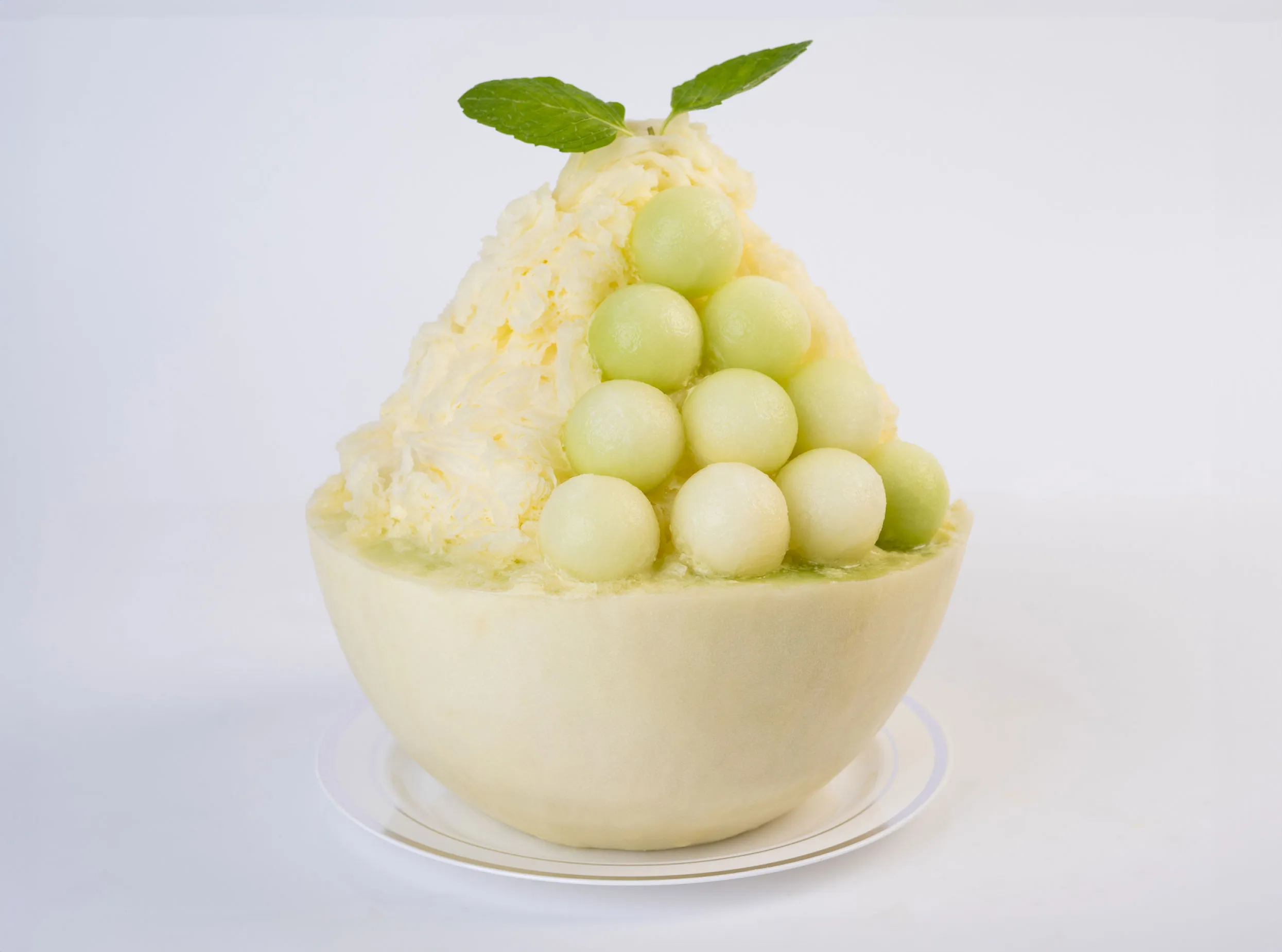
How is bingsu made? A milk base is frozen into a solid block, shaved into snow-fine flakes on a shaving machine, mounded into a chilled bowl, and layered with toppings such as fresh fruit, red bean, rice cake, or roasted soybean powder, finished with a milk drizzle. That is the whole process, and it takes only a few minutes per bowl - which is why good bingsu is always built to order in 2026, never held in advance. Here is what happens at each step, and why the ice matters more than the toppings. See what the finished bowls look like on the Oakobing menu.
How Is Bingsu Made, Step by Step?
Bingsu is assembled in five steps, and the first one happens long before you order:
- Freeze the base. A milk mixture is frozen into a solid block. This is the step that decides the final texture.
- Temper the block. The block rests until it is cold but not brittle, so the blade can cut smooth flakes instead of chips.
- Shave the ice. The block is mounted on a shaving machine and cut in thin, continuous passes into snow-like flakes.
- Mound the bowl. The flakes are piled into a chilled bowl so the mound holds its height and does not slump.
- Layer the toppings. Fresh fruit, red bean, rice cake, powders, or cookie crumble go on top, with the milk drizzle last.
Speed matters through all of it. Shaved ice starts melting the moment it leaves the blade, so a bowl that sat on a pass for five minutes is already a different dessert than one handed straight to the table.
What Is Bingsu Ice Made Of?
Bingsu ice is made from a frozen milk base, not water, and that is the single most important fact about the dish. Milk freezes into a softer, denser block than water, so when a blade passes over it the ice comes off as thin, pliable flakes rather than hard crystals. That is why a spoonful of bingsu melts almost instantly and tastes creamy before a single topping is involved, while a snow cone stays grainy and cold on the tongue.
There is more than one way to get flavor into the bowl, and the choice changes the result. The common approach is to shave plain ice and pour flavored syrup over the mound, which means the top few spoonfuls taste strong and the bottom tastes like nothing. Oakobing instead infuses the flavor into the ice block itself, produced at its own facility, so a green tea or mango bowl tastes of that flavor all the way through.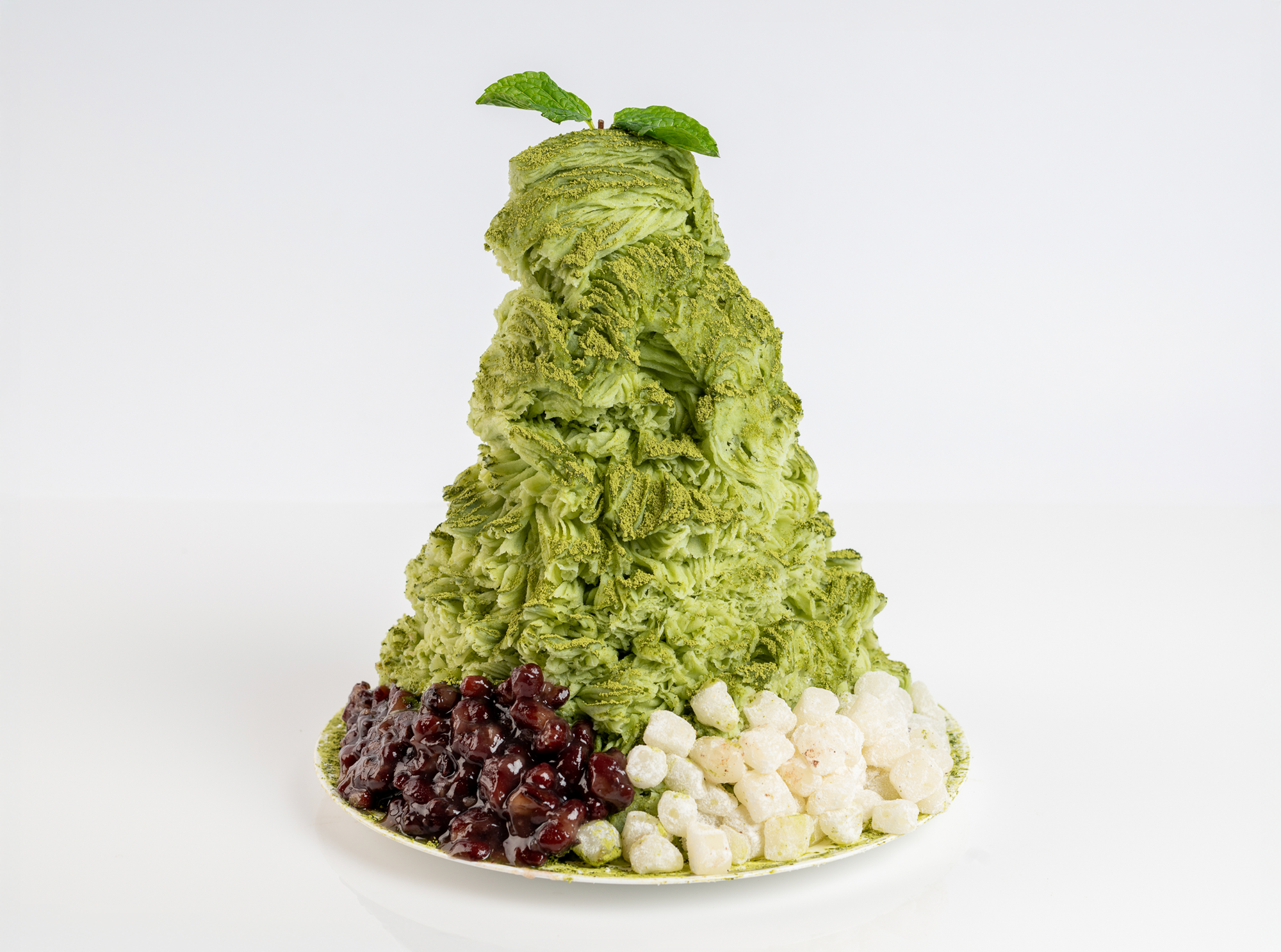
How Are Bingsu Toppings Assembled?
Toppings are not scattered on at random - they are layered in a deliberate order.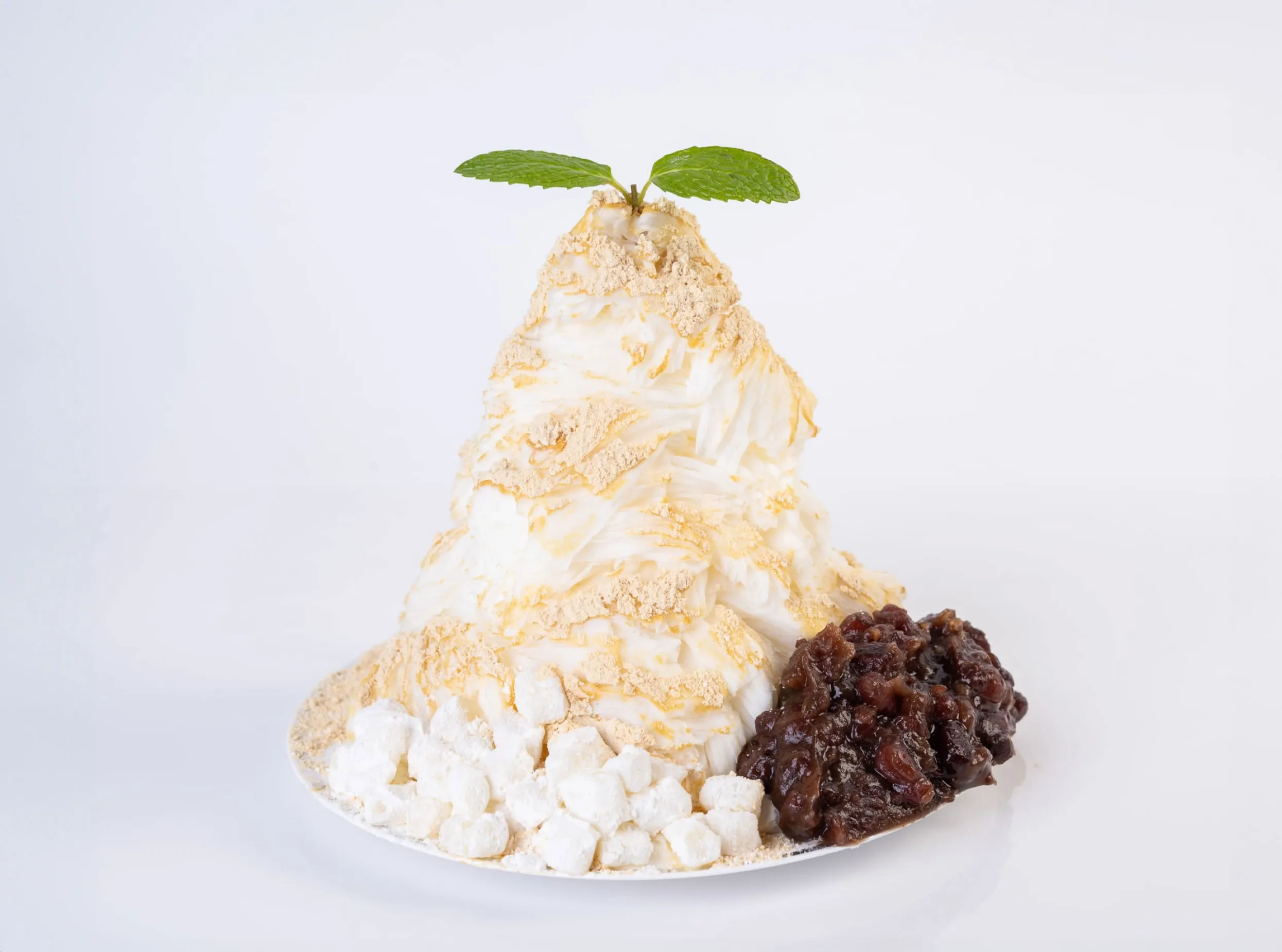
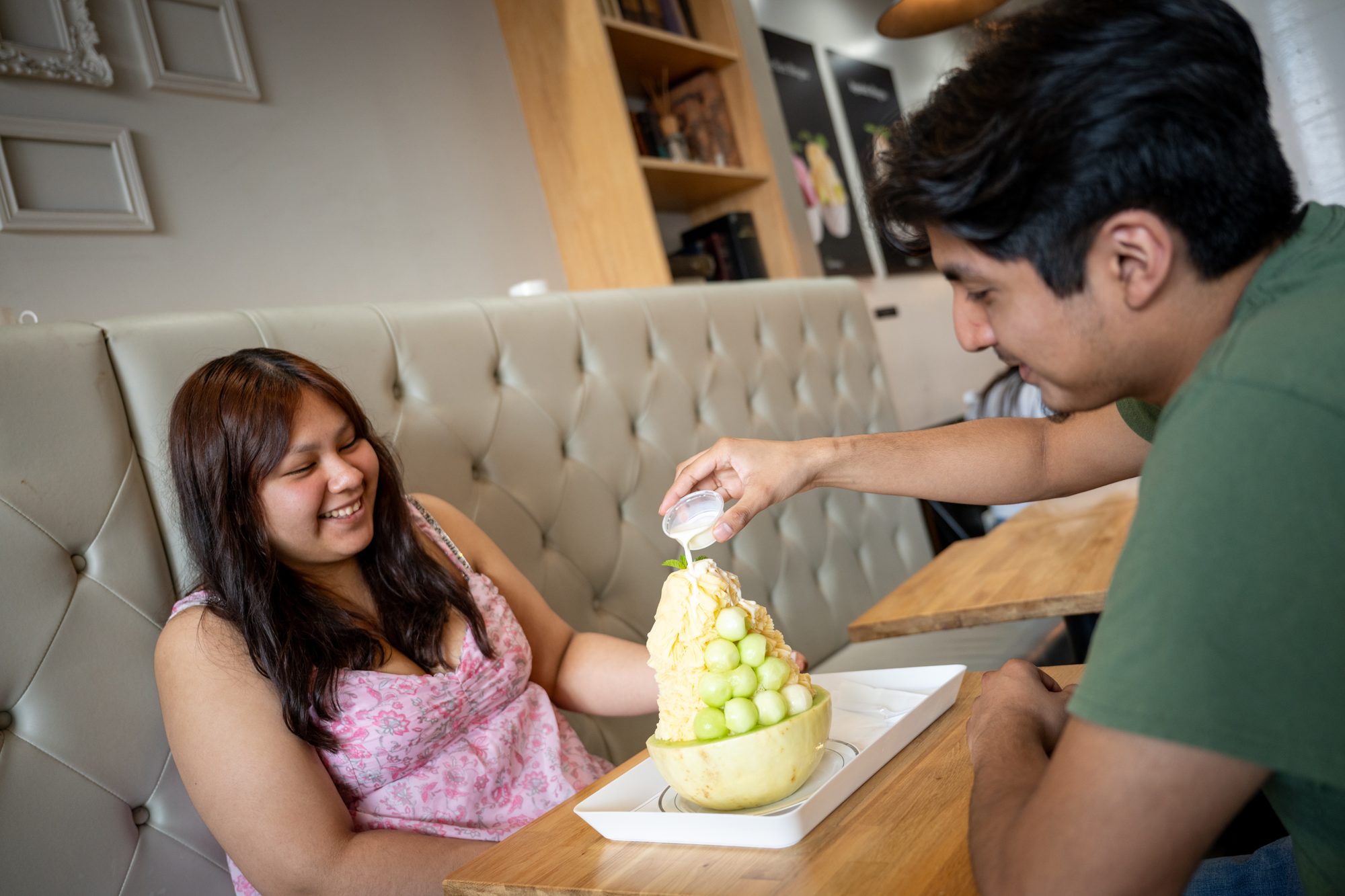
The sequence exists for eating, not just for looks. A well-built bowl gives you ice, topping, and drizzle in the same spoonful from the first bite to the last, instead of forcing you to dig for the good part. That is also why the milk drizzle at Oakobing arrives on the side rather than pre-poured: you decide how sweet and how rich each spoonful gets, which is the practical version of the light, fresh, and guilt-free idea the brand is built on. For a flavor-by-flavor look, see the mango melon bingsu guide.
Why Is Bingsu Served in Such a Large Bowl?
Because it was built to be shared. A bingsu bowl is a centerpiece dessert, and an Oakobing large size is portioned for two to four people to spoon into together at one table. The mound needs volume to hold its shape, the toppings need surface area to spread across, and the whole thing is meant to arrive looking like a dish rather than a serving. Order a large for a group and a smaller size when you are on your own - that is how the bowl is meant to be eaten.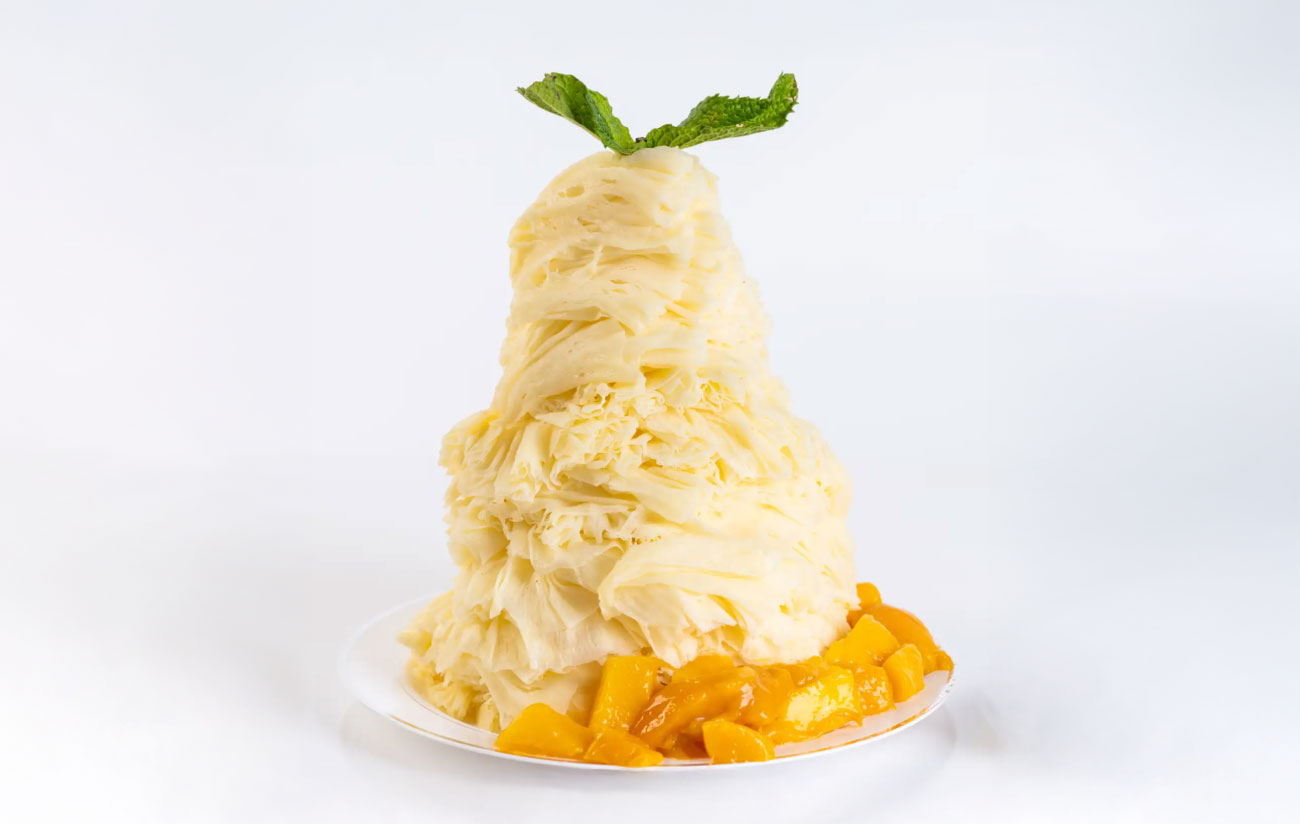
The size also explains why bingsu eats lighter than it looks. Shaved milk ice is mostly air and water rather than churned cream, so a bowl that looks like an enormous dessert splits comfortably several ways after a full dinner. If you want the specifics, see our bingsu calories and nutrition guide.
Can You Make Bingsu at Home?
You can get close, but not all the way. Freeze milk in a shallow pan, scrape the surface with a sturdy fork or run it through a home ice shaver, then top it with fruit, red bean, or condensed milk and you will have something recognizably bingsu-shaped. It is a genuinely fun experiment and it teaches you fast why the ice matters.
What a home kitchen cannot easily reproduce is the equipment chain: a properly tempered block, a sharp commercial blade, and a machine that cuts even flakes at speed. Home ice tends to come off in chips rather than ribbons, so the texture lands closer to slush than snow. That gap is the difference between bingsu you make and bingsu you order.
Where Can You Try Freshly Made Bingsu?
Oakobing shaves every bowl to order at its two Southern California stores, in Koreatown Los Angeles and Old Pasadena, so you can watch the process at the counter before you eat it. The lineup spans fruit bowls like mango melon and strawberry through matcha, injeolmi, and Oreo, all built on the same flavor-infused milk ice - Korean shaved ice reworked for how people eat dessert here rather than a museum recreation.
For hours, parking, and directions to either store, check the Oakobing locations page. If watching a bowl come together makes you think about running a shop like it, Oakobing is currently franchising in California and the franchise page covers what that involves.
Frequently Asked Questions
How is bingsu made?
Bingsu is made by freezing a milk base into a solid block, mounting that block on a shaving machine, and shaving it into fine, snow-like flakes that are mounded into a bowl. Toppings such as fresh fruit, red bean, rice cake, roasted soybean powder, or cookie crumble are then layered on top, and a milk drizzle finishes it. The whole assembly takes only a few minutes, which is why bingsu is made to order rather than held.
What is bingsu ice made of?
Traditional bingsu ice is a frozen milk base rather than plain water, which is why the flakes taste creamy and melt softly instead of crunching like snow-cone ice. Water ice shatters into hard crystals, while a milk block shaves into thin, ribbon-like flakes that hold toppings without collapsing. Oakobing produces its flavor-infused ice blocks at its own facility so the flavor runs through the ice itself.
Why is bingsu ice so soft compared to a snow cone?
The difference is the base and the blade. A snow cone is crushed water ice, so it is hard and grainy. Bingsu ice is a frozen milk block shaved in thin, continuous layers, so it comes off as soft flakes with air between them. That structure is what lets a bingsu mound hold its shape under fruit and syrup and still melt the moment it hits your tongue.
Can you make bingsu at home?
You can approximate it. Freeze milk in a shallow container, then shave the surface with a fork or a home ice shaver and top it with fruit, red bean, or condensed milk. The limitation is equipment: home freezers and blades cannot produce the very thin, even flakes a commercial shaving machine cuts from a properly tempered block, so the texture will be coarser than a cafe bowl.
Where can you watch bingsu being made in Los Angeles?
Oakobing builds every bowl to order at its Koreatown Los Angeles and Old Pasadena stores, so you can see the ice being shaved and the toppings layered at the counter. Flavors include mango melon, strawberry, matcha, injeolmi, and Oreo, and the milk drizzle is served on the side so you can adjust sweetness and texture yourself.
You might also like...
Stories about Korean desserts, bingsu culture, and more.