Bingsu vs Hawaiian Shave Ice: What's the Difference? (2026)
The short answer on bingsu vs Hawaiian shave ice: bingsu is milk-based ice layered with whole ingredients, while Hawaiian shave ice is water ice with flavored syrup poured over it. Both are shaved rather than crushed, so they look similar in a photo, but in 2026 they remain two genuinely different desserts - different ice, different flavor delivery, different serving size, different reason to order one. Here is how they compare and which one fits what you actually want. The Korean side of the comparison is on the Oakobing menu.
What Is the Core Difference Between Bingsu and Hawaiian Shave Ice?
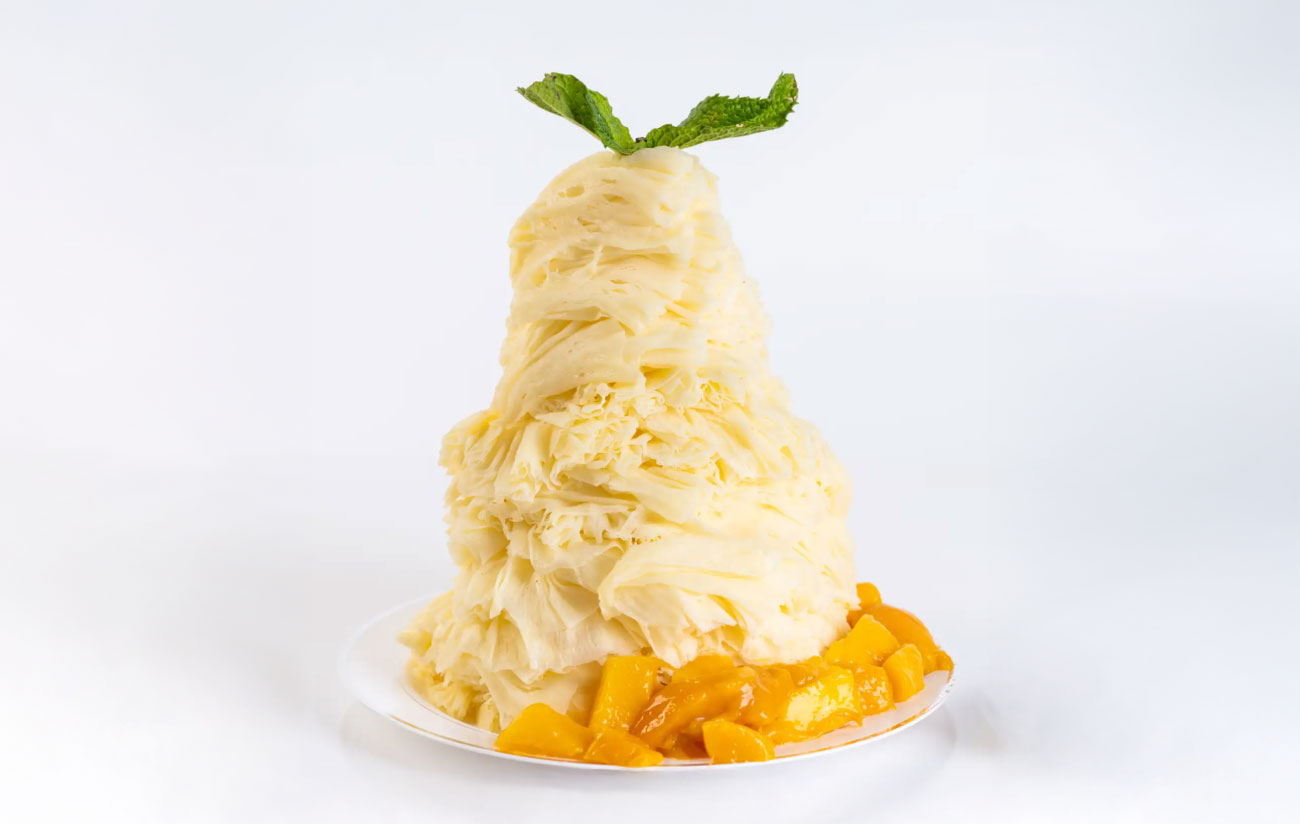
The ice itself. Hawaiian shave ice starts from a block of frozen water, shaved fine enough to feel powdery, then flavored with syrup after the fact. Bingsu starts from frozen milk, which shaves into soft flakes that taste faintly creamy before a single topping lands on them.
That one difference drives everything else:
| Korean bingsu | Hawaiian shave ice | |
|---|---|---|
| Ice base | Milk | Water |
| Flavor source | Ice and whole toppings | Poured syrup |
| Texture | Soft, snow-like, melts on contact | Fine and powdery, more granular |
| Typical toppings | Fresh fruit, rice cake, red bean, nuts | Ice cream, condensed milk, sometimes azuki |
| Serving | Wide bowl, often shared | Cup or cone, single serving |
| Sweetness | Light to moderate, adjustable | Sweet, syrup-driven |
Neither is a knockoff of the other. Hawaiian shave ice descends from Japanese kakigori brought to the islands by plantation workers, and Korean bingsu grew from patbingsu, a red bean and ice dish. They converged on shaving ice and diverged on everything after.
Which One Has More Real Ingredients?
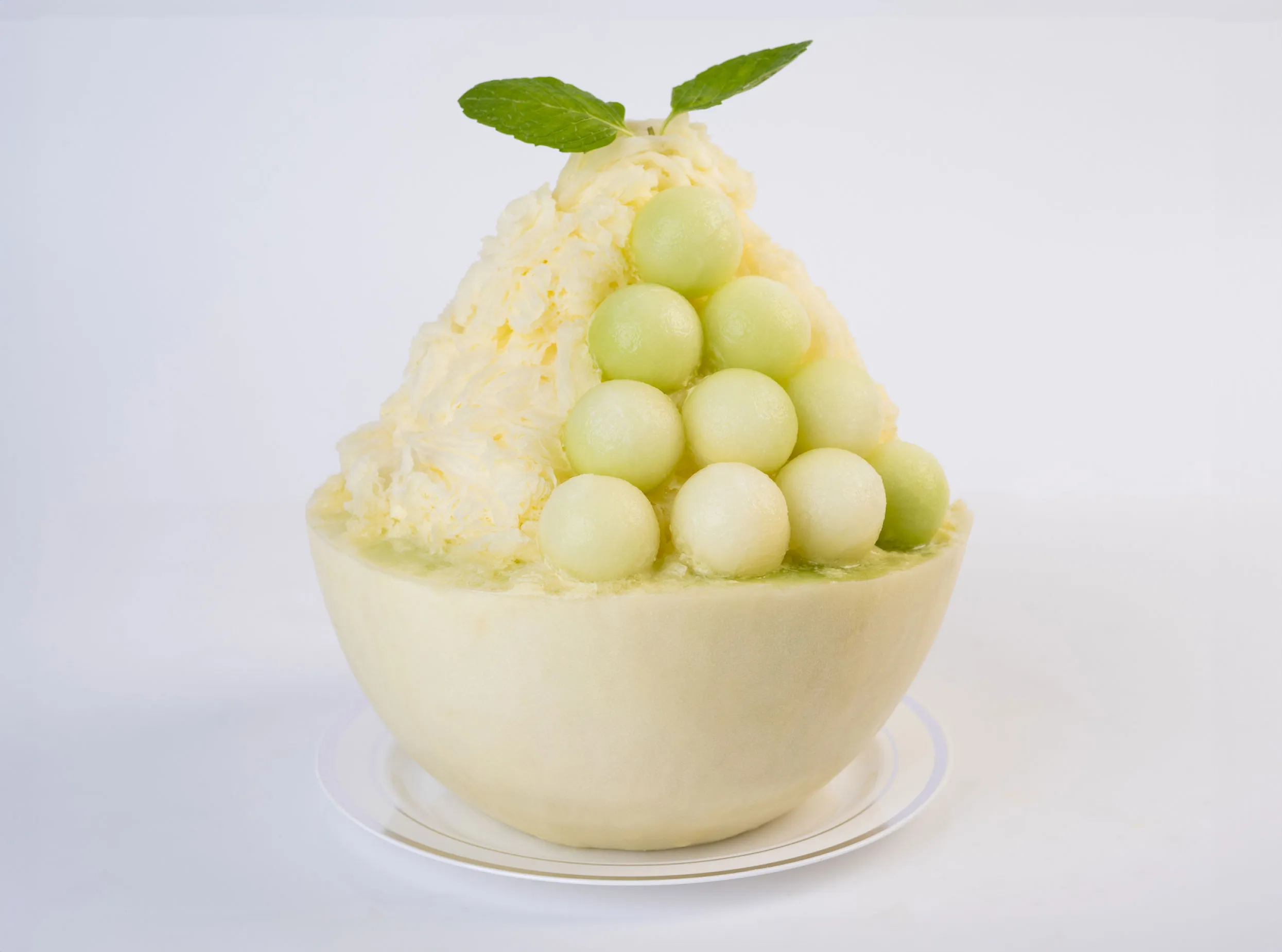
Bingsu, by design. A standard bowl is built from things you could name on sight: sliced strawberries, mango, melon balls, chewy rice cake, roasted soybean powder, red bean, almonds. Sweetness comes partly from the fruit and partly from a milk drizzle, and at Oakobing that drizzle arrives on the side so you set the level yourself.
Hawaiian shave ice leans on syrup for flavor and adds richness underneath - a scoop of ice cream at the bottom is traditional, and a condensed milk snow cap on top is common. Those are real additions, but the flavor identity of the dessert still comes from the bottle. The practical result: with shave ice you taste one dominant flavor, and with bingsu you taste ingredients that stay distinguishable spoonful to spoonful. A melon bowl tastes like melon because there is melon in it, with no syrup bottle involved.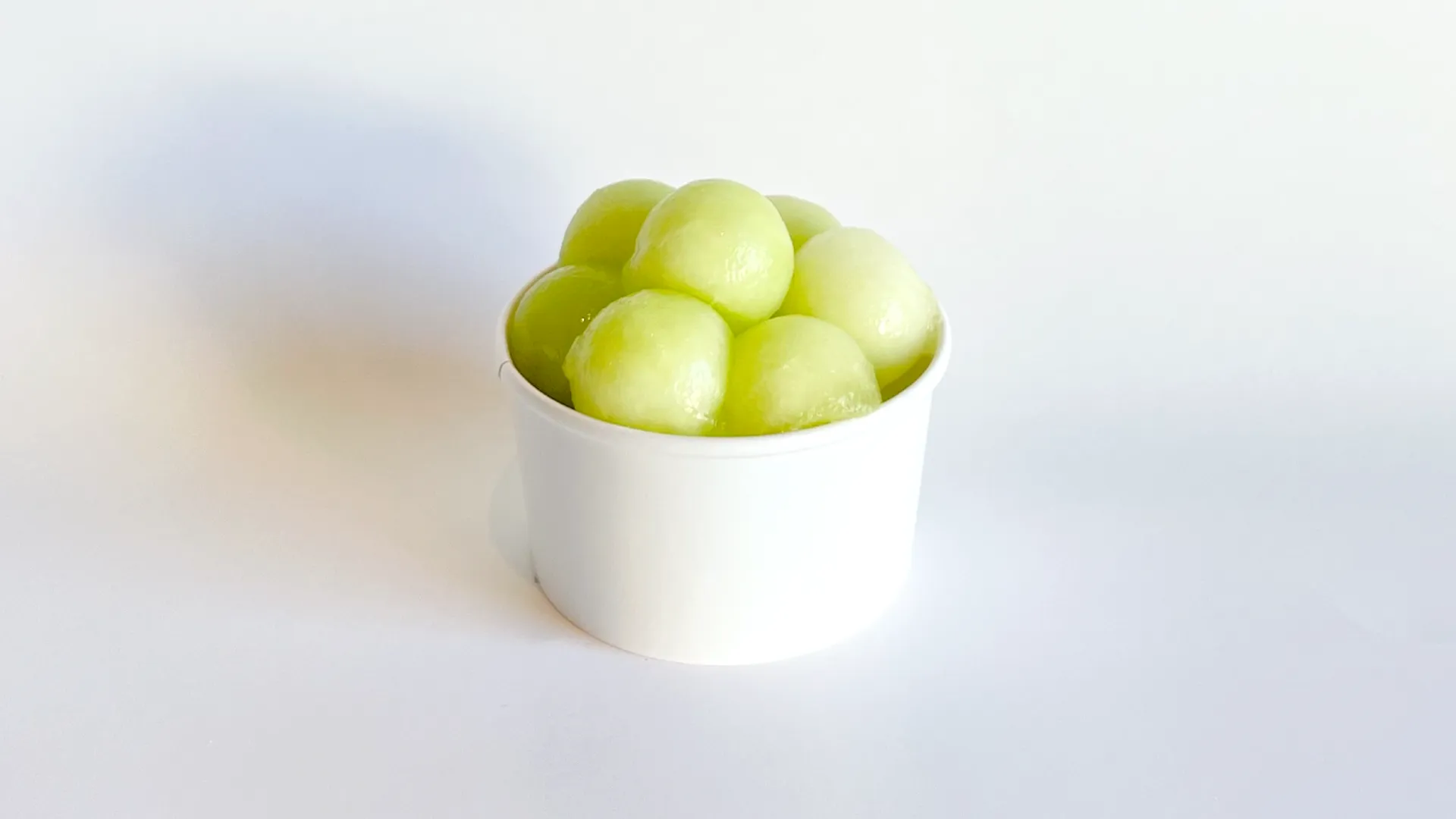
Which Is Lighter, and Which Should You Order?
Bingsu is generally the lighter-feeling dessert despite the milk, because the ice is mostly air and the sweetness is restrained. Shave ice feels lighter for the first few bites and then heavier once syrup and condensed milk collect at the bottom. Pick by situation:
- After a big meal - bingsu. Cold, airy, and not syrup-heavy, so it does not compete with what you just ate.
- On a hot beach afternoon - shave ice. Portable, one-handed, and refreshing in a way a shared bowl is not.
- With a group - bingsu. One Large feeds two to four people from the same bowl.
- If you dislike very sweet desserts - bingsu, and specifically a nutty bowl. Injeolmi bingsu is roasted and grain-forward, the point where the sweetness question stops applying entirely.
For anyone still sorting out the wider category, bingsu vs snow ice vs shaved ice maps the neighboring styles side by side, and for a nutty bowl in particular, sweetness is the wrong question.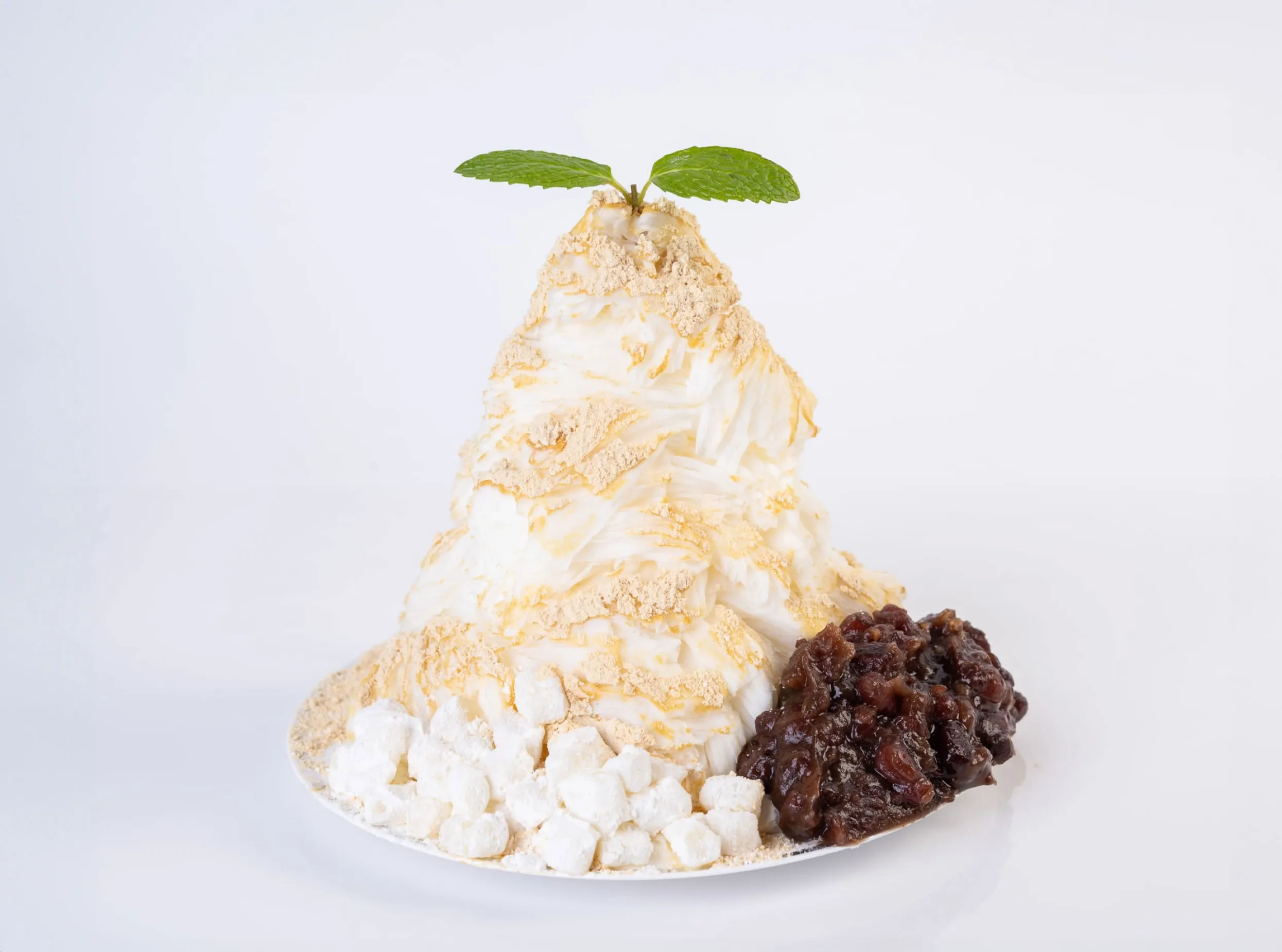
Why Does Bingsu Ice Taste Different All the Way Down?
Because of where the flavor is put. Pour syrup on a mound of ice and gravity does the rest: the top spoonfuls taste strong, the bottom tastes like water. That is the structural weakness of every syrup-poured dessert, shave ice included, and it is why the last third of a cup is usually the worst part.
Oakobing infuses flavor into the ice block itself, produced at its own facility, so a flavored bowl tastes consistent from the first spoonful to the last. Combined with the drizzle-on-the-side approach, that makes the sweetness adjustable instead of fixed. It is Korean shaved ice reworked for how people eat dessert here rather than a museum recreation of a Seoul cafe - the brand name means shaved ice inside a jade jar. It also explains the serving format: a bowl that stays good to the bottom is worth sharing, which is not something you would say about a single-serving cone or cup.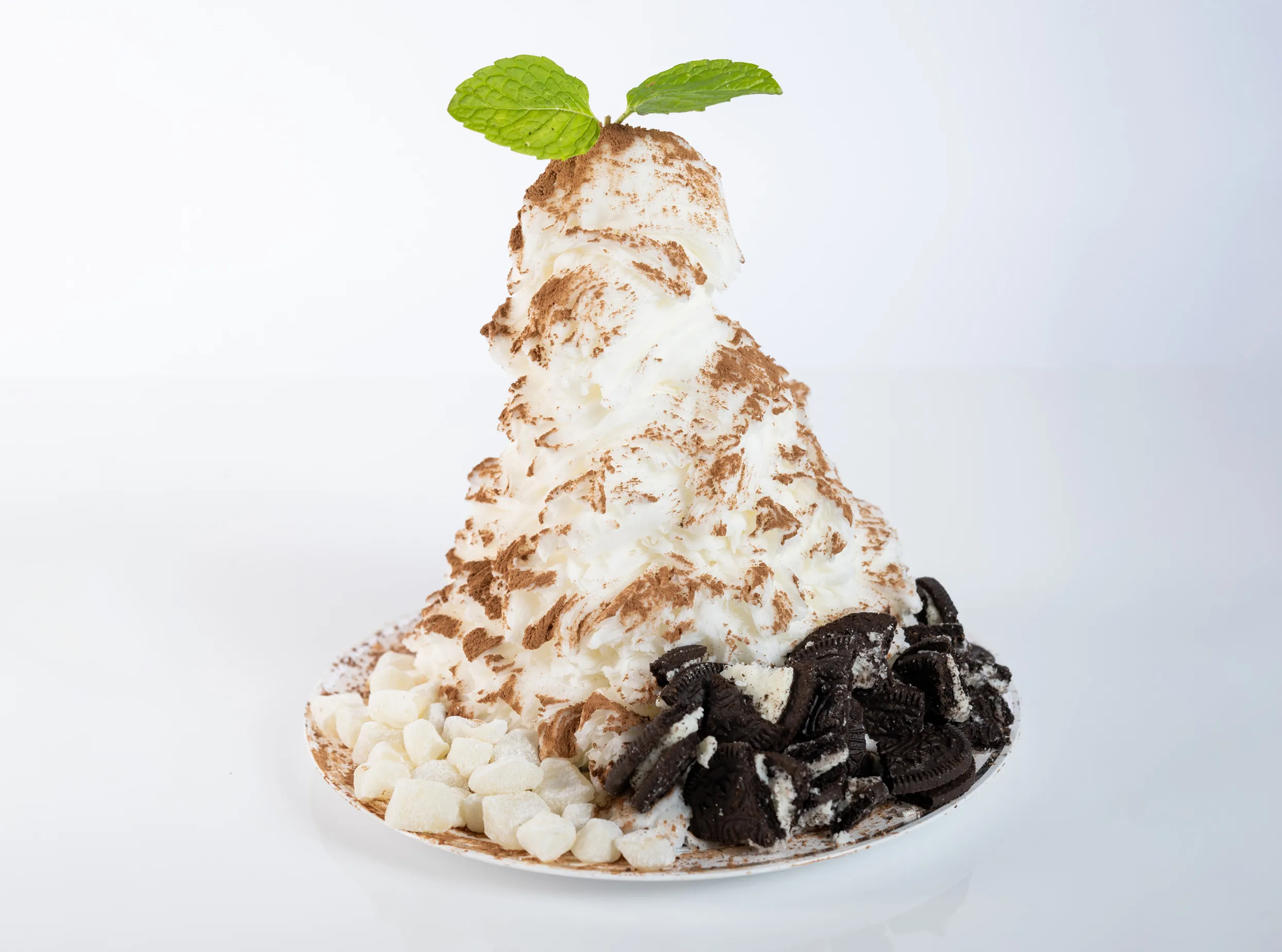
Where to Try Korean Bingsu in LA
Oakobing serves the full lineup at two Southern California stores - Koreatown Los Angeles and Old Pasadena - with dine-in, pickup, and delivery through Uber Eats and DoorDash. Addresses, hours, and directions are on the locations page. Order a Large if there are two to four of you, go light on the drizzle at first, and eat it in the first ten minutes.
And if the category itself interests you as a business rather than a dessert, Oakobing is currently franchising in Southern California - the franchise page covers what that involves.
Frequently Asked Questions
What is the difference between bingsu and Hawaiian shave ice?
Bingsu is Korean shaved ice made from a frozen milk base and layered with whole ingredients like fresh fruit, rice cake, or red bean. Hawaiian shave ice is finely shaved water ice with flavored syrup poured over it, often with ice cream or sweetened condensed milk added underneath or on top. The difference is structural: bingsu builds flavor into the ice and the toppings, while shave ice builds it with syrup on the surface.
Which is sweeter, bingsu or Hawaiian shave ice?
Hawaiian shave ice is usually sweeter, because flavored syrup is the main flavor source and it is poured generously. Bingsu leans lighter: the milk-based ice carries mild sweetness on its own, and at Oakobing the milk drizzle is served on the side so the customer decides how much goes on. Nutty bowls like injeolmi are barely sweet at all, which has no real equivalent on a shave ice menu.
Is bingsu the same as a snow cone?
No. A snow cone uses coarse crushed ice that stays crunchy and separates from the syrup as it melts. Bingsu ice is shaved into thin, snow-fine flakes from a milk base, so it collapses softly on the tongue and does not pool into syrup water. Hawaiian shave ice sits between the two: much finer than a snow cone, but still water ice with syrup rather than a milk base.
Which is better for sharing, bingsu or shave ice?
Bingsu. It is served in a wide bowl designed for multiple spoons, and an Oakobing Large is portioned for two to four people. Hawaiian shave ice is usually served in a cup or cone sized for one person. If you are with a group and want one dessert everyone eats from, bingsu is built for that and shave ice is not.
Where can you try Korean bingsu in Los Angeles?
Oakobing serves Korean bingsu at two Southern California stores, in Koreatown Los Angeles and Old Pasadena, with dine-in, pickup, and delivery through Uber Eats and DoorDash. Every bowl is built to order rather than held in a case, and the flavor is infused into the ice block itself rather than poured on top. See the Oakobing locations page for addresses, hours, and directions.
You might also like...
Stories about Korean desserts, bingsu culture, and more.