
Korean Cafe Culture: Why Dessert Is Something You Sit Down For (2026)
Korean cafe culture is the practice of treating a cafe as a place to stay rather than a counter to pass through, and in 2026 it is the reason Korean dessert menus look the way they do. The room is built for sitting, the busy hours are in the evening rather than the morning, and the signature orders are large and shared instead of single-serving. Once you see that the visit comes first and the order comes second, the rest of the format explains itself. Here is what that actually looks like, in Korea and in Los Angeles.
What Is Korean Cafe Culture, Exactly?
It is a use of space more than a style of coffee. A Korean cafe is commonly used as what urban planners would call a third place: somewhere that is neither home nor work, where you can sit for an hour or three without anyone signaling that you should move along.
The practical markers are consistent:
- Real seating, designed rooms. Interiors are a significant part of the offer, not a backdrop to the counter.
- Long stays are normal. Studying, catching up, working, waiting out the afternoon. Nobody is rushing the table.
- Evening peaks. The busy stretch is after dinner, not before work.
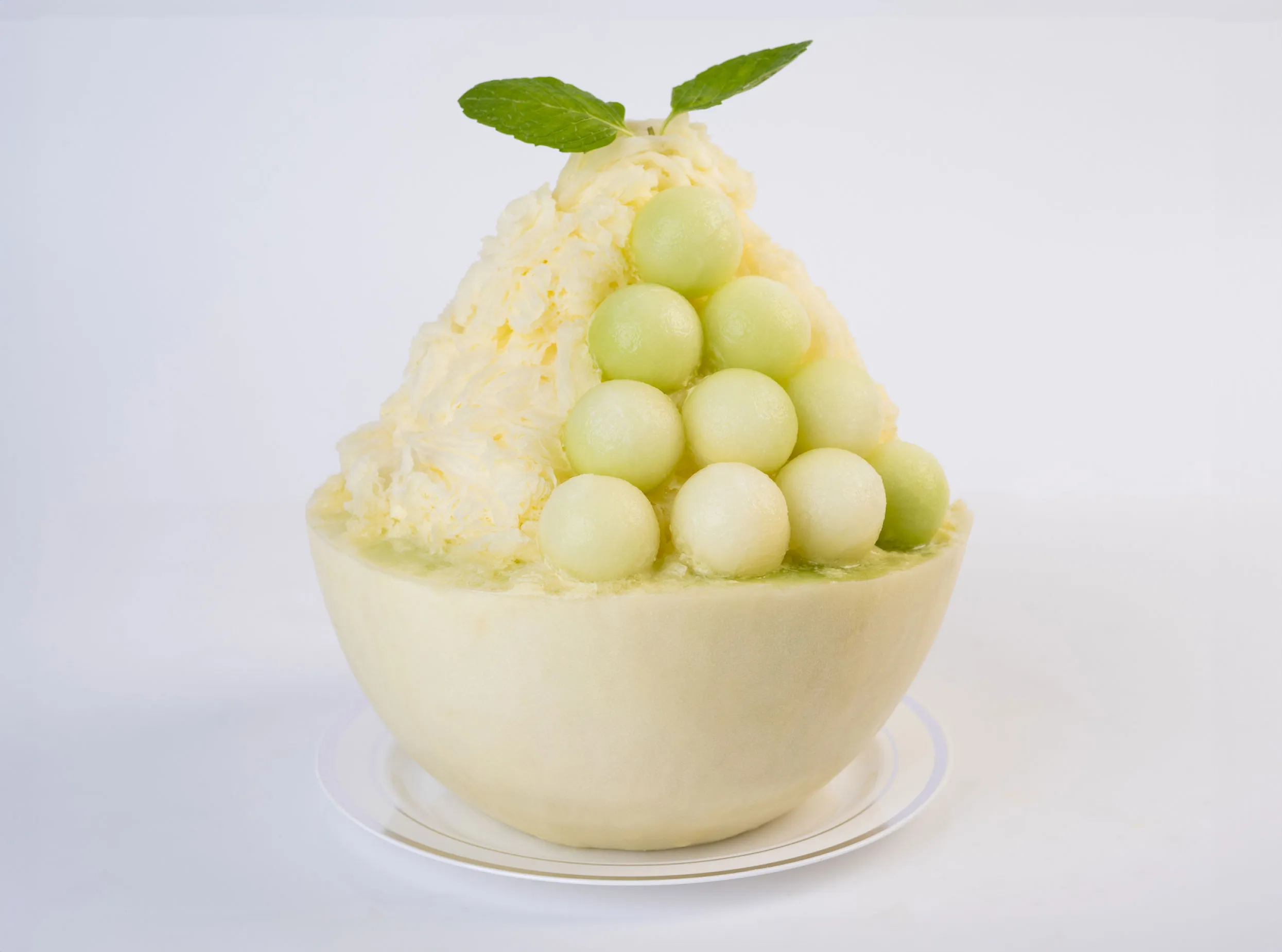
- Dessert is the main order. Coffee is present, but the item that anchors the visit is frequently something cold, sweet and built to look good on the table.
That last point is what most visitors notice first. In an American coffee shop the pastry case supports the espresso machine. In a Korean dessert cafe the relationship often runs the other way, and the dessert is the reason the group came in. The visit is an occasion rather than a transaction.
Why Do Korean Cafes Serve Dessert for Sharing?
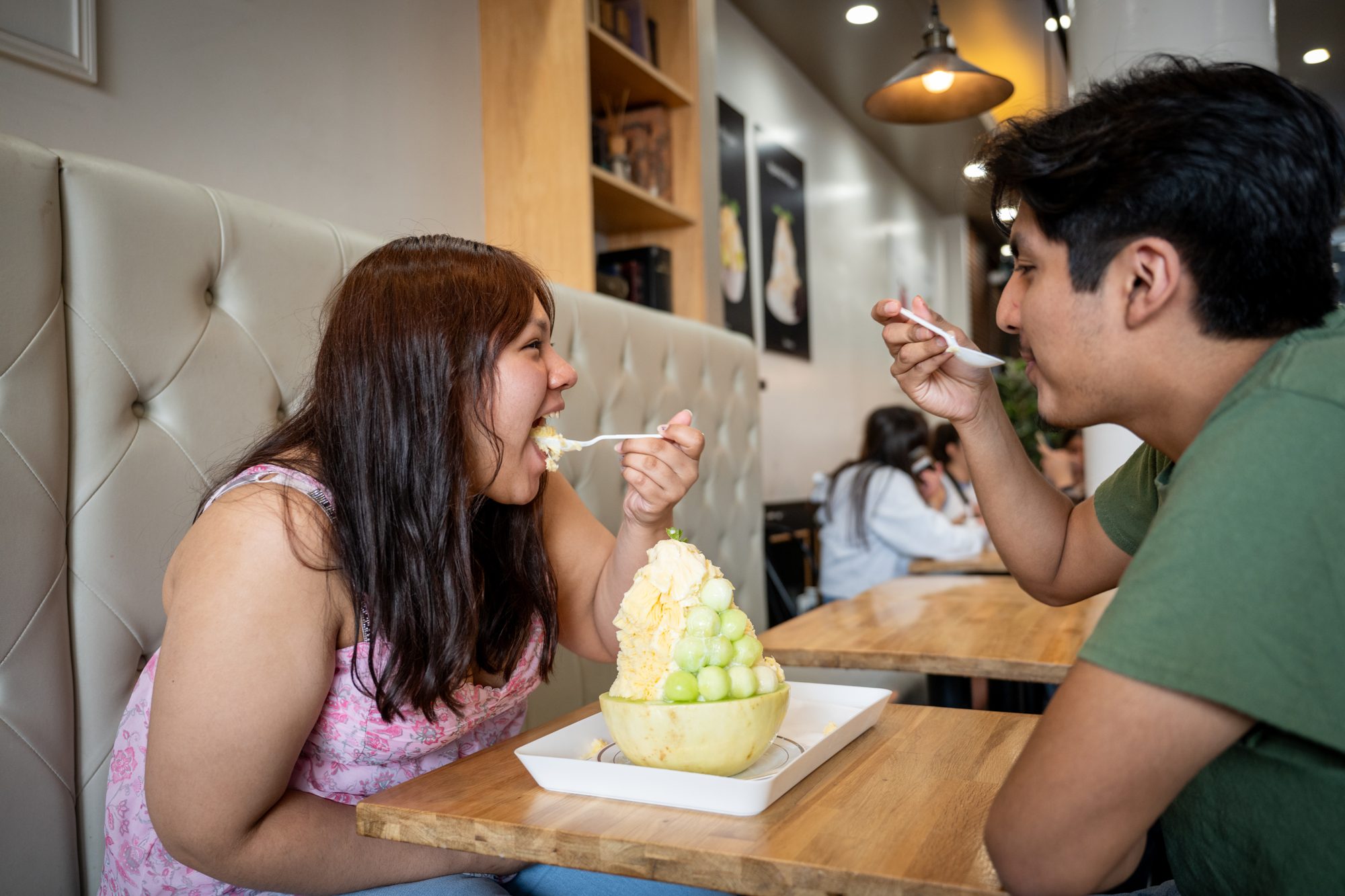
Because the format follows the group. This is the single most useful thing to understand about the category, and it is why bingsu became the signature of Korean cafes rather than a niche item on the side.
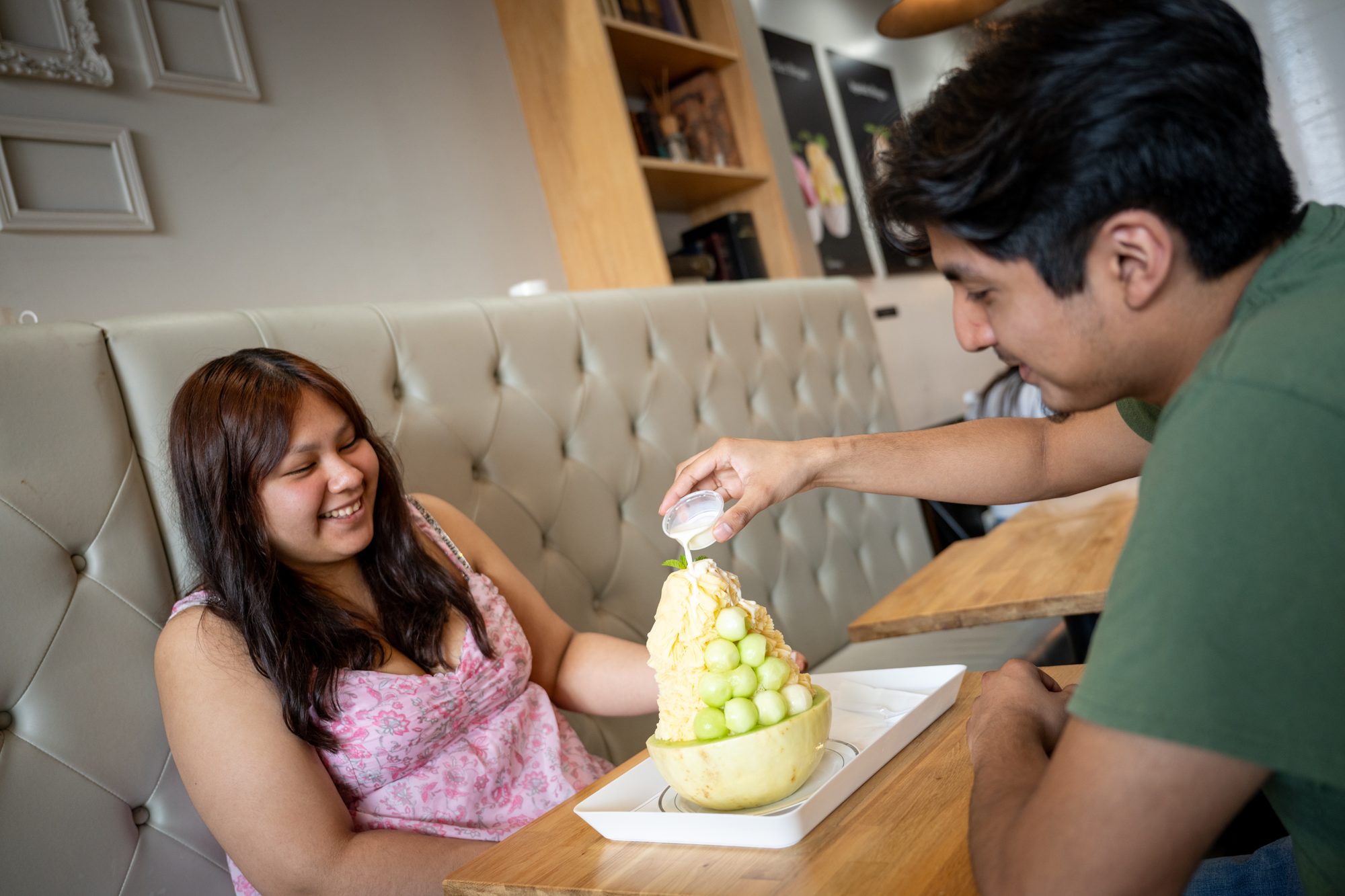
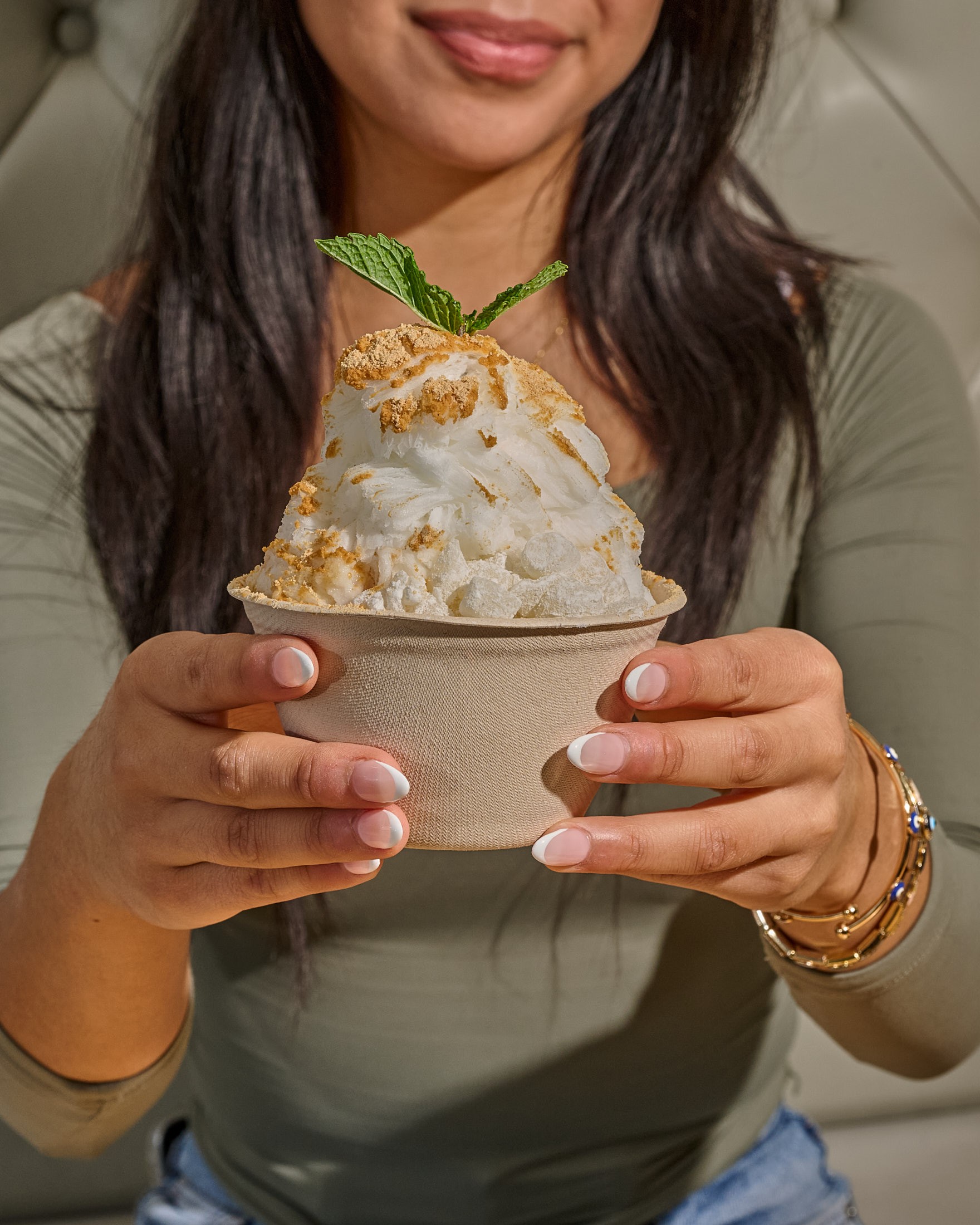
If a cafe expects two to four people to sit at a table for an hour, a single-serving dessert does not work. It is finished in five minutes, everyone eats separately, and the table has nothing in the middle of it. A large shared bowl matches the length and the shape of the visit. It arrives tall, it takes half an hour to work through, and it gives the group a common object to sit around.
The consequences are concrete rather than sentimental. Cost per person drops, because one bowl covers the table. Nobody has to commit to a whole dessert to participate. And the pace of eating slows down to the pace of talking, which is the actual point. We wrote about that mechanism in detail in why bingsu is shared, because it is a cultural habit and not just a menu item.
How Is a Korean Dessert Cafe Different from an American Coffee Shop?
Different design goals, which produce different rooms. Neither model is better; they are built for different visits, and expecting one to behave like the other is where most confusion comes from.
| Korean dessert cafe | Typical American coffee shop | |
|---|---|---|
| Center of the room | The table | The counter |
| Peak hours | Evening, after dinner | Morning commute |
| Main order | Dessert, often shared | Coffee, single serving |
| Expected stay | One to three hours | Ten minutes to an hour |
| Group size | Two to four | One to two |
| Role of interior | Part of the offer | Background |
The tell is what happens when a group of four walks in. In a throughput-oriented shop, four people ordering four drinks is a small logistical problem to be cleared quickly. In a dessert cafe, four people at one table with one bowl is the design case the room was built for.
Does Korean Cafe Culture Translate to Los Angeles?
It already has, and Koreatown is where it is most visible. The neighborhood holds a dense run of Korean cafes, bakeries and dessert shops in a walkable area, and the evening rhythm is the same one the format assumes: the rooms fill up after restaurants thin out, and tables turn slowly because nobody is trying to turn them.
Two adjustments show up in the American version. The first is scale, since LA is a driving city and cafes sit in strip malls and mixed-use blocks rather than on dense pedestrian streets. The second is menu, because a cafe here serves a mixed audience and tends to keep both the Korean items and familiar formats on the board.
Oakobing sits inside that translation deliberately. The brand describes itself as a modern adaptation of Korean shaved ice for the American market rather than a recreation of a Korean shop, and the choices follow from that: flavor infused into the ice block itself at the company's own production facility, the condensed milk drizzle served on the side so the table controls sweetness, and Large bowls portioned for two to four people. The rooms in Koreatown Los Angeles and Old Pasadena are set up for groups to sit, which is the part of the culture that matters most.
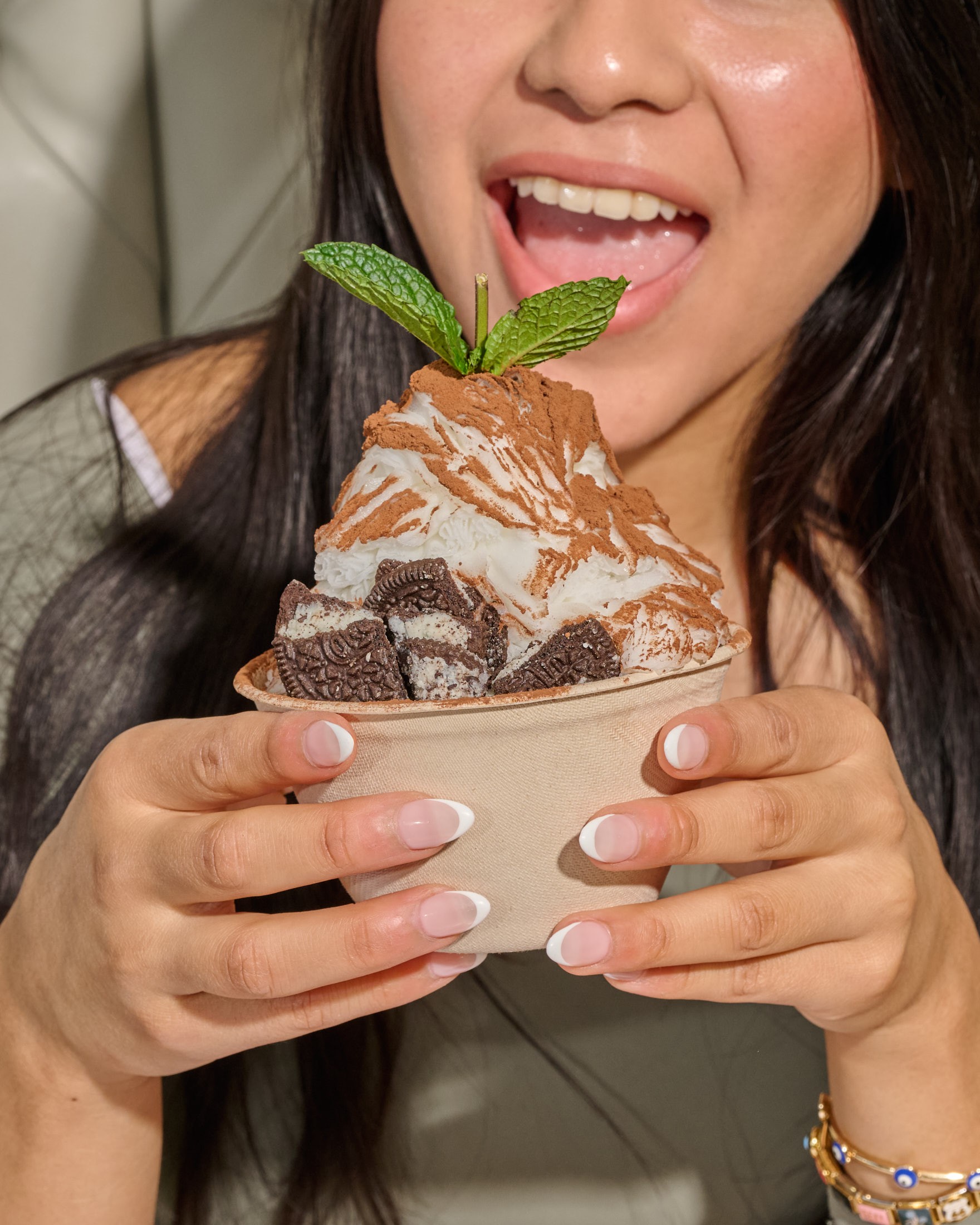
If you want to see the rest of the Korean dessert landscape in the city, K-dessert in Los Angeles maps the wider category. If you are going for the first time and want to know how the shared bowl actually works at the table, how to eat bingsu covers the mechanics. Current bowls and drinks are on the menu, and addresses and hours for both stores are on the locations page - worth checking before you go, since dessert rooms keep later hours than restaurants do.
Frequently Asked Questions
What is Korean cafe culture?
It is the practice of treating a cafe as a place to stay rather than a counter to pass through. In Korea, cafes are widely used as a setting for long conversations, studying, meeting friends after dinner and simply sitting somewhere pleasant, and the rooms are designed for that: real seating, considered interiors, longer evening hours and menus built around desserts meant to be lingered over. The visit is the point, and the order is simply the reason to be there.
Why do Korean cafes serve dessert meant for sharing?
Because the visit is usually a group activity. If a cafe expects two to four people to sit for an hour, a single-serving dessert is the wrong format, since it finishes in minutes and gives the table nothing in common. A large shared bowl matches the visit. Bingsu is the clearest example: a Large bingsu at Oakobing is portioned for two to four people and comes with enough spoons for everyone at the table.
How is a Korean dessert cafe different from an American coffee shop?
Mostly in what the room is for. An American coffee shop is often built around throughput, with the counter as the center and seating as an afterthought, and the busiest hours are in the morning. A Korean dessert cafe is built around the table, the busiest hours are in the evening, and dessert is the main order rather than an add-on to coffee. Neither is better, they are designed for different visits.
Why are Korean cafes open late?
Because the demand is after dinner. When a cafe functions as a place to meet friends rather than a morning caffeine stop, the natural peak moves to the evening, and Korean dessert cafes are commonly busiest well after restaurants have thinned out. That timing is part of why dessert cafes appear in nightlife districts, including Koreatown in Los Angeles, rather than in office corridors.
Where can you experience Korean cafe culture in Los Angeles?
Koreatown is the densest concentration, with a long run of Korean cafes, bakeries and dessert shops in a small area, and it is the easiest place to see the format in practice. Pasadena has a smaller but similar scene with an easier walk. Oakobing runs stores in both, serving bingsu, Korean dessert drinks and fruit toppings in rooms set up for groups to sit rather than for orders to be carried out.
You might also like...
Stories about Korean desserts, bingsu culture, and more.