Why Is Bingsu Shared? Korea's Group Dessert Culture (2026)
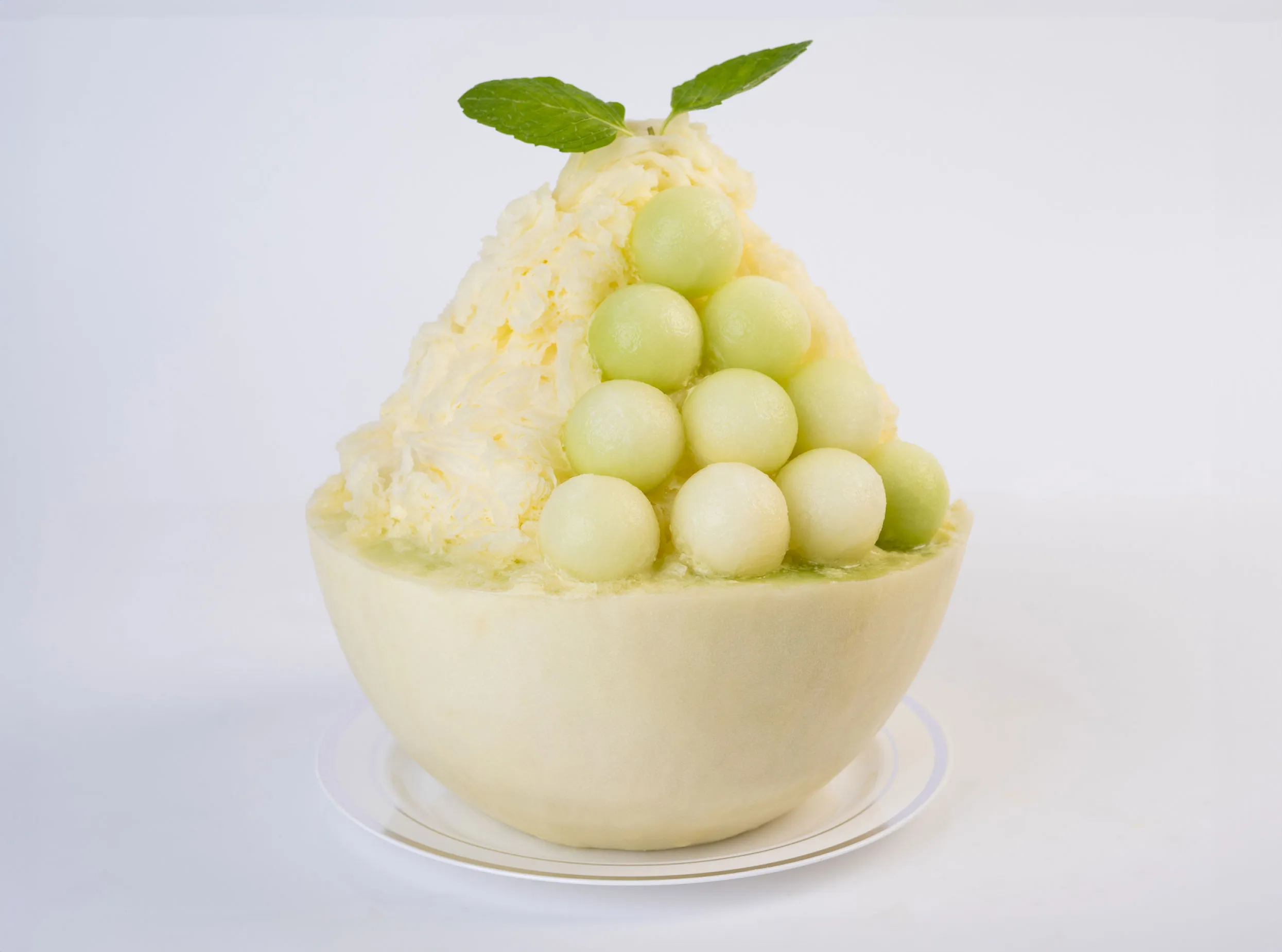
Bingsu for sharing is not a serving suggestion in 2026 - it is the design. Korean shaved ice arrives as one tall bowl with several spoons because the dessert was built around a table rather than a person, and at Oakobing a Large is portioned for two to four people. The bowl format, the melt rate, and Korean cafe culture all point the same direction, and once you understand why, you stop mis-ordering. Here is where the habit comes from, what it does for the table, and how to size an order without guessing.
Why Is Bingsu Served in One Big Bowl?
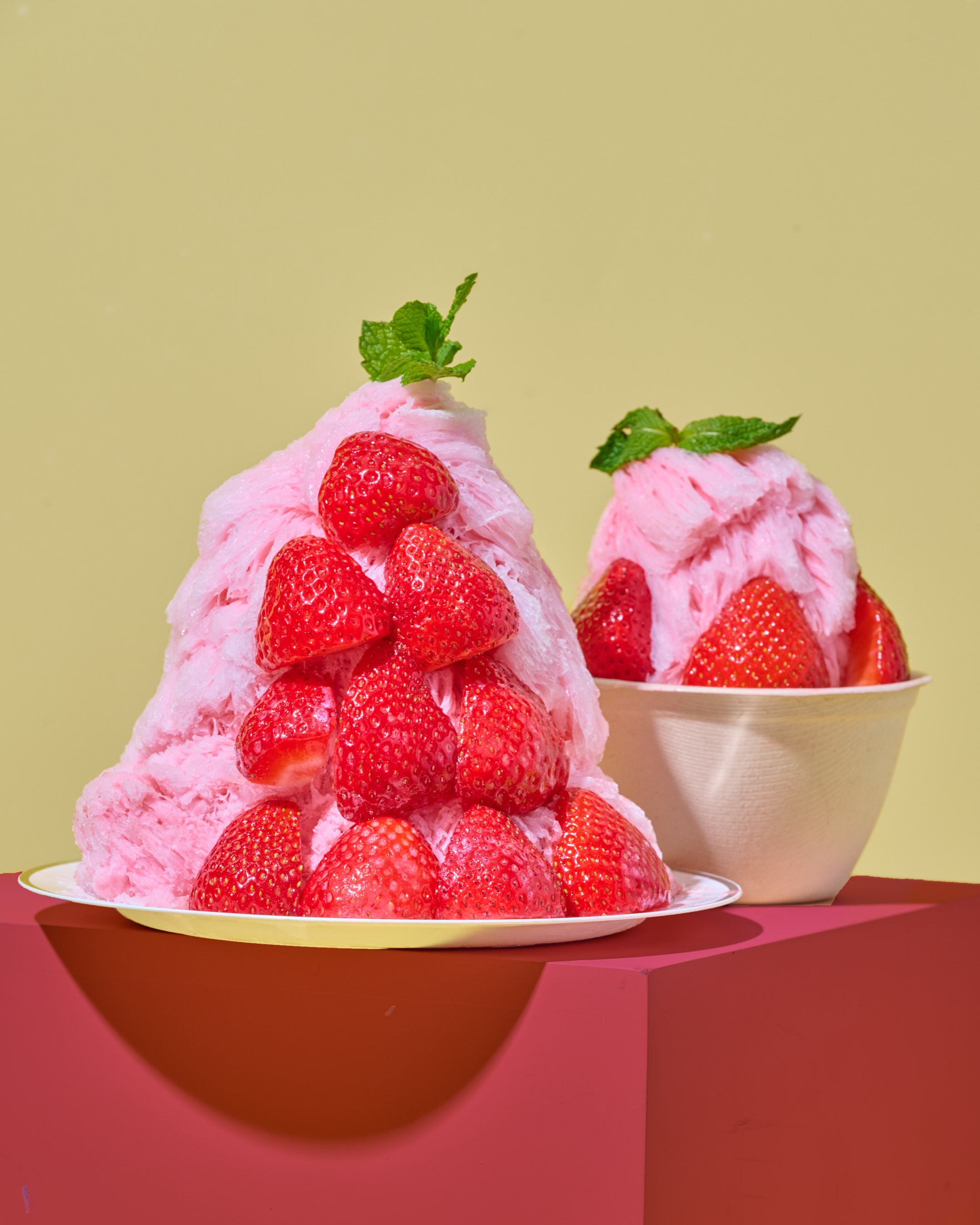
Because Korean cafe culture treats dessert as a place to sit, not a course to finish. A cafe visit in Korea is an hour or two of conversation with something cold in the middle of the table, and the object in the middle needs to survive being talked over. One large bowl does that. Four small cups create four separate desserts, each one melting on its own private schedule, and the conversation ends when the cups do.
There is a structural reason too. Bingsu is mostly air and ice, so it builds upward - and a tall bowl holds its shape far better than a shallow one, because the mass at the center stays cold while the edges give. Split the same volume into four cups and you quadruple the surface area exposed to a warm room. The shared bowl is not just cultural. It is the physically better container.
The economics are the third leg. A group-size bowl divided four ways costs each person less than a solo dessert would, which is exactly what lets a table of four also order four drinks and stay for an hour. The table is the unit, not the person.
How Many People Does a Large Bingsu Actually Feed?
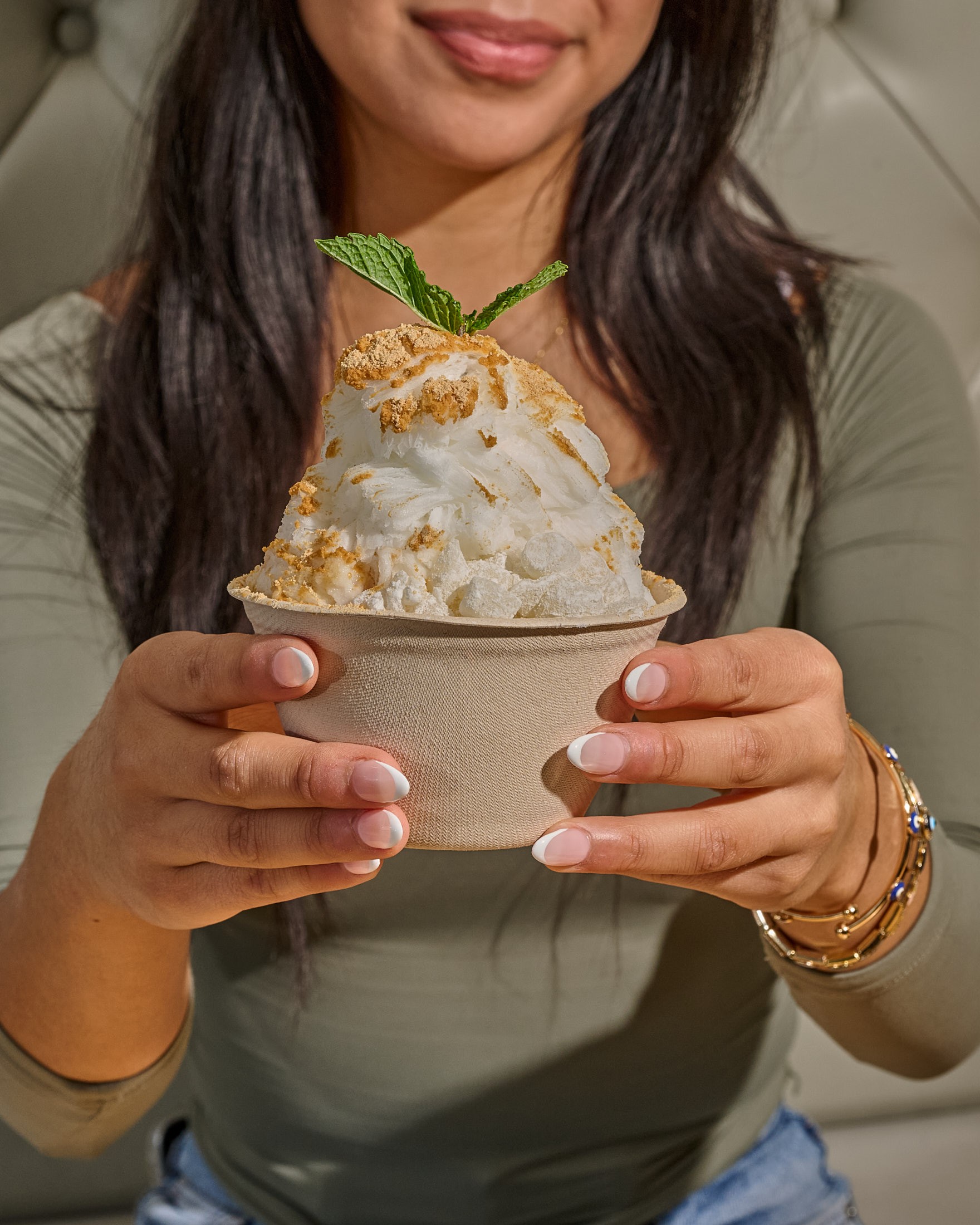
Two to four, and the honest answer depends on what else you have eaten.
- Two people - finish it comfortably and feel satisfied. This is the most common order.
- Three people - the sweet spot. Everyone gets a proper amount and nobody is scraping.
- Four people - works well after a full meal, or when everyone also has a drink. Works less well as a standalone dessert for four hungry people.
- One person - order a smaller size instead. A Large alone means racing a melting bowl and losing.
Oakobing also serves smaller single-size bowls in the most popular flavors, so sharing is the default rather than a requirement. The useful rule for a pair: if you both want the same flavor, get one Large. If you want two different flavors, get two smaller bowls - you end up with both at full quality instead of one flavor and a compromise. The Oakobing menu shows which flavors come in which sizes.
What Does Sharing Change About How You Order?
It turns the order into a table decision rather than five individual ones, and that changes the strategy. The goal stops being your favorite flavor and starts being coverage: one bowl that most people at the table will actually eat.
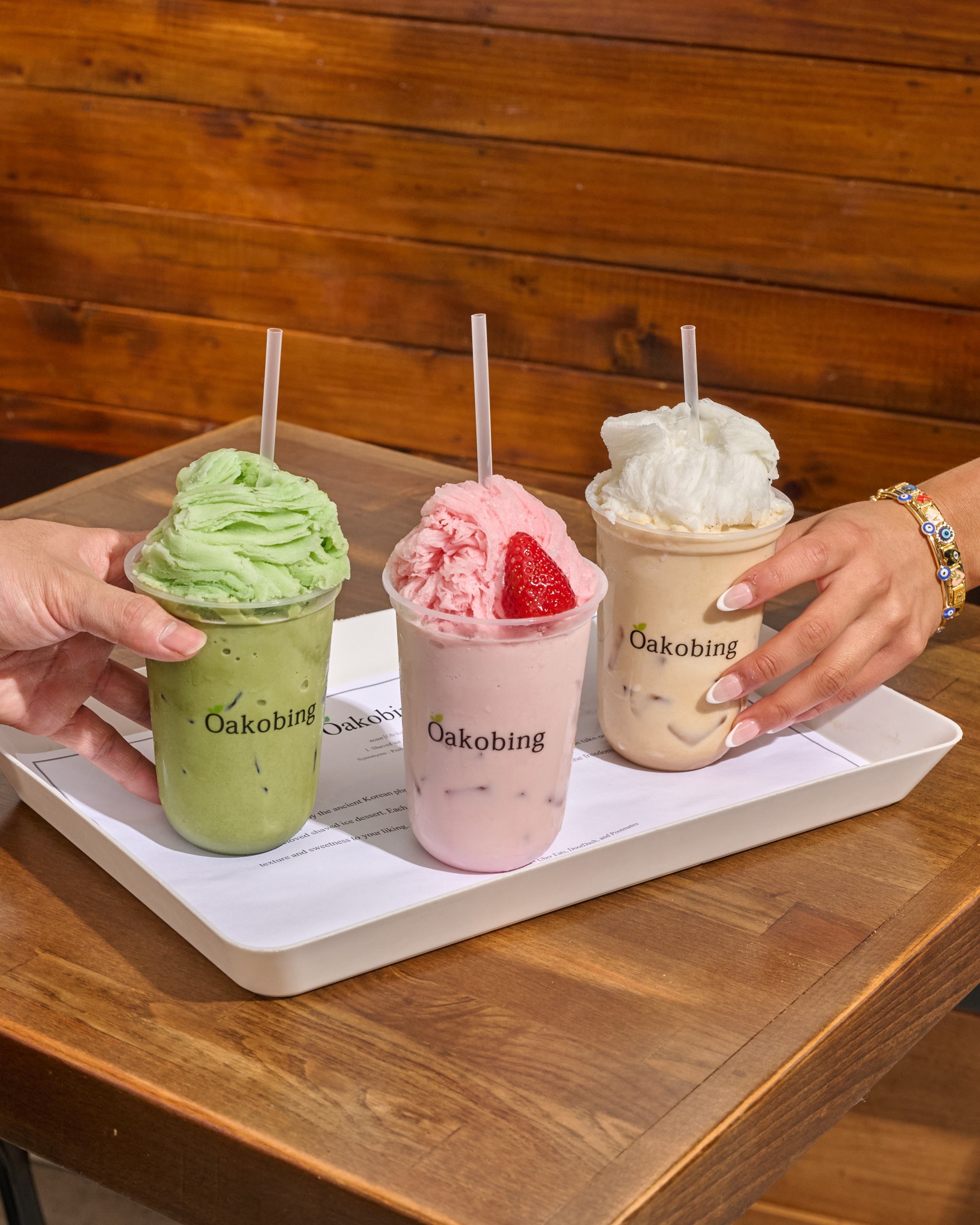
That is why a mixed pair of bowls beats one big safe choice for a group of four or more. In practice:
- Fruit plus non-fruit.Strawberry bingsu is tart and light; injeolmi bingsu is nutty and barely sweet. Between them you have covered almost anyone.
- Sweet plus bitter. A cookie-and-coffee bowl balances a fruit bowl, and gives the person who says they do not eat dessert somewhere to go.
- One bowl, one drink each. The drink is what makes an hour at the table possible, and it is where a shared dessert becomes an actual sit-down.
The other thing sharing changes is toppings. When one bowl serves four palates, restraint wins - which is why the milk drizzle at Oakobing arrives on the side rather than pre-poured. Everyone adjusts their own corner instead of the loudest person at the table deciding for the group. Our bingsu toppings guide covers what actually goes on a bowl and what each addition does.
Does the Shared Format Explain Why Bingsu Photographs So Well?
Largely, yes. A dessert built to be set down in the middle of a table and admired for a moment before anyone touches it is, by construction, a photogenic object - tall, layered, symmetrical, and stable for a few minutes. Single-serving desserts are eaten immediately because there is no reason to wait. A shared bowl has a built-in pause while spoons get distributed, and that pause is when the photograph happens.
That is a real part of why Korean shaved ice travels on social media the way it does, which our guide to viral bingsu gets into. But the pause is not free. Bingsu is at its best in the first ten minutes, and a bowl that has been arranged and re-shot for five of them is a worse dessert than one that was eaten. Take the photo, then eat.
Where Can You Try a Shared Bowl in Los Angeles?
Oakobing serves group-size bowls at both stores, in Koreatown Los Angeles and Old Pasadena, with the full flavor lineup at each - dine-in, pickup, or delivery through Uber Eats and DoorDash. Dine-in is the format the dessert was designed for; addresses and hours for both stores are on the locations page.
Oakobing builds each bowl to order, and the size range exists specifically so that a table of two and a table of five can both order correctly. The Large is not an upsell. It is the original shape of the dessert, and the reason Korean shaved ice ends up being something you remember eating with people rather than something you ate.
If watching a busy store on a Saturday evening makes you think about running one, Oakobing is currently franchising in California - the franchise page covers what that involves.
Frequently Asked Questions
Why is bingsu shared instead of served in individual portions?
Because the dessert was designed around a table rather than a person. Bingsu arrives as one tall bowl with several spoons, and the format does three things at once: it fits Korean cafe culture, where dessert is a reason to sit and talk for an hour; it keeps the cost per person low enough that a group of four can all order a drink as well; and it holds its shape long enough to be photographed before anyone eats. A single-serving cup does none of those things.
How many people does a Large bingsu feed?
A Large at Oakobing is portioned for two to four people. Two people will finish it comfortably and feel it. Three is the sweet spot. Four works when everyone has also ordered a drink or is eating after a full meal. Anyone ordering a Large alone should expect to leave half of it, because shaved ice cannot be saved for later.
Can you get bingsu in a single serving?
Yes. Oakobing offers smaller single-size bowls in the most popular flavors for one person, so sharing is the default rather than the only option. The practical rule is that two people wanting two different flavors are better served by two small bowls than by one Large, because you get both flavors at full quality instead of one flavor and a compromise.
Is it rude to eat bingsu without sharing it?
Not at all. Sharing is the format the dessert was built around, not an etiquette rule you can break. Plenty of people eat a single-size bowl alone with a coffee, and that is an ordinary order. The only real mistake is ordering a group-size bowl for one person and then racing the melt, which is a portioning error rather than a social one.
How do you keep a shared bingsu bowl from melting before everyone finishes?
Eat from the top down in sections rather than stirring the whole bowl at the start, and add the milk drizzle in stages instead of pouring it all on at once. Stirring accelerates the melt by breaking the ice structure that keeps the bowl standing, and a fully drizzled bowl collapses faster than a dry one. A shared bowl is at its best in the first ten minutes, which is the real reason bingsu is a dine-in dessert.
You might also like...
Stories about Korean desserts, bingsu culture, and more.