Bingsu Toppings: What Goes on Korean Shaved Ice (2026)
Bingsu toppings fall into five working groups: sweetened red bean, chewy rice cake, fresh fruit, roasted soybean powder, and the milk drizzle - plus modern extras like cookie crumble, ice cream, and nuts. Each one does a specific job, and in 2026 the difference between a good bowl and a forgettable one is usually whether those jobs are balanced rather than piled. Here is what each topping actually contributes, which ones belong together, and how to build a bowl you will finish. The full lineup is on the Oakobing menu.
What Are the Main Bingsu Toppings?
Five categories cover almost every bowl you will see:
| Topping | What it adds | Sweetness |
|---|---|---|
| Sweetened red bean (pat) | Earthy depth, soft body | Moderate |
| Rice cake (injeolmi, tteok) | Chew, contrast against soft ice | Very low |
| Fresh fruit | Brightness, acidity, color | Natural, light |
| Roasted soybean powder | Nutty, toasty, faintly savory | Almost none |
| Milk or condensed milk drizzle | Richness, binds the layers | High, adjustable |
Everything else - cookie crumble, cereal, ice cream, sliced almonds, syrup - is a modern extra layered on top of that base. Those extras are where cafes differentiate, but they are not what makes a bowl bingsu.
Why Is Red Bean the Original Topping?
Because bingsu started there. The original bowl is patbingsu, literally red bean shaved ice, and for most of its history that was the whole dessert: ice, sweetened red bean, and not much else. Everything on menus today is a variation on that starting point, which is why the red bean bowl is still the reference version. Our guide to patbingsu vs bingsu traces how the category split from there.
Red bean is worth understanding on its own terms. It is not jam-sweet and not chocolatey - it is earthy and mellow, with a soft, slightly grainy body that gives the bowl weight. Against fine ice, that weight matters: it keeps the dessert from being all air. First-timers often expect something sugary and get something closer to a mild bean puree, which is exactly what it is supposed to be.
What Does Rice Cake Do to a Bowl?
It supplies chew, which shaved ice cannot supply on its own. Rice cake - injeolmi when it is the pounded, soybean-dusted kind - is soft but springy, and it needs a moment of actual chewing. Fine ice collapses instantly on the tongue, so a bowl made only of ice and syrup has one texture and gets boring by the halfway point. Rice cake fixes that.
It also barely registers as sweet, which makes it a safe addition to any bowl. Pair it with fruit and it stays in the background; pair it with roasted soybean powder and the two become the whole dessert, as in injeolmi bingsu, where the rice cake is the chewiest thing in the bowl.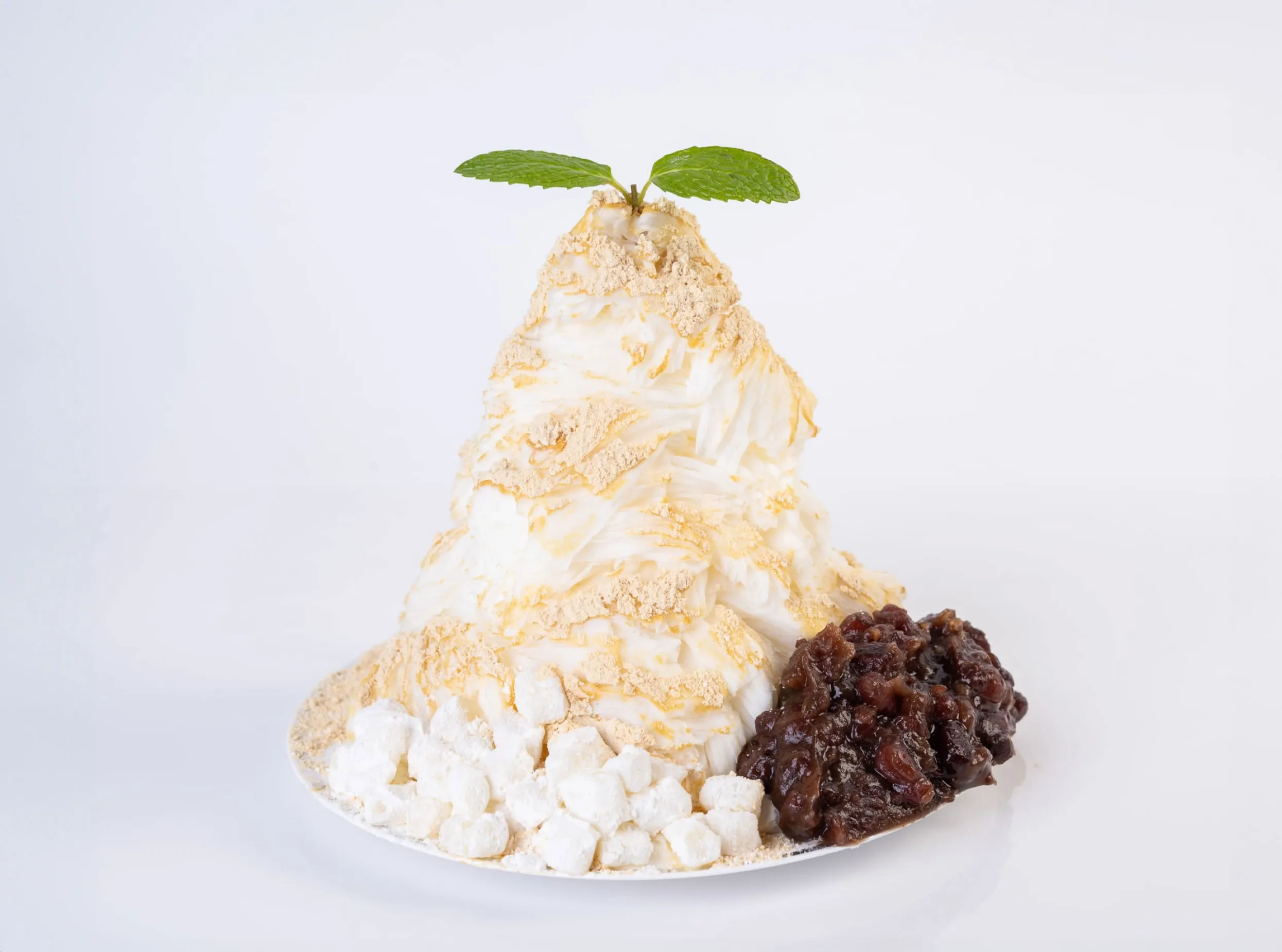
How Do Fresh Fruit Toppings Change the Dessert?
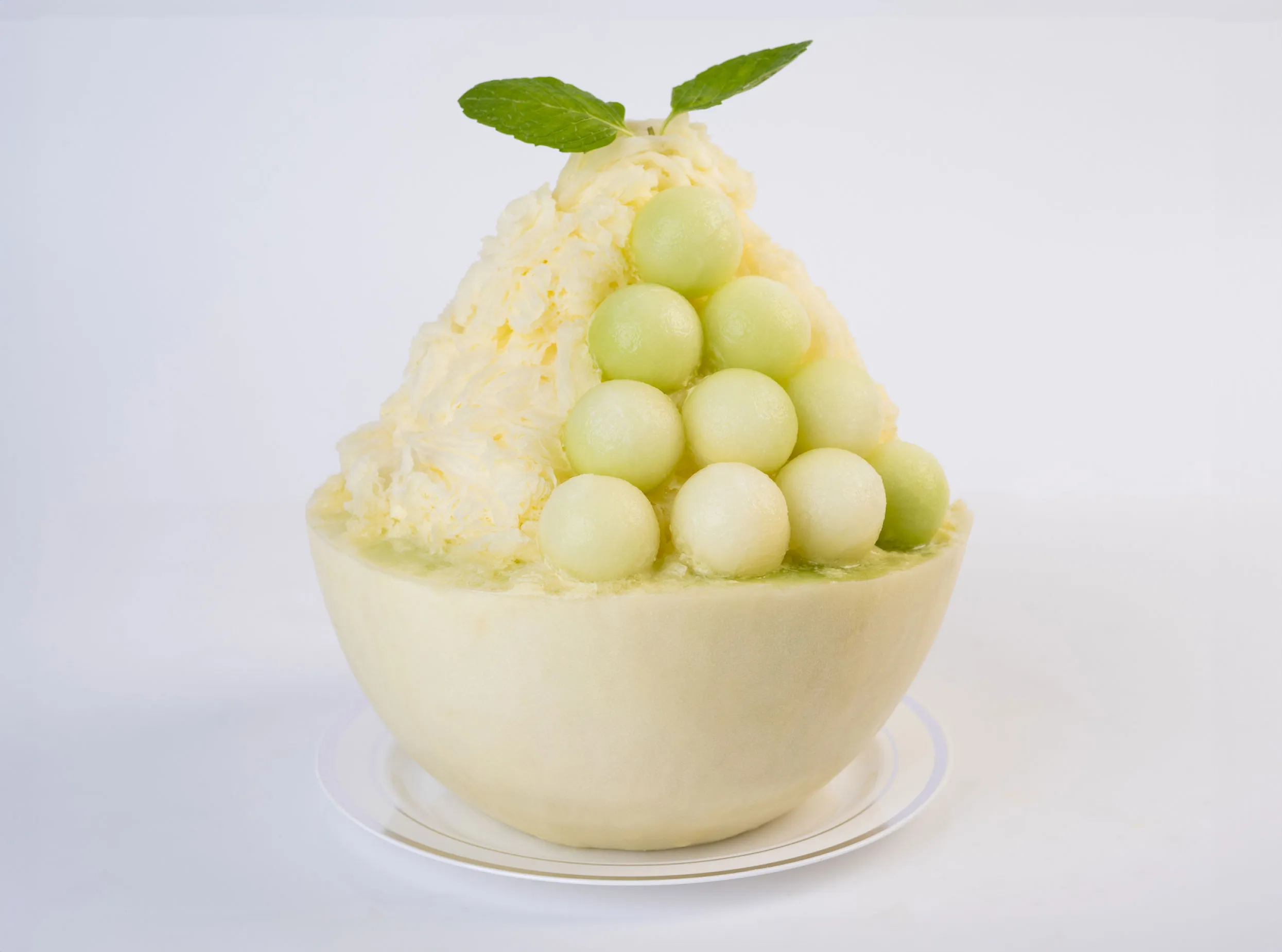
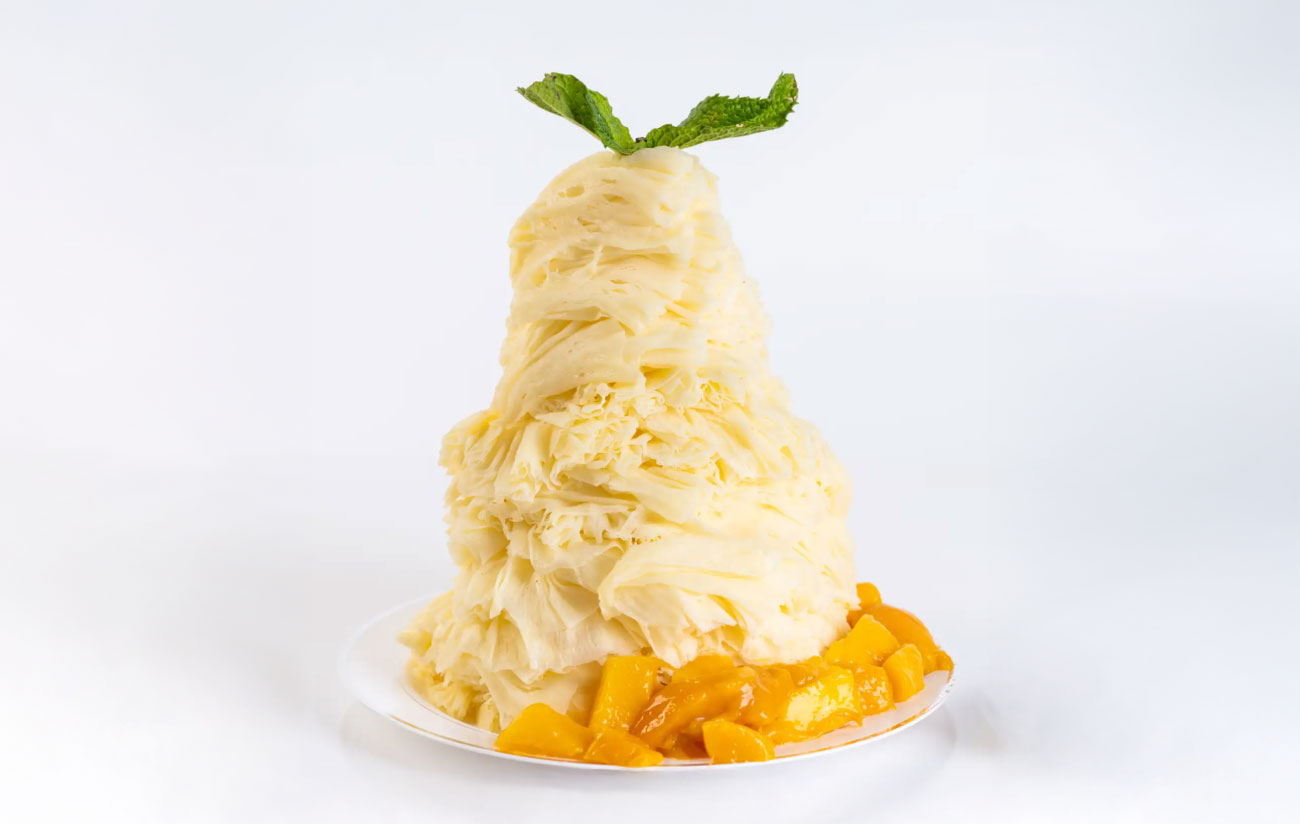
They add acidity, which is the thing sugar cannot replace. A bowl of ice and sweet toppings goes flat by the third spoonful; put tart strawberry or ripe mango on it and each bite resets. Fruit also brings water content that melts into the ice rather than sitting on top of it, so the flavor spreads instead of staying at the surface.
The catch is that fruit toppings only work if the fruit is real. Syrup labeled strawberry gives you one flat note and no acidity. Cut fruit gives you texture, variation between pieces, and a sharpness no bottle can fake.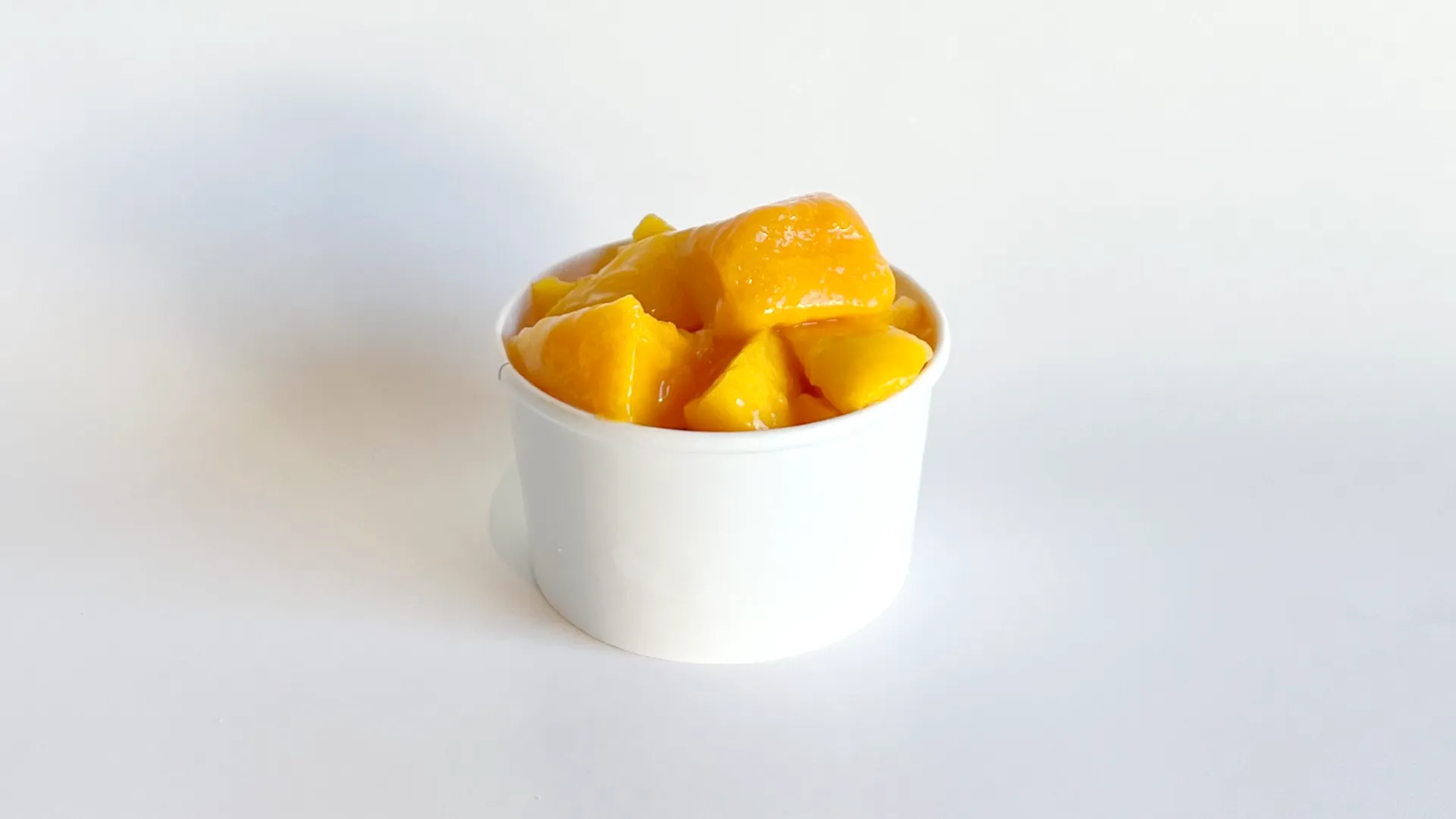
There is a related point about where the flavor lives. Most shaved ice operations shave plain ice and pour flavoring over the mound, so the top spoonfuls taste strong and the bottom tastes like water. Oakobing infuses flavor into the ice block itself, produced at its own facility, so a fruit bowl tastes like fruit all the way down and the toppings on top are additions rather than the only flavor present.
What About Cookies, Cereal, and Other Modern Toppings?
They are the dessert-cafe layer, and they earn their place through crunch. Cookie crumble, cereal, and sliced almonds all do the same structural job: introduce a dry, hard texture into a bowl that is otherwise soft and wet. That contrast is why an Oreo bowl works even though cookies have nothing to do with the dessert's origins.
Two rules keep the modern toppings from ruining a bowl:
- One crunch element, not three. Stacking cookie, cereal, and nuts turns the bowl into a texture argument nobody wins.
- Watch the sweetness budget. Cookie crumble plus a heavy drizzle plus ice cream is three sweet things competing. Pick one to lead.
On a cookie bowl in particular, ease off the drizzle - the crunch is the point.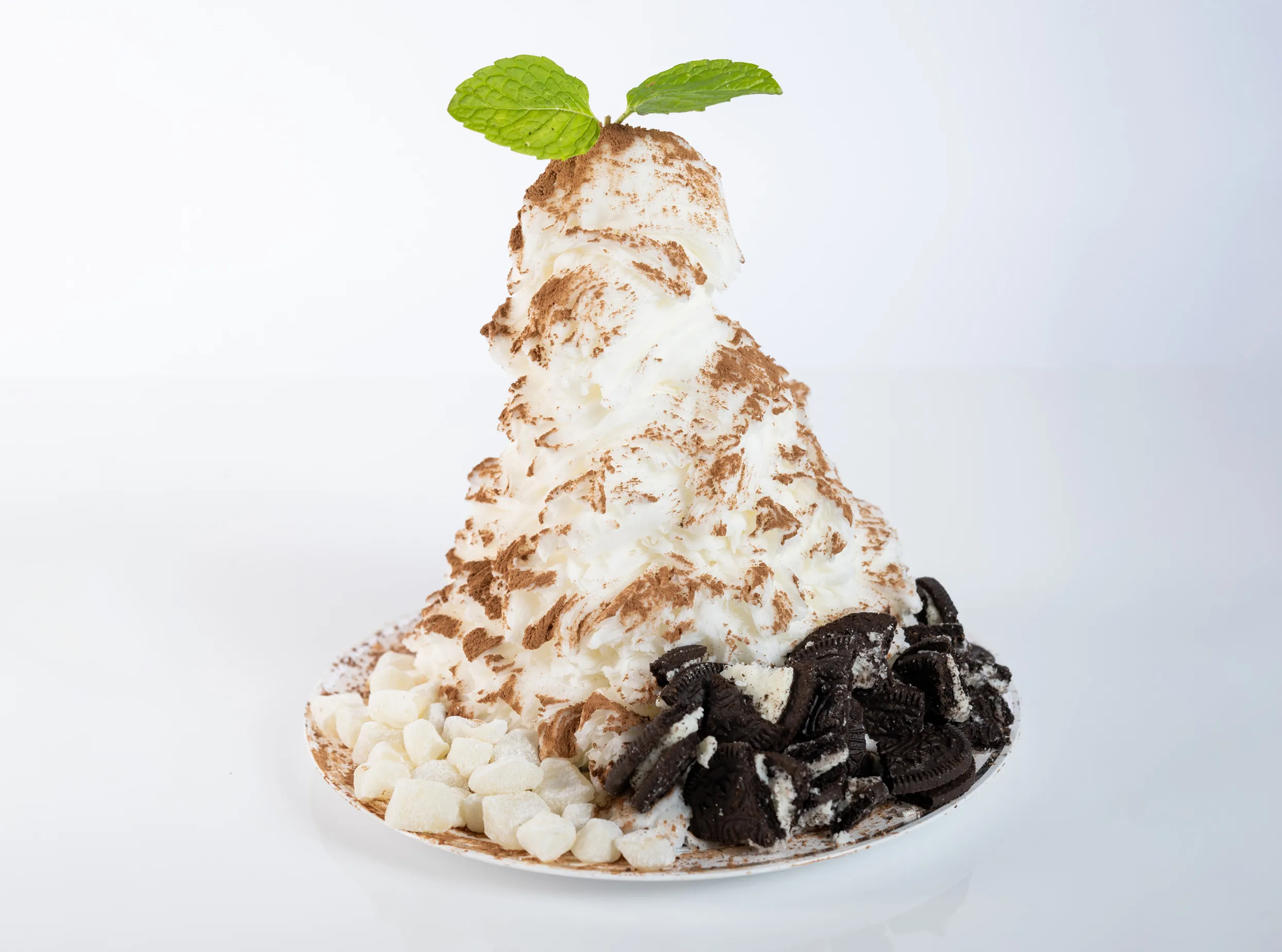
How Should You Build a Bowl?
Pick one flavor lead, one texture, one contrast, then adjust the drizzle at the table. That is the whole method:
- Lead with the ice flavor - fruit, green tea, or nutty. This is most of what you taste.
- Add one chewy element - rice cake, almost always the right call.
- Add one crunch or one soft depth - almonds and cookie for crunch, red bean for depth. Not both.
- Drizzle last, and less than you think. Oakobing serves it on the side for exactly this reason.
- Size for the group. A Large is portioned for two to four people, and shaved ice does not wait.
If you want to see the whole sequence from ice block to finished bowl, how bingsu is made covers the production side. And to try the toppings in person, both Oakobing stores build every bowl to order, in Koreatown Los Angeles and Old Pasadena - addresses and hours are on the locations page.
Building every bowl to order is what the counter does all day, and the topping lineup is one of the things a franchisee inherits rather than invents. Oakobing is currently franchising in Southern California - the franchise page covers how the menu and supply side work.
Frequently Asked Questions
What are the traditional bingsu toppings?
The original bowl, patbingsu, is topped with sweetened red bean paste, and that remains the traditional core. Chewy rice cake, roasted soybean powder, and a drizzle of condensed or sweetened milk are the other long-standing additions. Fresh fruit, cookie crumble, ice cream, and cereal are modern additions that became standard as bingsu spread beyond Korea and cafes started building bowls around a single flavor.
What is the powder on top of bingsu?
It is roasted soybean powder, called kongkaru in Korean, and it appears mainly on injeolmi bingsu. Soybeans are roasted and ground fine, which makes the powder nutty, toasty, and slightly savory - closer to unsweetened peanut powder or roasted sesame than to anything sugary. It contributes almost no sweetness, which is why an injeolmi bowl is the least sweet option in the category.
Do you have to eat the red bean on bingsu?
No, but it is worth trying at least once. Sweetened red bean paste is mild, earthy, and only moderately sweet, closer to a soft bean puree than to a jam. It is the original topping and the reason the dessert exists in its modern form. If it is not for you, fruit bowls and nutty bowls skip it entirely, so nothing about the category depends on liking red bean.
Why is the milk drizzle served on the side at Oakobing?
Because it is the main sweetness control in the bowl. When the drizzle is poured in the kitchen, the sweetness is fixed before the customer tastes anything. Serving it on the side lets each person add as much as they want, which matters most on lightly sweet bowls like injeolmi and green tea. The practical advice is to start with about half of what you think you want, taste, then add.
Which bingsu toppings work best together?
Pick one texture, one flavor, and one contrast. A fruit bowl works with fresh fruit for flavor, chewy rice cake for texture, and a light drizzle for contrast. A nutty bowl works with soybean powder for flavor, rice cake for texture, and sliced almonds for a dry snap. What does not work is stacking several strong sweet toppings at once, because the ice is delicate and heavy sweetness flattens it.
You might also like...
Stories about Korean desserts, bingsu culture, and more.