Bingsu vs Cendol: Korean vs Southeast Asian Shaved Ice (2026)
Bingsu vs cendol in 2026 comes down to what sits under the spoon: cendol is a Southeast Asian dessert of green pandan rice-flour jelly in coconut milk with palm sugar syrup over ice, while bingsu is a frozen milk block shaved into soft, snowy flakes and piled high for the table. Both are cold, both are made for hot weather, and both are easy to find across Los Angeles. The base, the sweetener and the texture are what set them apart.
What Is the Difference Between Bingsu and Cendol?
Cendol is a coconut dessert with ice; bingsu is a dessert made of ice. In cendol the ice chills the bowl, while in bingsu the ice is the dessert.
Cendol is popular across Southeast Asia, especially Malaysia, Singapore and Indonesia, where a close relative is called es dawet. Its exact origin is debated. The core is short, wobbly strands of green jelly made from rice flour and colored and scented with pandan leaf. They go into a bowl or glass with coconut milk, a pour of dark palm sugar syrup, often called gula melaka, and shaved or crushed ice. Some versions add red beans or corn.
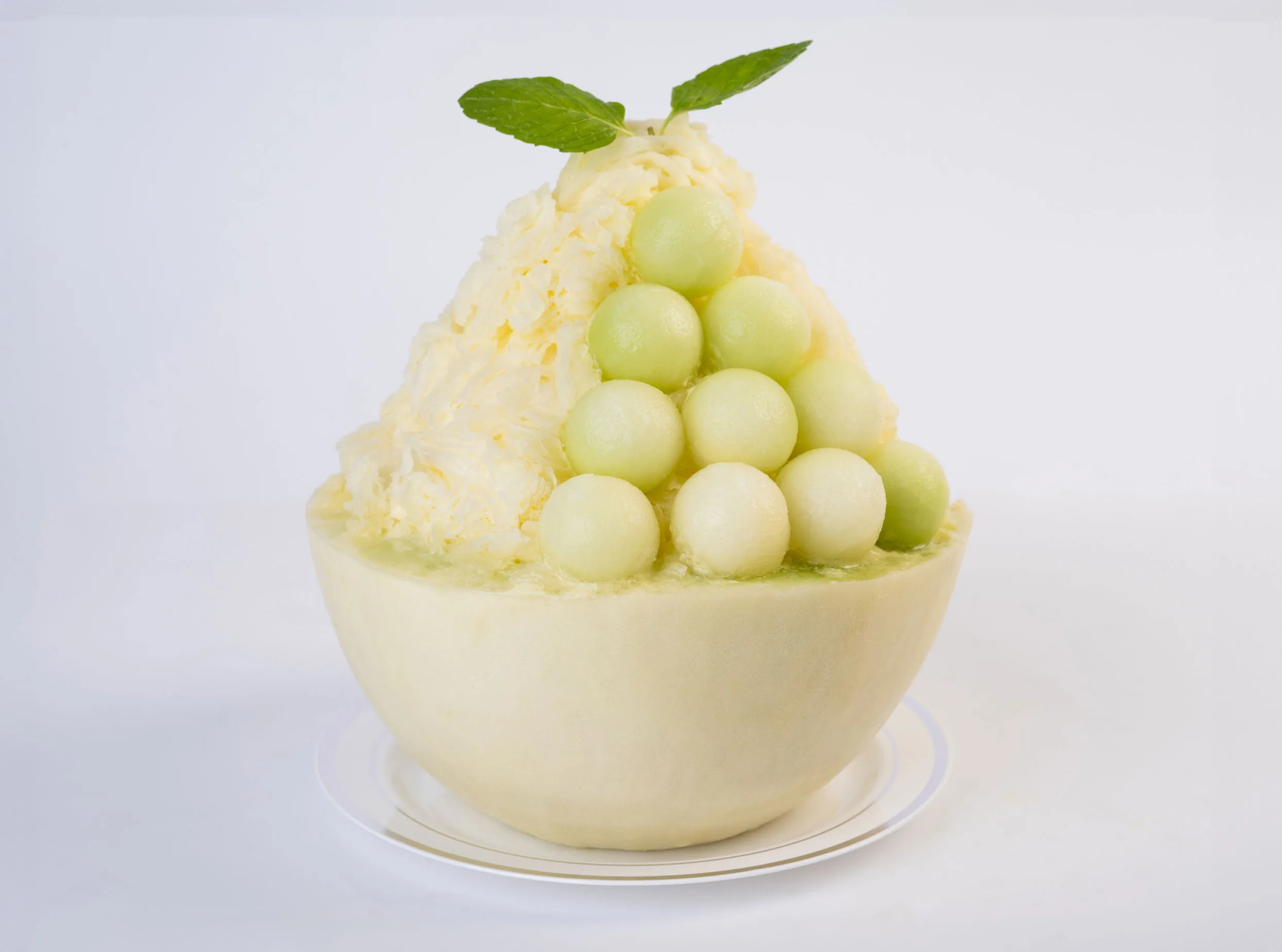
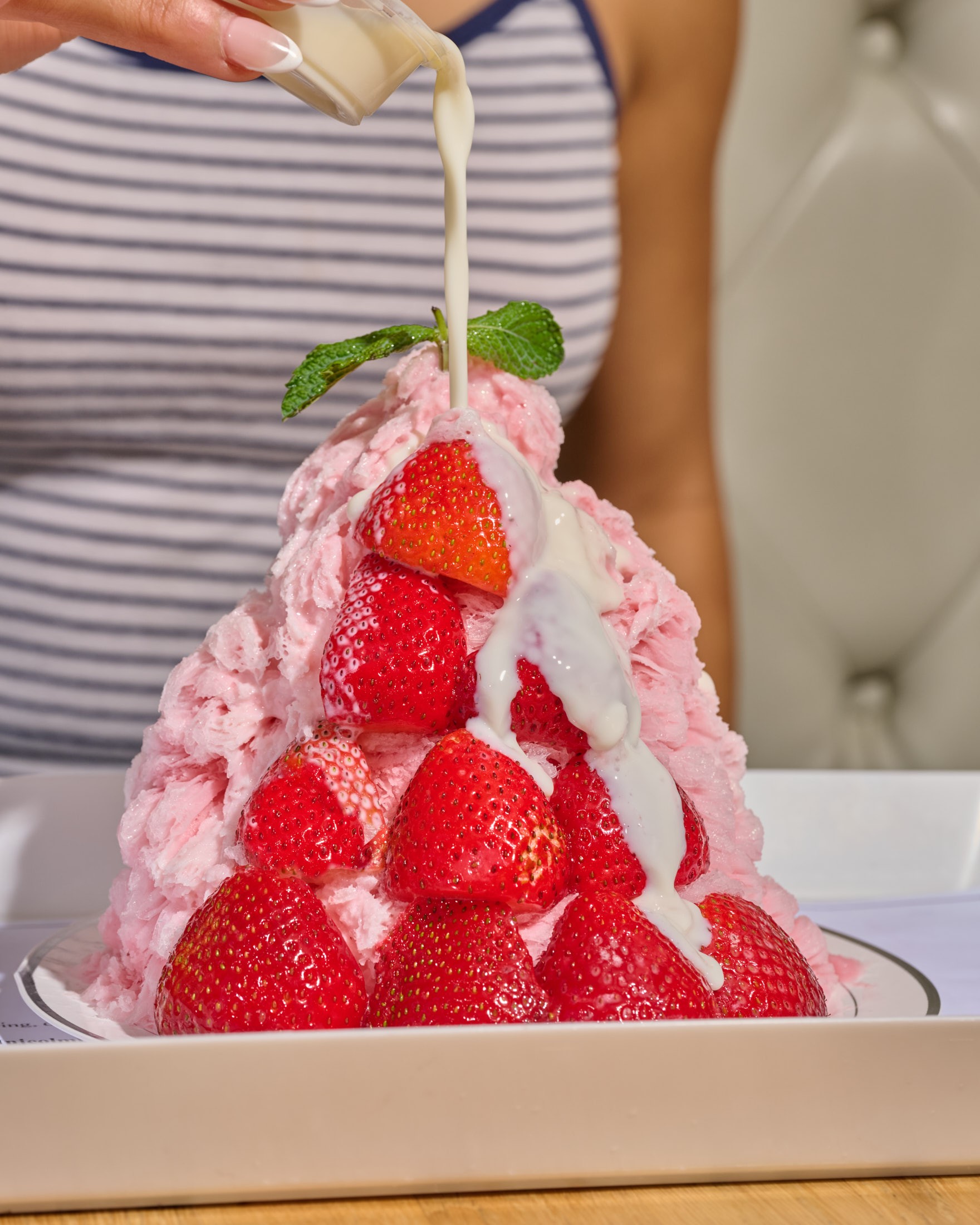
Bingsu starts from a block. In the modern Korean style that block is frozen milk, and a machine shaves it into thin, feathery ribbons. Toppings go on top, and the flakes are fine enough to melt almost on contact.
| Bingsu | Cendol | |
|---|---|---|
| Origin | Korea | Southeast Asia (Malaysia, Singapore, Indonesia) |
| Base | Shaved frozen milk (modern style) | Coconut milk over shaved or crushed ice |
| Sweetener | Condensed milk drizzle | Palm sugar syrup |
| Signature texture | Light, fine, snowy | Soft, slippery pandan jelly |
| Common add-ins | Fruit, rice cake, cookies | Red beans, corn, extra jelly |
| Portion | Large bowl for 2-4 people | Usually one bowl or glass per person |
How Does the Flavor Compare?
Cendol tastes of coconut, pandan and caramel; bingsu tastes of milk and whatever flavor is built into it. One is rich and tropical, the other is light and clean.
Palm sugar gives cendol its deep, almost smoky sweetness, and coconut milk makes every spoonful creamy. Pandan adds a soft, grassy, vanilla-like aroma to the jelly.
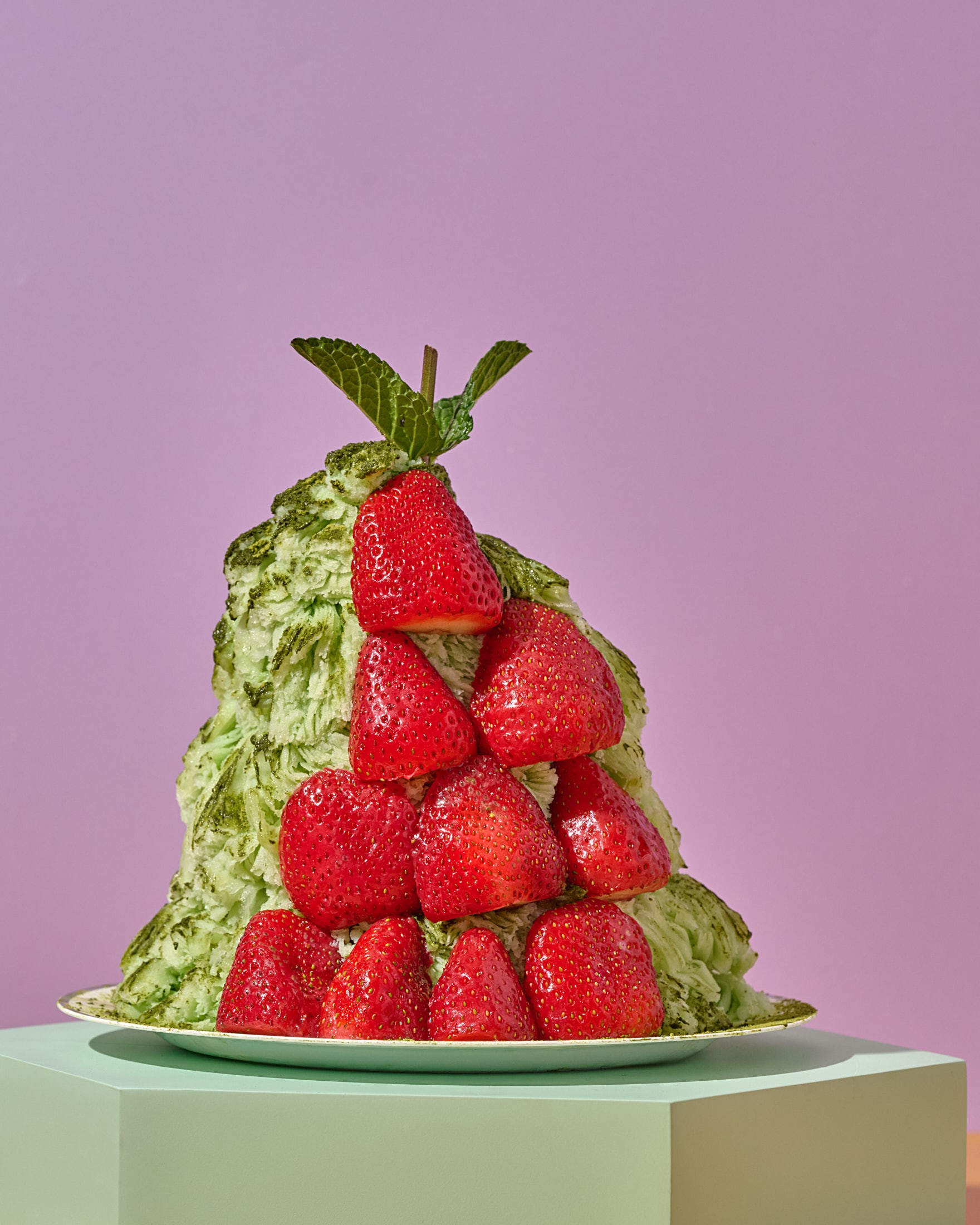
At Oakobing, the flavor goes into the ice itself. Strawberry, mango, green tea and other flavors are infused into the milk block at the company's own production facility, so the ice tastes the same from the top of the bowl to the bottom instead of only where a syrup lands. The condensed milk drizzle comes on the side, so the table decides how sweet each spoonful gets.
Which Has the Better Texture, Bingsu or Cendol?
It depends on whether you want slippery or fluffy. Cendol is about soft green jelly strands moving through cold coconut milk. Bingsu is about airy flakes that dissolve on your tongue.
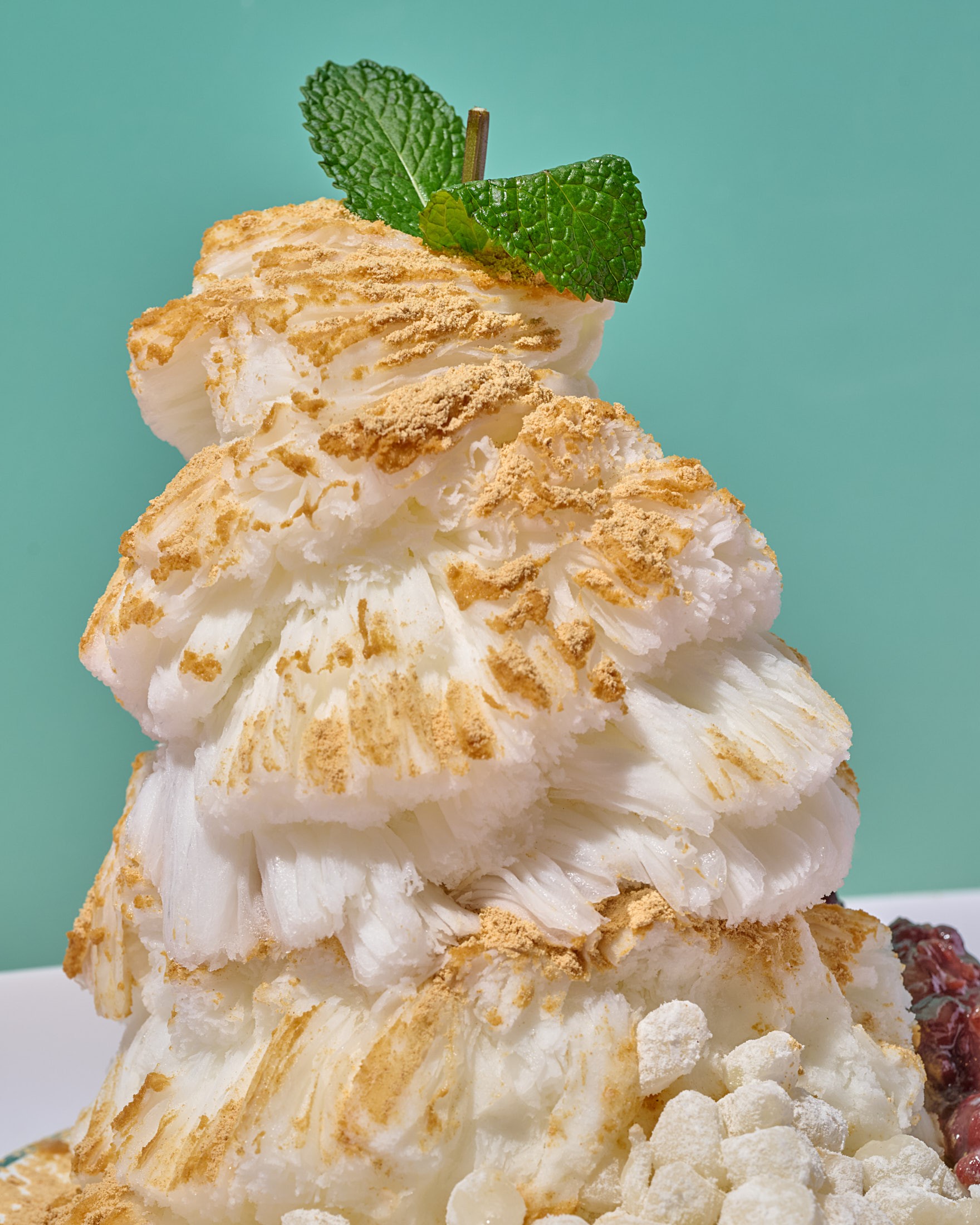
If you love cendol for the chew, look at injeolmi bingsu. It pairs shaved milk ice with roasted soybean powder and soft Korean rice cake, so you get a satisfying, chewy bite with a nutty, toasty flavor. Read what is injeolmi bingsu for the full breakdown.
If you love cendol for the red beans, the classic Korean bowl is patbingsu, topped with sweet red bean paste. Our patbingsu vs bingsu guide explains how the traditional and modern styles differ.
How Is Cendol Different from Halo-Halo and Mango Sago?
Cendol is the coconut-and-pandan member of the Asian cold dessert family. Halo-halo, from the Philippines, layers many toppings such as sweet beans, jellies, fruit and ube over shaved ice with evaporated milk. Mango sago, from Hong Kong, is a chilled mango and milk soup with sago pearls and no shaved ice at all.
Bingsu stands apart from all three because the ice itself carries the flavor. If you are working through the whole family, see bingsu vs halo-halo and bingsu vs mango sago.
How Do You Eat Bingsu and Cendol?
You stir and sip cendol on your own; you dig into bingsu together. The eating style is almost as different as the dessert.
Cendol usually arrives in a single bowl or tall glass. You stir once so the palm sugar syrup runs through the coconut milk, then eat the jelly with a spoon and finish the rest like a drink as the ice melts.
Bingsu arrives as a tall mound in one bowl for the table. Start from the top, fold toppings into the flakes as you go, and eat at a steady pace before it melts. Our how to eat bingsu guide covers the order, spoons and timing.
When Should You Order Bingsu Instead of Cendol?
Order bingsu when you want a light frozen dessert to share; order cendol when you want something rich, coconut-forward and just for you.
Pick cendol if:
- You love coconut milk and caramel-like palm sugar.
- You want a sweet, drinkable dessert in a glass.
- You enjoy slippery jelly textures.
Pick bingsu if:
- You want a lighter, milk-based frozen dessert.
- You are sharing with two to four people; a Large bowl is built for the table.
- You want to control the sweetness with the drizzle on the side.
Where Can You Try Bingsu in Los Angeles?
Oakobing does not sell cendol, but it serves Korean bingsu at two LA-area cafes, in Koreatown Los Angeles and Old Pasadena. Current flavors are on the Oakobing menu, and addresses and directions are on the locations page.
Frequently Asked Questions
What is the difference between bingsu and cendol?
Cendol is a Southeast Asian dessert of green rice-flour jelly flavored with pandan, served in coconut milk with palm sugar syrup and shaved or crushed ice. Bingsu is a Korean dessert made by shaving a frozen milk block into fine, snowy flakes and topping it with fruit, rice cake or cookies. Cendol tastes of coconut and caramel-like palm sugar; bingsu tastes of milk and its toppings.
Where does cendol come from?
Cendol is popular across Southeast Asia, especially Malaysia, Singapore and Indonesia, where a closely related drink is called es dawet. Several countries have long traditions of it, so its exact origin is debated. Recipes vary by region, but green pandan jelly, coconut milk and palm sugar syrup are the common core.
Is cendol sweeter than bingsu?
Cendol is usually sweeter and richer than plain bingsu because palm sugar syrup and coconut milk are built into every spoonful. Bingsu milk ice is only lightly sweet on its own, and at Oakobing the condensed milk drizzle is served on the side, so you decide how sweet the bowl gets.
Do bingsu and cendol both use red beans?
They can. Some cendol versions add sweet red beans, and the traditional Korean patbingsu is topped with sweetened red bean paste. Modern bingsu often swaps red bean for fruit, cookies or roasted soybean powder, so red bean is one shared option rather than a defining ingredient for either dessert.
Does Oakobing sell cendol?
No. Oakobing does not sell cendol or other Southeast Asian shaved ice desserts. Its Koreatown Los Angeles and Old Pasadena cafes serve Korean bingsu, such as strawberry, mango melon, green tea, injeolmi and Oreo tiramisu, plus Korean dessert drinks. For cendol, a Malaysian, Singaporean or Indonesian restaurant is the right stop.
You might also like...
Stories about Korean desserts, bingsu culture, and more.