Bingsu vs Mochi Ice Cream: Which Cold Dessert Should You Order? (2026)
Bingsu vs mochi ice cream in 2026 comes down to portion and structure: mochi ice cream is a bite-sized ball of ice cream wrapped in sweet rice dough that one person eats in two bites, and bingsu is a tall bowl of shaved milk ice that a table shares. Both are cold, both sit in the Asian dessert aisle of most people's mental map, and both get suggested on the same warm Los Angeles evening. They are not interchangeable orders. Here is how they differ on base, texture, portion, sweetness control and cost per person.
What Is the Actual Difference Between Bingsu and Mochi Ice Cream?
One is wrapped, the other is built. That single structural fact drives everything else.
Mochi ice cream starts with churned ice cream, rolled into a small ball and sealed inside a thin sheet of mochi, the chewy dough made from pounded glutinous rice. It is dusted with starch so the pieces do not stick, frozen solid and sold by the piece or the box. You eat it with your hands, and the whole experience lasts about thirty seconds.
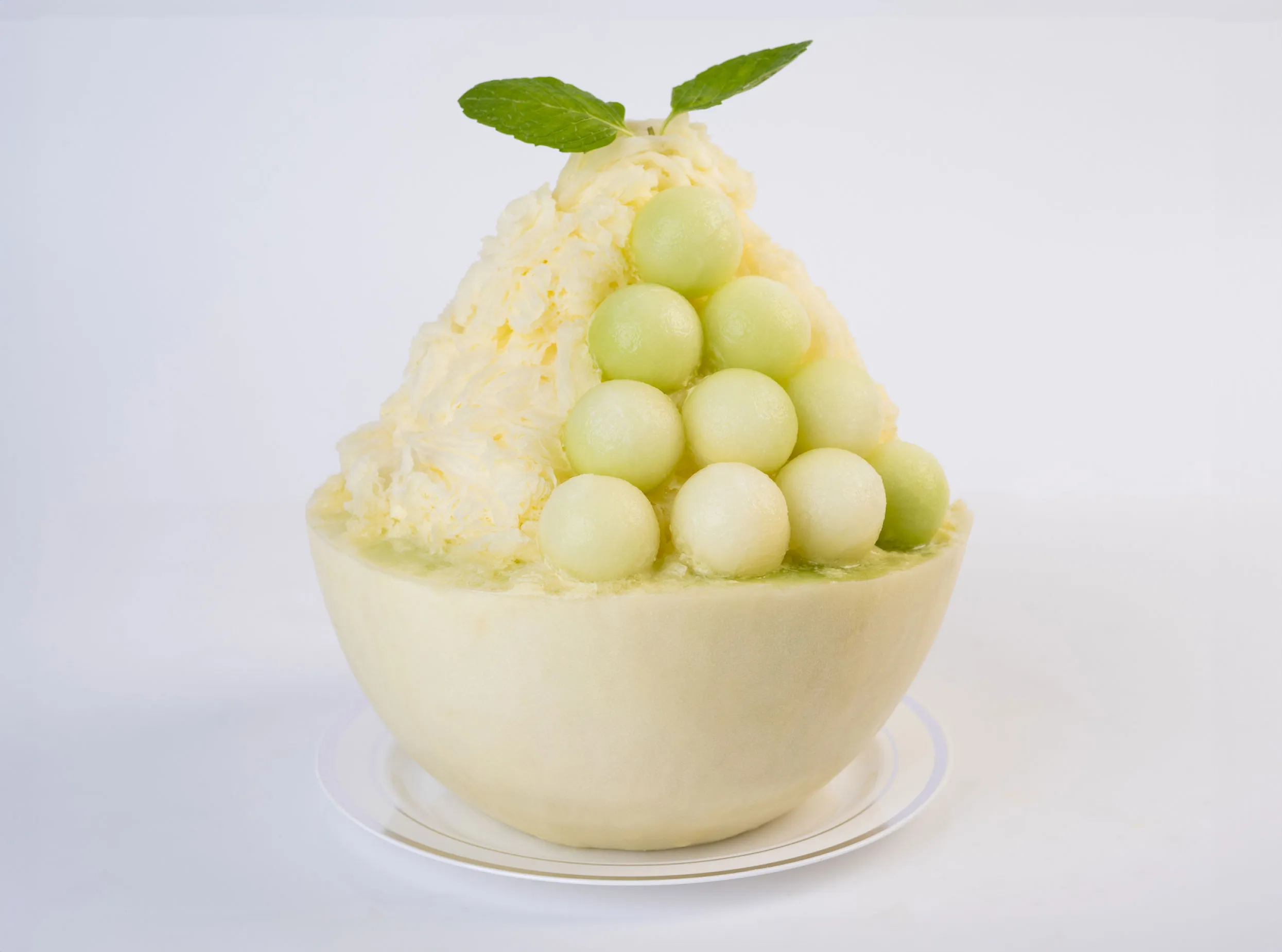
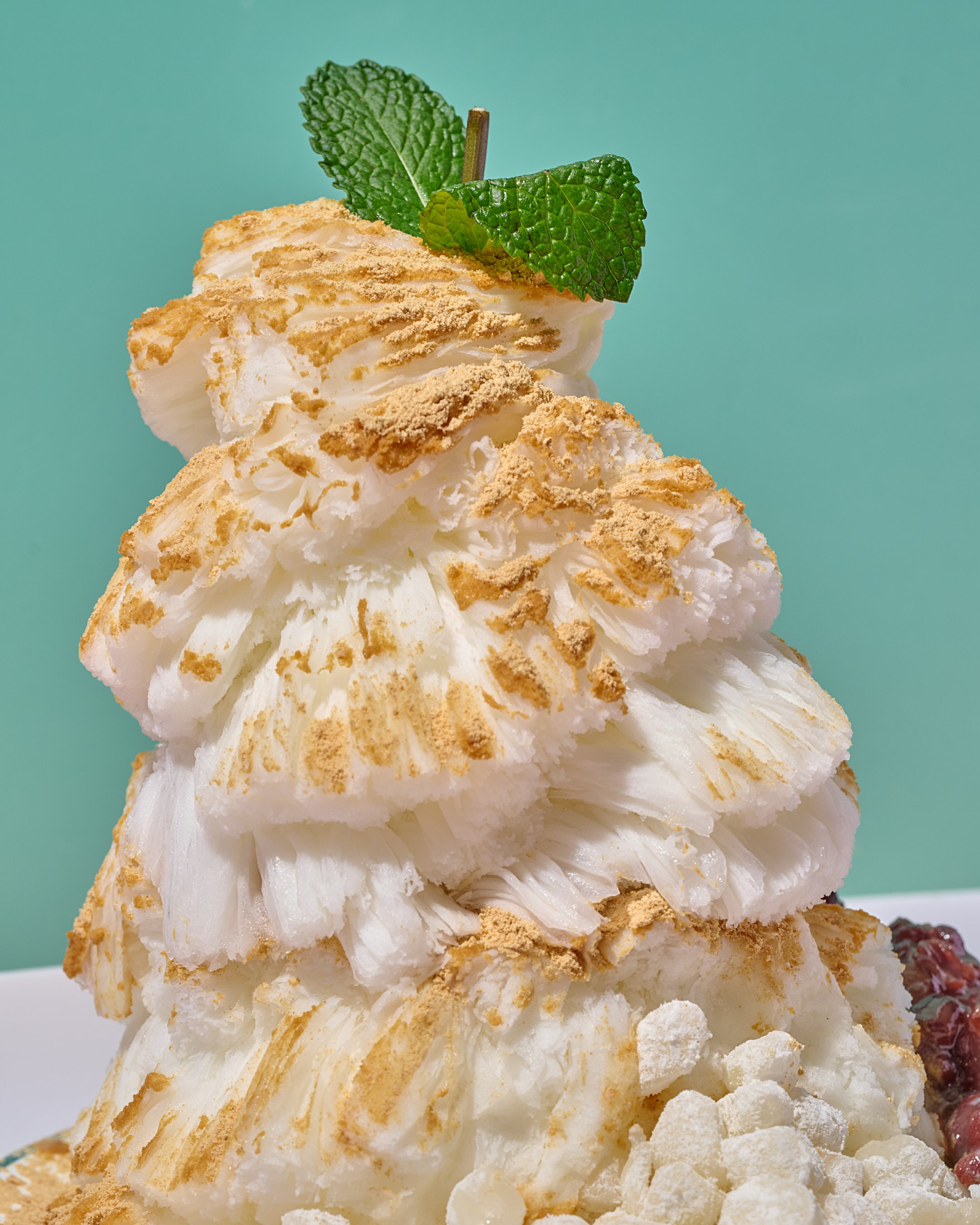
Bingsu starts with a frozen block that gets shaved into fine flakes. In the modern Korean version that block is frozen milk rather than frozen water, which is why the flakes come out snow-soft and collapse on the tongue instead of crunching. The bowl is then built upward in layers with fruit, cookie crumb, rice cake or roasted grain powder, and eaten with spoons over half an hour.
| Bingsu | Mochi ice cream | |
|---|---|---|
| Base | Shaved frozen milk ice | Churned ice cream |
| Wrapper | None, served open in a bowl | Thin pounded rice dough |
| Texture | Airy, melts on contact | Chewy outside, dense inside |
| Origin | Korea | Japan |
| Portion | Built to share, 2-4 people | Single bite, one per person |
| Eaten with | Spoons, seated | Fingers, anywhere |
| Sweetness | Adjustable by milk drizzle | Fixed when it is made |
The practical read: mochi ice cream is a snack you can eat standing up, and bingsu is a dessert you sit down for. Deciding which of those two evenings you are having settles the order.
Which One Is Lighter, Bingsu or Mochi Ice Cream?
Neither wins on its own terms, because the two are measured differently. A mochi ice cream piece is small, which does the work of portion control for you, but what is inside that wrapper is full churned ice cream, so it is dense for its size. A bingsu bowl is visually much bigger, but it is mostly shaved milk ice and fruit, and it is normally divided several ways.
What actually changes the math is how each dessert handles sugar:
- Mochi ice cream is finished when it is frozen. The sweetness of the shell and the ice cream inside is set at the factory or the counter, and there is nothing to adjust when it reaches you.
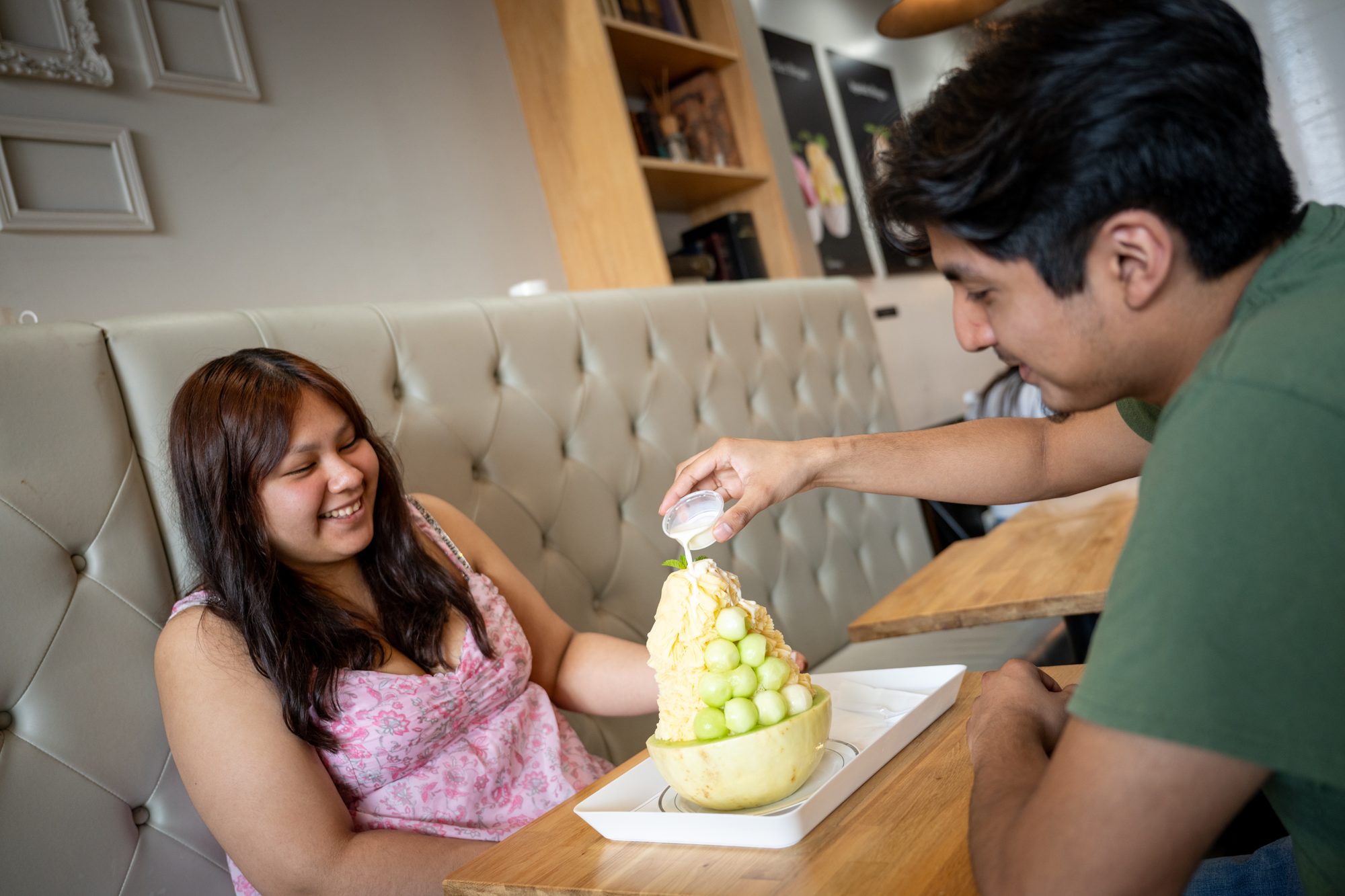
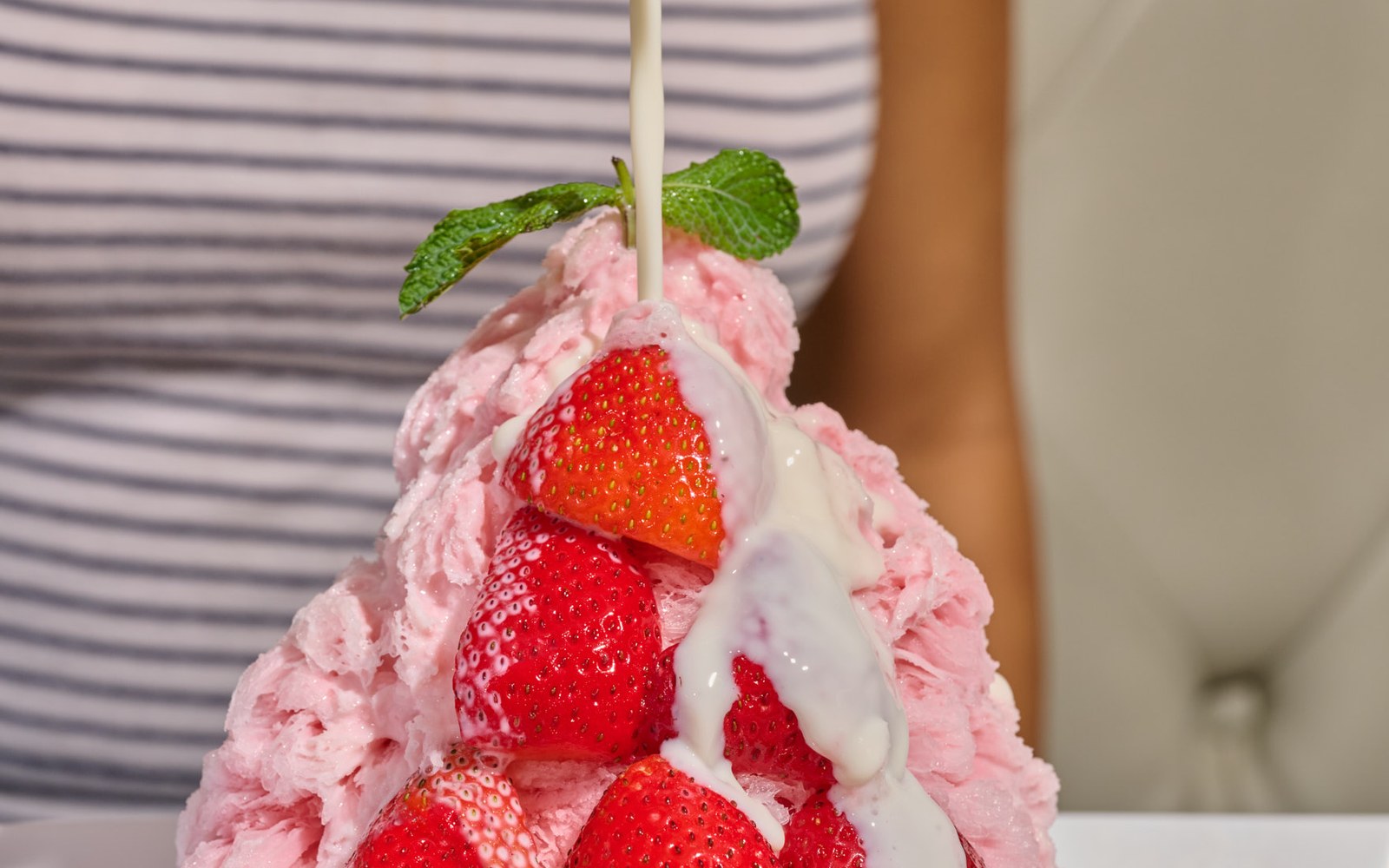
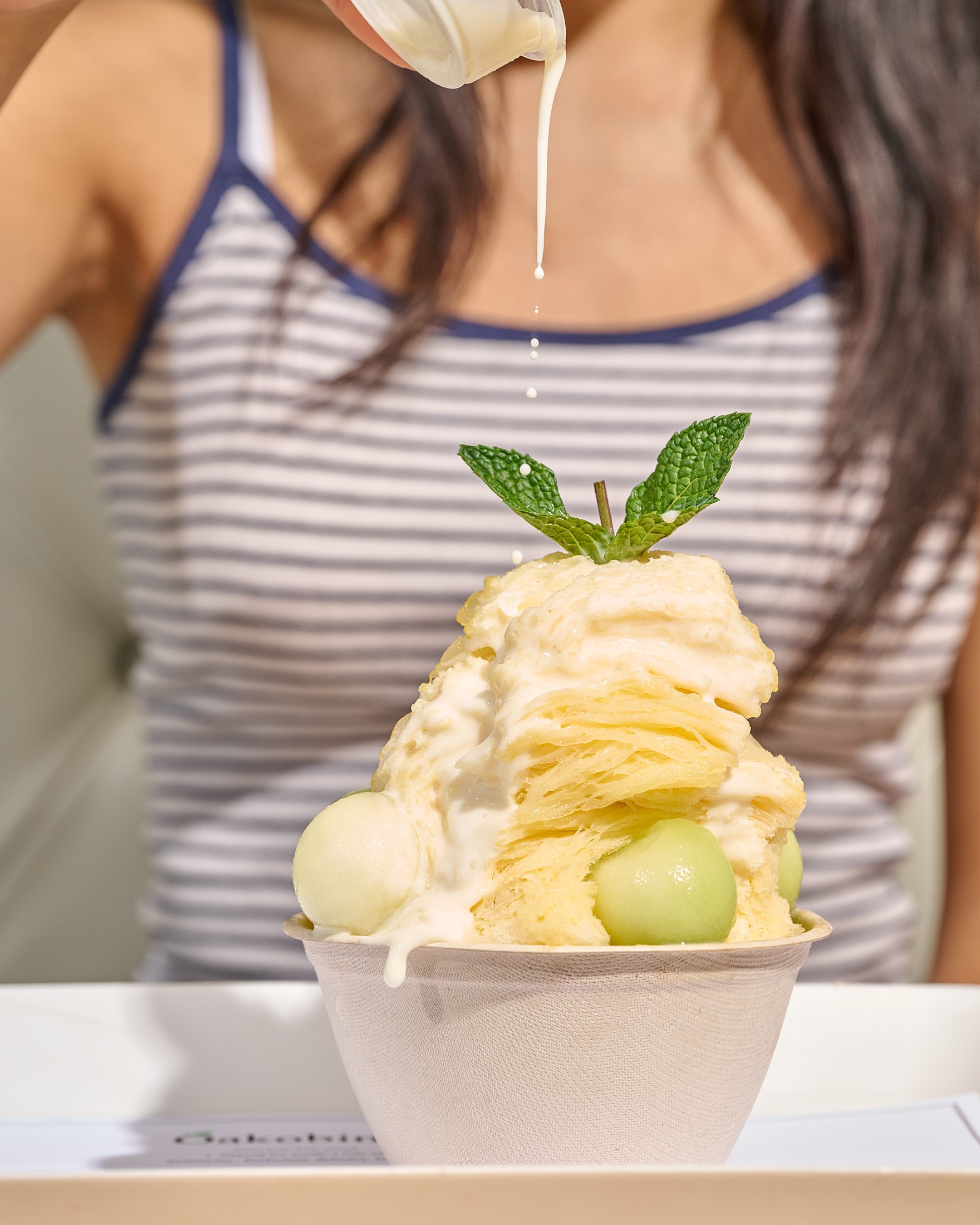
- Bingsu at Oakobing arrives with the milk drizzle on the side. You decide how much goes over the bowl, or whether any does at all.
- The flavor in an Oakobing bowl is infused into the ice block itself at the company's own production facility, rather than syrup poured over plain white ice at the counter, so the flavor does not depend on a heavy pour.
If you want the numbers rather than the principle, the bingsu calories and nutrition guide breaks a bowl down by component. The short version applies to both desserts equally: read the build, not the category.
Is There Mochi in Bingsu?
Sometimes, and this is where the two desserts actually meet. Injeolmi bingsu is finished with chewy Korean rice cake and roasted soybean powder, and that rice cake is made the same way mochi is, by pounding steamed glutinous rice until it turns elastic.
The difference is what the rice does. In mochi ice cream it is structural, a wrapper holding a frozen center. In bingsu it is a topping, one of several textures sitting on a base of shaved milk ice, next to red bean or fruit. So if what you like about mochi ice cream is the chew, injeolmi bingsu is the bowl that gives you that chew without the dense frozen center. If what you like is the ice cream itself, a scoop-based dessert is the closer match, which we cover in bingsu vs ice cream.
Which Should You Order Tonight?
Match the dessert to the situation and the choice tends to make itself:
- You want something small after a full dinner. Mochi ice cream. One or two pieces, done.
- You are out with two or three friends and want a reason to sit. Bingsu. One bowl, several spoons, nobody committing to a whole dessert alone.
- You want to control how sweet it is. Bingsu, with the drizzle held back.
- You want dessert to travel with you. Mochi ice cream, which survives a walk in a way shaved ice does not.
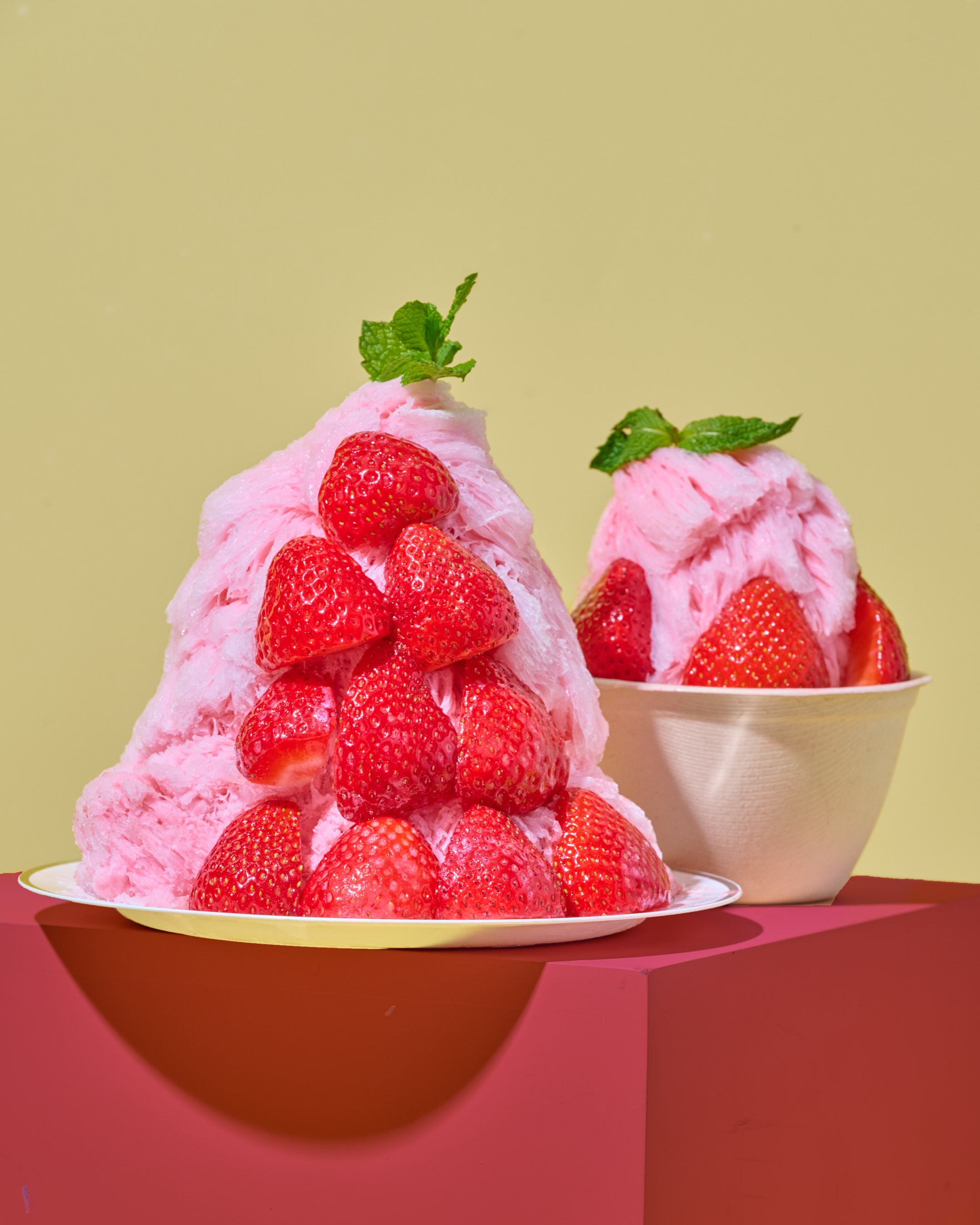
- You want the order that photographs for a group. Bingsu, built tall with fruit stacked on top.
That second point is the one most people underestimate. Cold desserts in Los Angeles are mostly sold as single servings, and bingsu is one of the few designed from the start to be eaten by a group, which is why an evening out tends to organize itself around one bowl.
You can see the current bowls and drinks on the menu, and both Oakobing stores, in Koreatown Los Angeles and Old Pasadena, are set up for the shared-table version of the order with addresses and hours on the locations page. Oakobing does not sell mochi ice cream, so if you want both on the same night, plan two stops. And if the shared cold-dessert format interests you as a business rather than as an evening, Oakobing is currently franchising in California and the franchise page covers what that involves.
Frequently Asked Questions
What is the difference between bingsu and mochi ice cream?
The structure. Mochi ice cream is a small ball of ice cream wrapped in a thin layer of sweet pounded rice dough, eaten in one or two bites straight from the freezer. Bingsu is Korean shaved ice, and in its modern form the block being shaved is frozen milk rather than water, so it comes out as fine snow-soft flakes built into a tall bowl with fruit and toppings. One is a wrapped single bite, the other is an open bowl a table eats together.
Is bingsu or mochi ice cream lighter?
It depends on how much you eat rather than which one you pick. A single mochi ice cream piece is small and self-limiting, which makes it easy to stop at one. A bingsu bowl is much larger, but it is built on shaved milk ice and fruit rather than churned cream, and it is normally split between two to four people. At Oakobing the condensed milk drizzle comes on the side, so the sweetness of the bowl is set by the person eating it and not in the kitchen.
Does bingsu contain mochi or rice cake?
Some bingsu does. Injeolmi bingsu is topped with chewy rice cake pieces and roasted soybean powder, and the rice cake in that bowl is made the same basic way as mochi, from pounded glutinous rice. The difference is the role it plays. In mochi ice cream the rice dough is the wrapper that holds everything together, while in bingsu the rice cake is one topping sitting on a base of shaved milk ice.
Which is better for sharing, bingsu or mochi ice cream?
Bingsu, by a wide margin. Mochi ice cream is portioned one piece per person and is usually bought by the box, so sharing means handing out separate pieces. Bingsu is built as a table dessert. A Large bingsu at Oakobing is portioned for two to four people and arrives with enough spoons for the group, which makes it the format that works when everyone wants one thing in the middle of the table.
Does Oakobing sell mochi ice cream?
No. Oakobing serves bingsu, Korean dessert drinks and fruit toppings in Koreatown Los Angeles and Old Pasadena, and does not carry mochi ice cream. The closest thing on the menu is injeolmi bingsu, which is finished with chewy Korean rice cake and roasted soybean powder over shaved milk ice. Mochi ice cream is usually found in grocery freezer aisles and at Japanese dessert counters instead.
You might also like...
Stories about Korean desserts, bingsu culture, and more.