Korean Dessert Names: A Glossary for First-Timers (2026)
The Korean dessert names worth knowing in 2026 are bingsu (shaved ice), patbingsu (shaved ice with sweet red bean), tteok (rice cake), injeolmi (rice cake rolled in roasted soybean powder), hotteok (a filled sweet pancake), bungeoppang (a fish-shaped pastry), yakgwa (a honey cookie) and dalgona (a sugar candy). Korean desserts are popping up across menus and social feeds, and the names can feel like a puzzle the first time you read them. This glossary explains what each one is, how to say it, and where to start.
What Are the Most Common Korean Dessert Names?
Most Korean desserts you will see in the US fall into three groups: cold bowls, rice cakes and street sweets. Here are the names in each group, with a simple pronunciation guide.
| Name | Say it like | What it is |
|---|---|---|
| Bingsu | BING-soo | Shaved ice dessert piled into a bowl with toppings |
| Patbingsu | PAHT-bing-soo | Bingsu topped with sweet red beans |
| Tteok | tuhk | Korean rice cake, the general name for many varieties |
| Injeolmi | in-JUL-mee | Chewy rice cake coated in roasted soybean powder |
| Hotteok | HO-duhk | Pan-fried pancake filled with brown sugar and nuts |
| Bungeoppang | BUNG-uh-ppahng | Fish-shaped pastry, often filled with red bean |
| Yakgwa | YAHK-gwah | Fried honey cookie, often flavored with ginger |
| Dalgona | DAHL-go-nah | Crunchy honeycomb-style sugar candy |
The words often explain the dessert. Bing means ice, and pat means red bean, so patbingsu is literally red bean ice. Once you know a few roots, many menu names start to decode themselves.
What Is Bingsu, and Why Is It the Best-Known Korean Dessert?
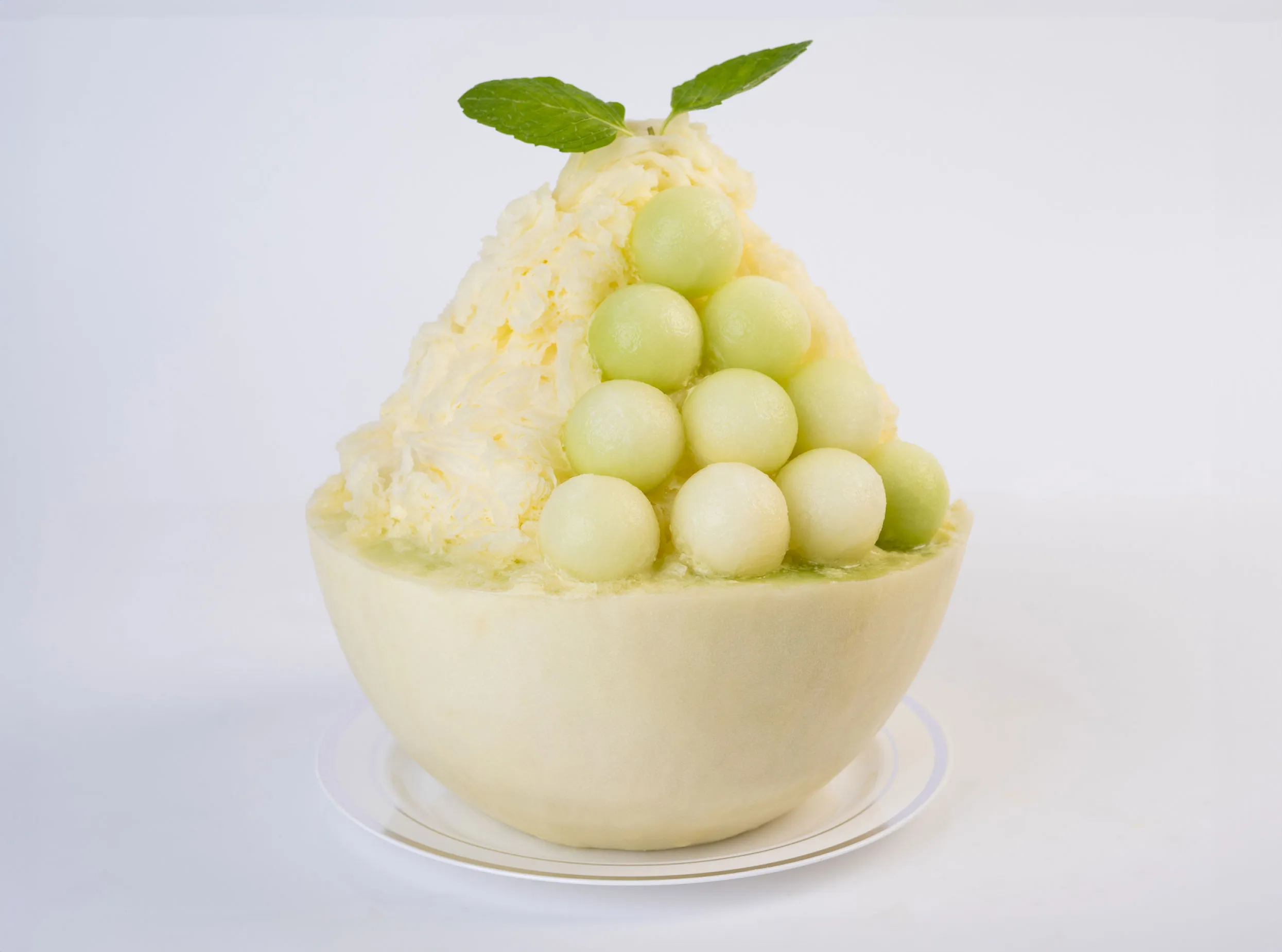
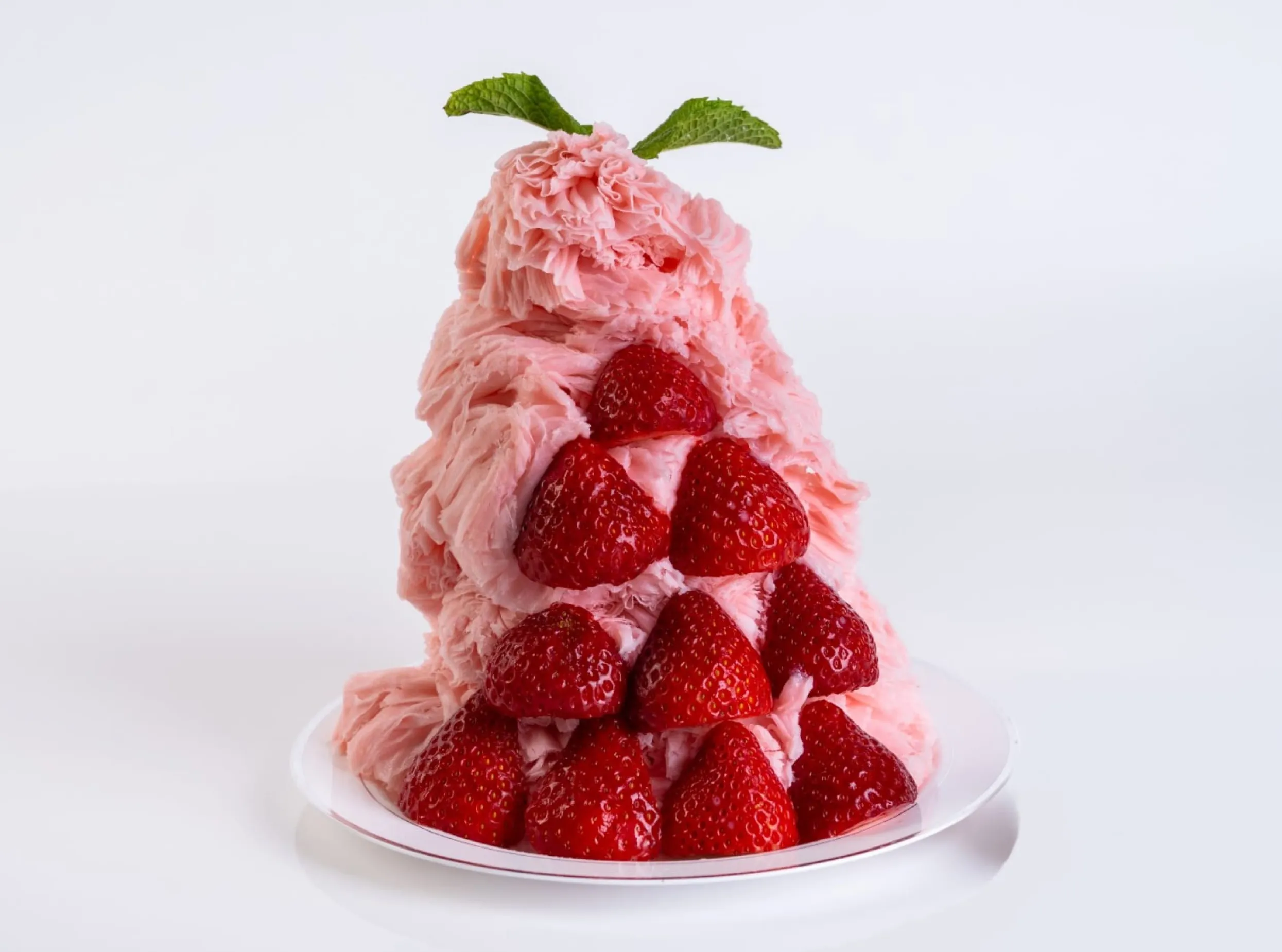
Bingsu is Korean shaved ice, and it is the Korean dessert most visitors meet first because it is served in dedicated cafes rather than only at street stalls or holidays. A block of ice is shaved into fine flakes, piled tall in a bowl and finished with toppings.
The classic version is patbingsu, topped with sweet red beans and sometimes small pieces of rice cake. Modern Korean cafes expanded the idea in many directions, and one of the biggest changes was the base itself: instead of shaving plain water ice, many cafes shave frozen milk, which produces soft, snow-like flakes that melt on the tongue. Our guide to patbingsu vs bingsu explains that shift in more detail, and the history of bingsu traces how it got there.
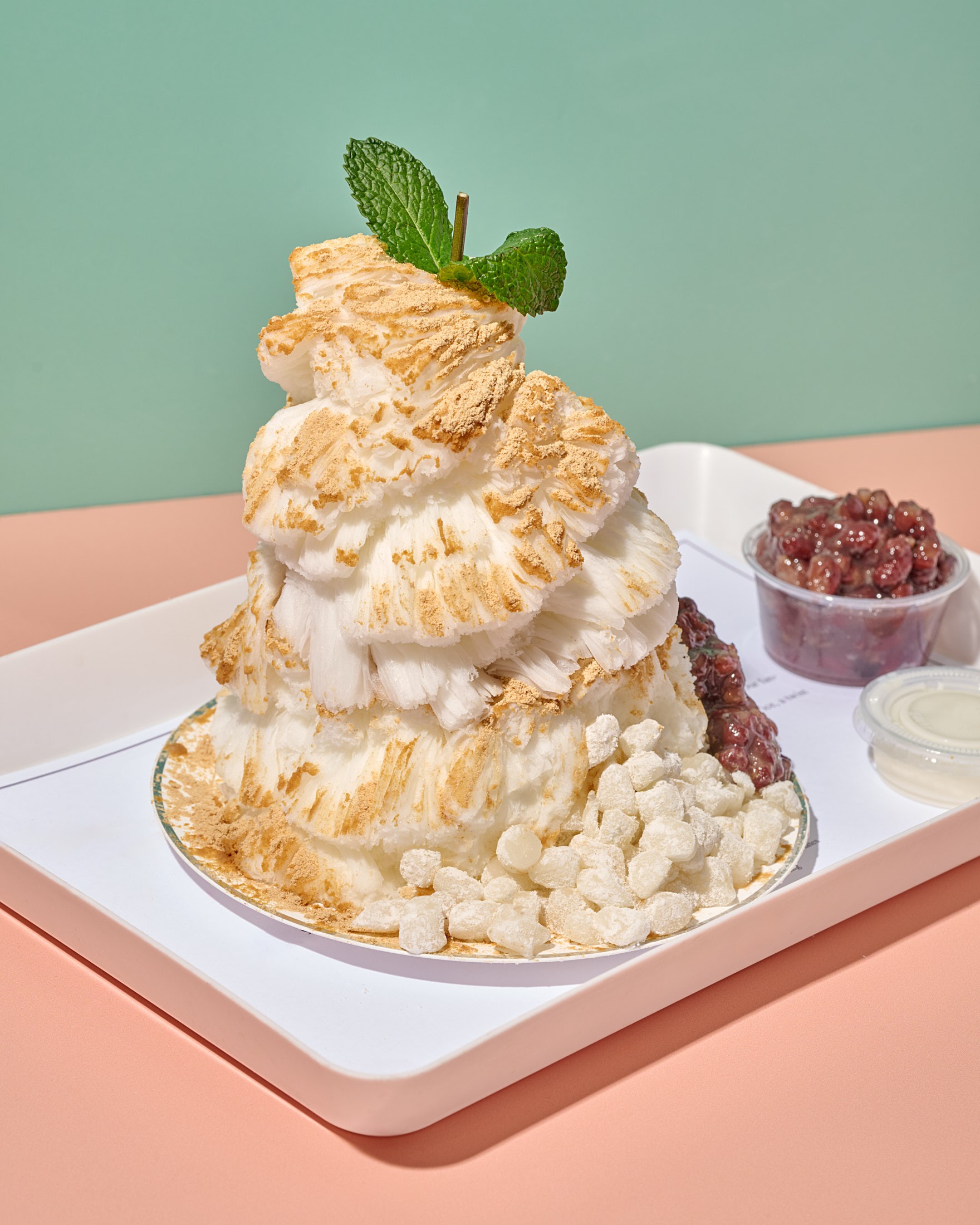
The other names in this glossary often show up as bingsu toppings. Injeolmi bingsu is the clearest example: shaved milk ice topped with nutty roasted soybean powder, called konggaru, and pieces of chewy rice cake.
What Is the Difference Between Tteok and Injeolmi?
Tteok is the general Korean word for rice cake, and injeolmi is one specific kind. Think of tteok as the family name and injeolmi as one member.
There are many kinds of tteok. Some are steamed, some are pounded, some are filled, and some are savory rather than sweet, like the cylinders used in spicy tteokbokki. Injeolmi is the pounded, chewy kind, cut into small pieces and rolled in roasted soybean powder. The powder is what makes the flavor so recognizable: toasty, nutty and only lightly sweet.
Because that flavor is so distinctive, it has moved beyond the rice cake itself. You will find it in bingsu, ice cream and drinks. At Oakobing, injeolmi appears as a bingsu flavor and as an injeolmi latte, so you can try it in a bowl or poured into the cup.
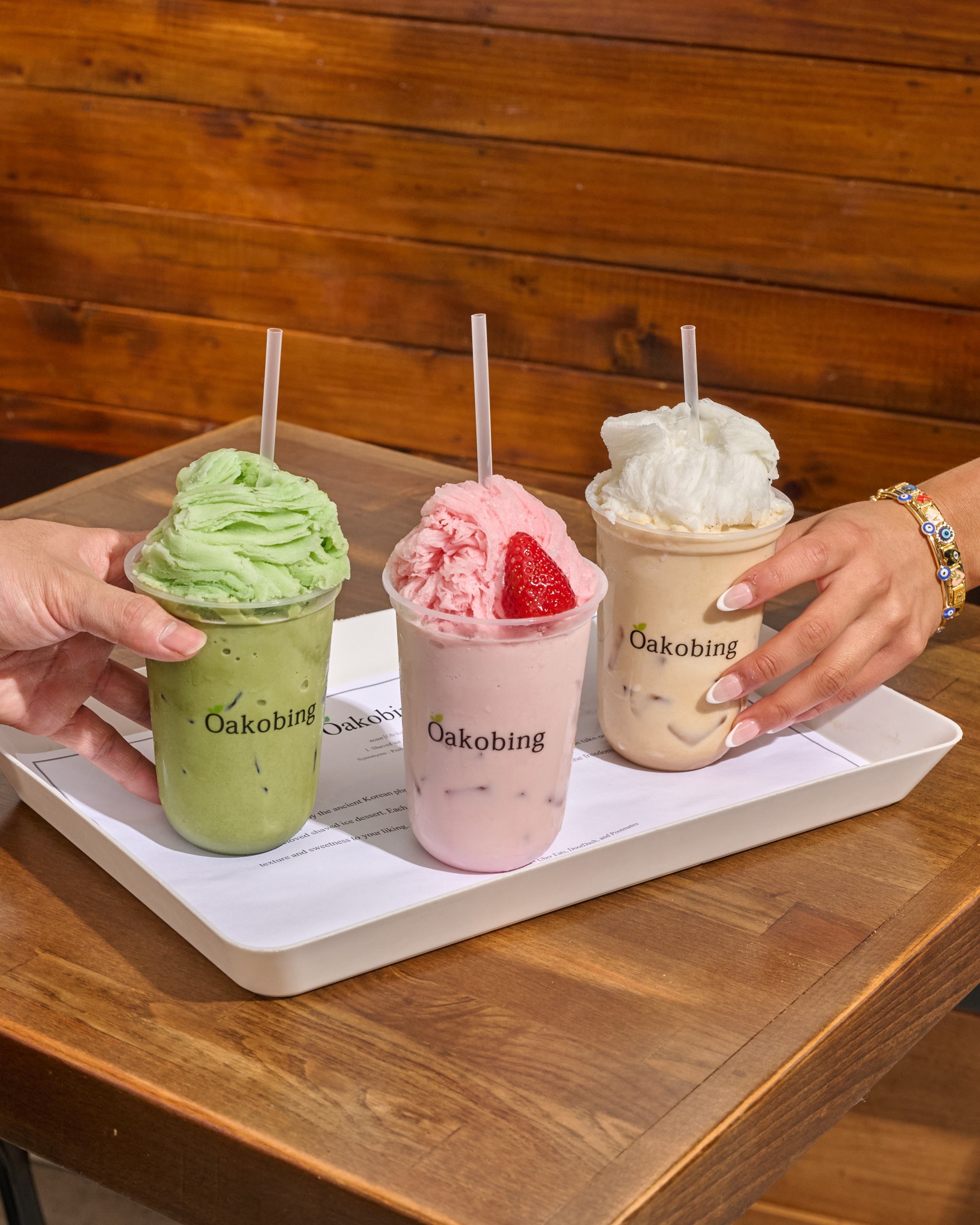
Korean dessert drinks have their own names too. Misugaru is a roasted multigrain powder stirred into milk or water, and sikhye is a sweet rice drink often served after a meal. In Korean cafes you will also see the flavors from this glossary turned into lattes, which is why an injeolmi latte tastes so much like the rice cake.
If you want the full story of this flavor, read what injeolmi bingsu is.
Which Korean Desserts Should a First-Timer Try?
Start with bingsu, then branch out by flavor. It is the most approachable way into Korean desserts because the format is easy to enjoy and the flavors range from very familiar to very Korean.
A simple path for a first visit:
- Familiar first: a fruit bingsu such as strawberry or mango melon.
- One step further: green tea bingsu, which brings matcha into the bowl.
- The classic Korean flavor: injeolmi bingsu, with roasted soybean powder and rice cake.
- Modern cafe style: a cookie-based bowl such as Oreo tiramisu, which wraps the format around a familiar flavor.
Street sweets like hotteok and bungeoppang are worth seeking out too, especially in colder months, but they are usually sold by specialty vendors rather than bingsu cafes. Oakobing focuses on bingsu and Korean dessert drinks, so that is the part of the glossary you can try there.

Bingsu is also meant to be shared, which makes it a good way to taste several Korean flavors with friends at one table. Oakobing serves it at cafes in Koreatown Los Angeles and Old Pasadena as a modern take on Korean shaved ice made for here. Browse current flavors on the Oakobing menu and find both cafes on the locations page.
Frequently Asked Questions
What are the most common Korean dessert names?
The Korean dessert names first-timers meet most often are bingsu (shaved ice), patbingsu (shaved ice with sweet red bean), tteok (rice cake), injeolmi (rice cake coated in roasted soybean powder), hotteok (a filled, pan-fried sweet pancake), bungeoppang (a fish-shaped pastry with a sweet filling), yakgwa (a honey cookie) and dalgona (a crunchy sugar candy). Bingsu is the one most commonly found at Korean dessert cafes in Los Angeles.
What does bingsu mean in Korean?
Bingsu means shaved ice. The word combines bing, meaning ice, with su, meaning water. It describes a dessert of finely shaved ice piled into a bowl and topped with fruit, sweet red bean, rice cake, powders or syrups. In the modern style found in many Korean cafes, the block being shaved is frozen milk rather than plain water, so the texture is soft and snow-like.
What is the difference between bingsu and patbingsu?
Patbingsu is a specific type of bingsu topped with pat, sweetened red beans. Bingsu is the broader category of Korean shaved ice desserts, which today includes fruit, green tea, injeolmi, cookie and many other variations. Every patbingsu is a bingsu, but most bingsu served in modern cafes are not patbingsu.
What is injeolmi?
Injeolmi is a Korean rice cake made from glutinous rice that is pounded until chewy, cut into small pieces and coated in roasted soybean powder, called konggaru. The powder gives it a nutty, toasty flavor. The same powder and rice cake pieces are used to top injeolmi bingsu, and the flavor also appears in drinks such as the injeolmi latte.
Which Korean dessert should a first-timer try?
Bingsu is the easiest starting point because it is familiar enough to enjoy right away and very Korean in its format, built as one bowl shared at the table. A first-timer who likes fruit can start with strawberry or mango melon, and someone curious about classic Korean flavors can try injeolmi bingsu, which combines shaved milk ice with roasted soybean powder and rice cake.
You might also like...
Stories about Korean desserts, bingsu culture, and more.