Bingsu History: How Korean Shaved Ice Became a Dessert (2026)
Bingsu history runs in three stages: centuries of Korean ice storage, then red bean patbingsu in the twentieth century, then the switch from water ice to milk ice in the 2010s that turned it into the dessert sold worldwide today. The name itself is literal - bingsu means ice water. Here is how a court luxury became a summer street dessert and then a cafe menu item, and what actually changed at each step. You can see where the story ends up on the Oakobing menu.
Where Did Bingsu Come From?
From ice storage, long before it was a dessert. Korea kept winter ice through the summer in stone ice houses called seokbinggo, several of which still stand today, and river ice was cut in the cold months and packed away for the year ahead. During the Joseon dynasty that ice was a controlled luxury, distributed by the court rather than sold on a corner.
What that infrastructure created was a habit: the idea that ice in warm weather was something worth going to considerable trouble for. But shaved ice as a dessert anyone could buy needed machine-made ice, and that only reached the peninsula in the early twentieth century. The dessert we would recognize dates from then - roughly a century old, not many centuries, even though the ice culture behind it is far older.
What Was the Original Bingsu?
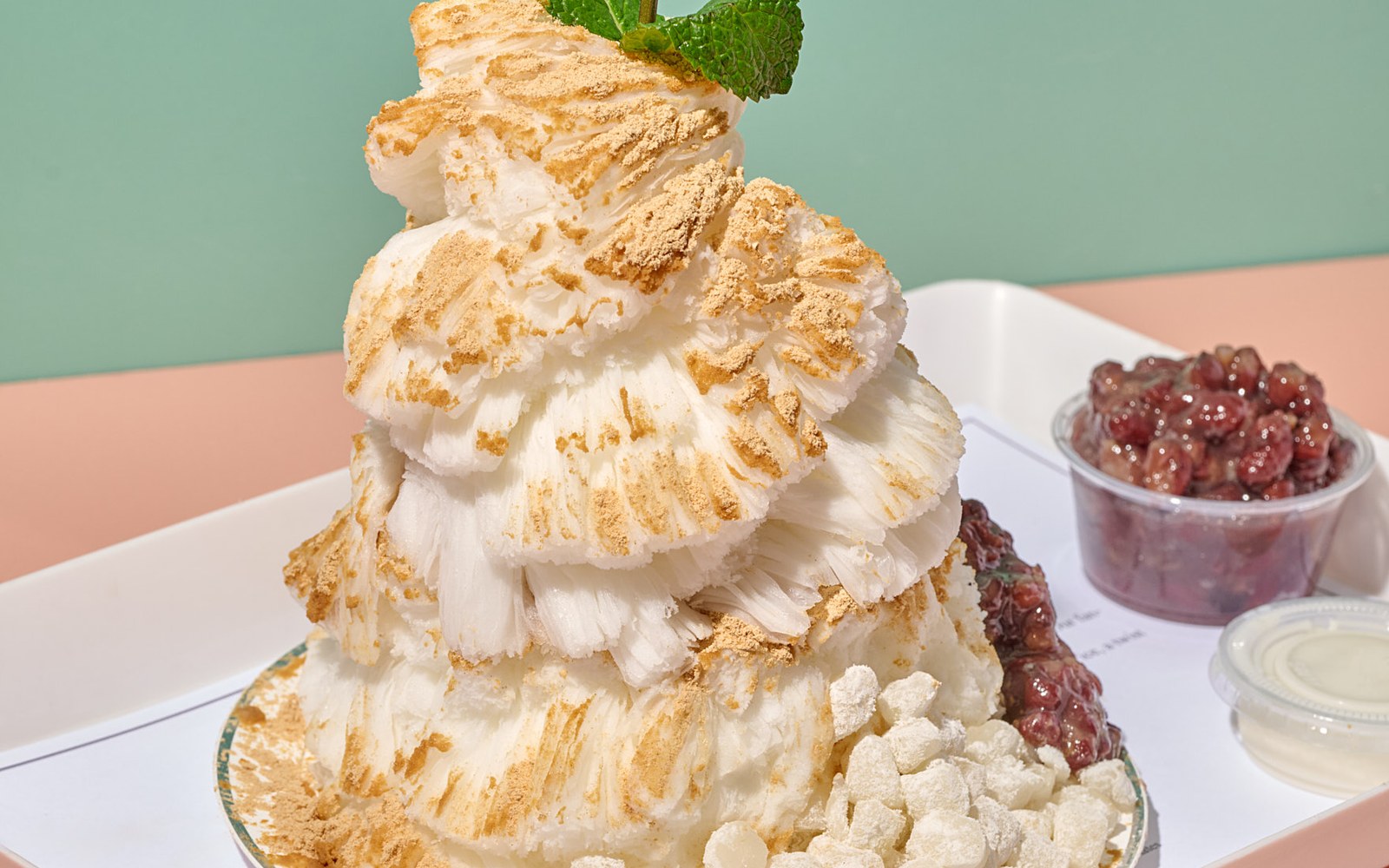
Patbingsu - shaved ice with sweetened red bean paste on top. Through the second half of the twentieth century this was the default, and it is still the reference version.
The classic build is short:
- Coarse shaved water ice as the base, crunchier and less creamy than what most shops serve now.
- Sweetened red bean paste, which is earthy rather than sugary.
- Chewy rice cake (tteok) for texture.
- Condensed or evaporated milk, poured over at the table.
- Sometimes fruit, or roasted grain powder depending on the shop and the decade.
Patbingsu was a summer street and snack-bar dessert first and a cafe dessert second, and it stayed almost unchanged for decades. If you want the direct comparison with what came later, we broke it down in patbingsu vs bingsu.
What Changed in the 2010s?
The ice changed, and everything else followed. Korean cafes moved from shaving frozen water to shaving frozen milk, which produces a far finer, softer snow that melts on contact instead of crunching between your teeth.
That one technical shift did three things at once:
- It made the dessert creamy without adding cream. The dairy was inside the ice rather than poured on it.
- It opened the flavor range. Once the base was milk, matcha, fruit, coffee and cookie versions all made sense - red bean was no longer the only thing that could carry the bowl.
- It exported well. The snow ice format is what spread through Asia and into the United States in that decade, which is why so many Americans met bingsu as a fluffy white mountain rather than as a bowl of red bean.
This is also when bingsu stopped being one dessert and became a category. The ice did more of the work than the toppings did.
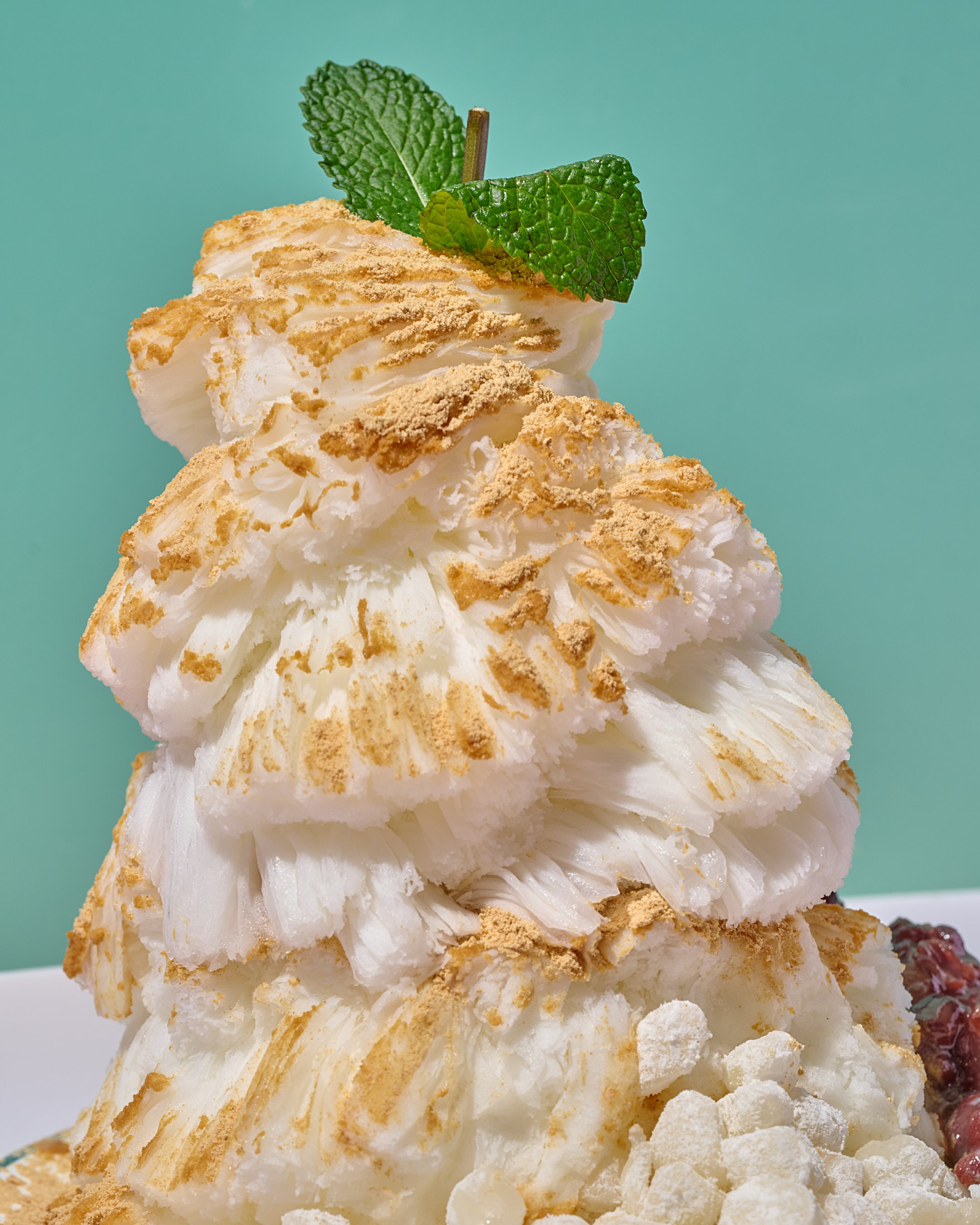
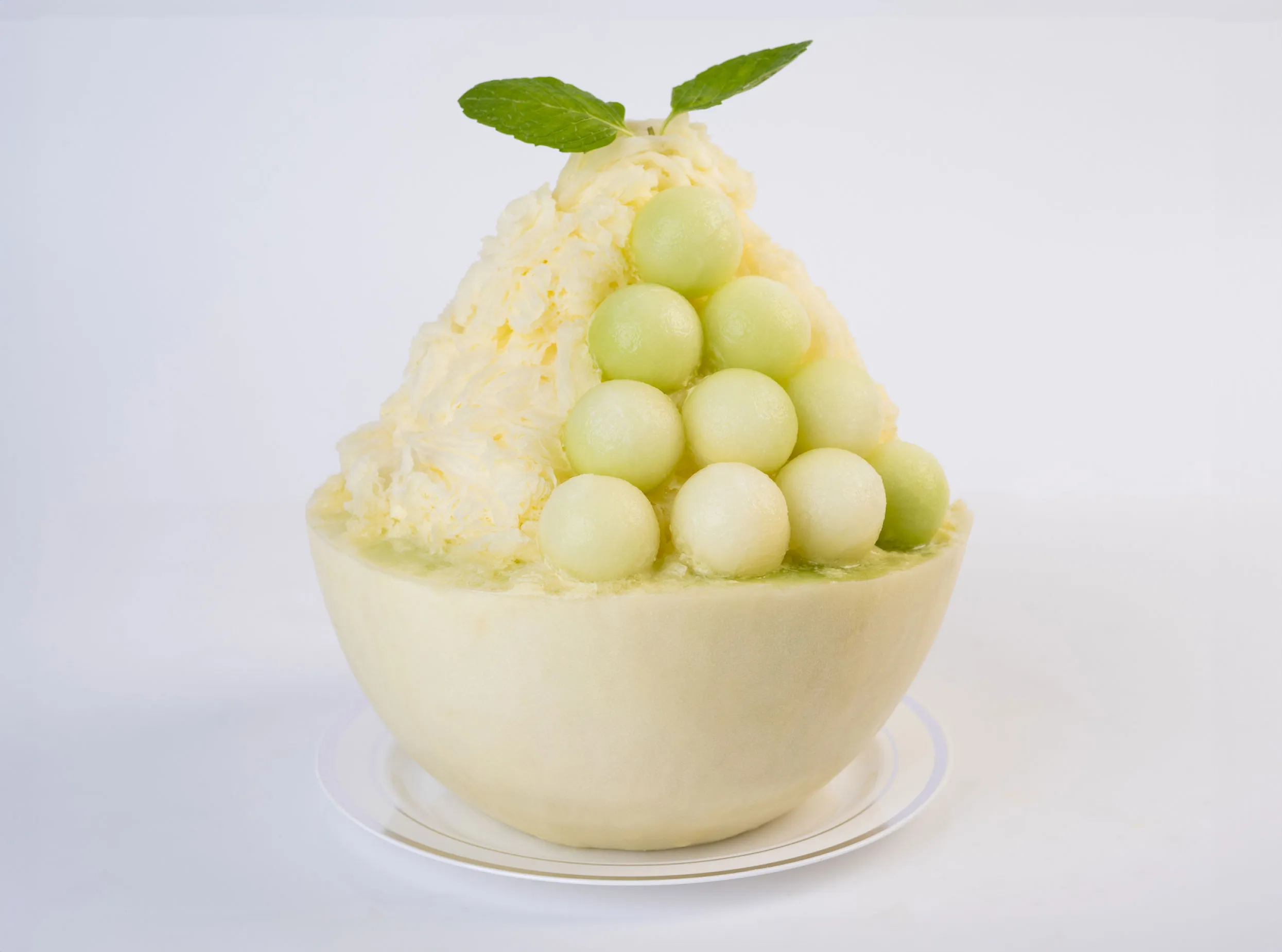
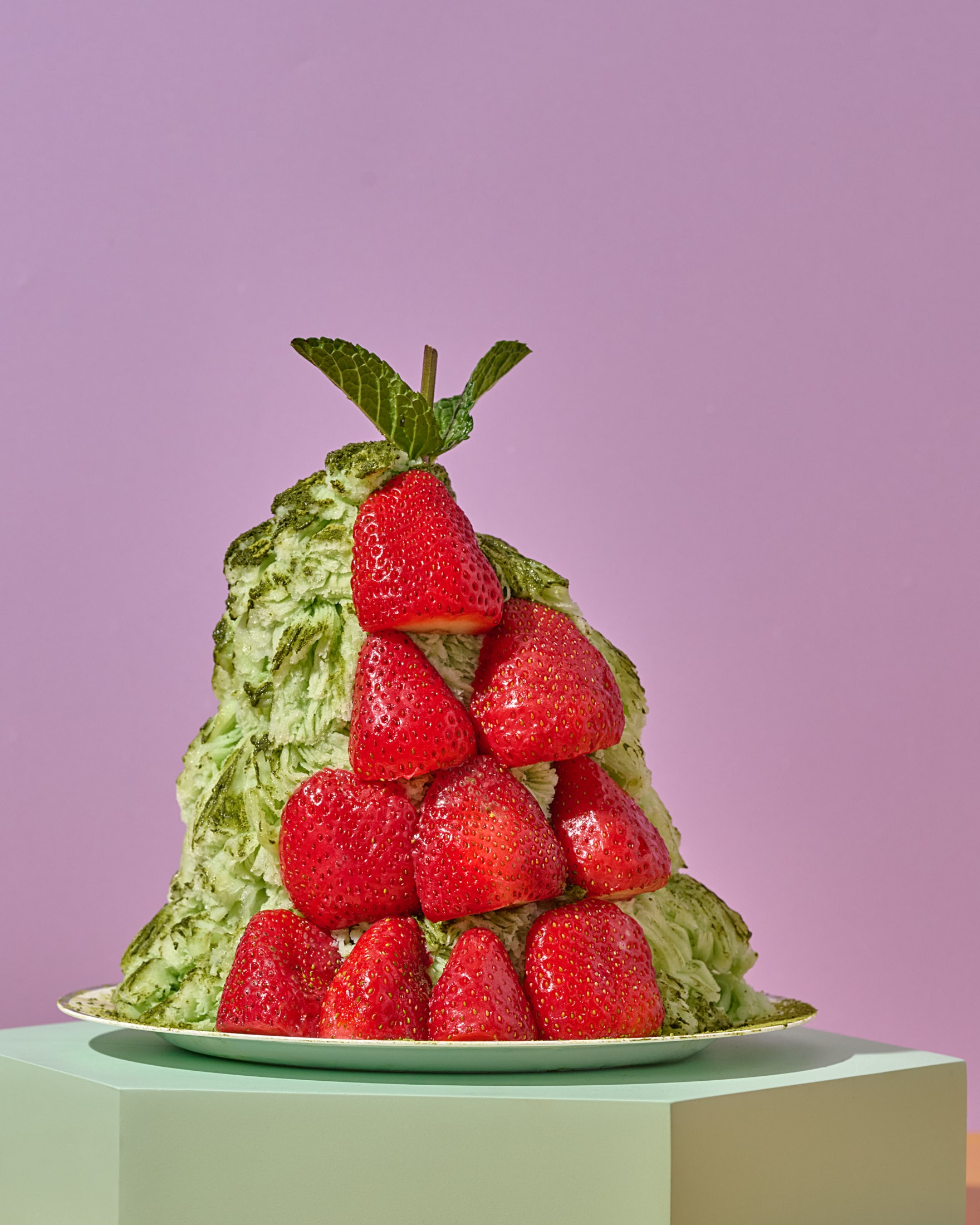
By the end of that decade the dessert had a shape that would be recognizable in any Korean cafe: a tall shaved milk-ice bowl, one flavor identity per bowl, sized for a table rather than a person, photographed before it was eaten. That is the version that crossed the Pacific - not a street snack, but a dessert with a menu.
How Does Modern Bingsu Get Made?
From a frozen block, shaved to order, then layered. Almost every version sold today follows the same three steps: freeze a milk base into a block, shave it into fine flakes, and build the bowl in layers with fruit, cookie crumb, rice cake or roasted soybean powder.
Where shops differ is what is in the block. The common approach is to shave plain milk ice and then pour flavored syrup over the mound - which tastes strong at the first spoonful and like melted water at the last. Oakobing infuses the flavor into the ice block itself at its own production facility, so the flavor is distributed through the bowl rather than sitting on top. The milk drizzle then comes on the side, which puts sweetness and texture under the control of whoever is eating it rather than being decided in the kitchen.
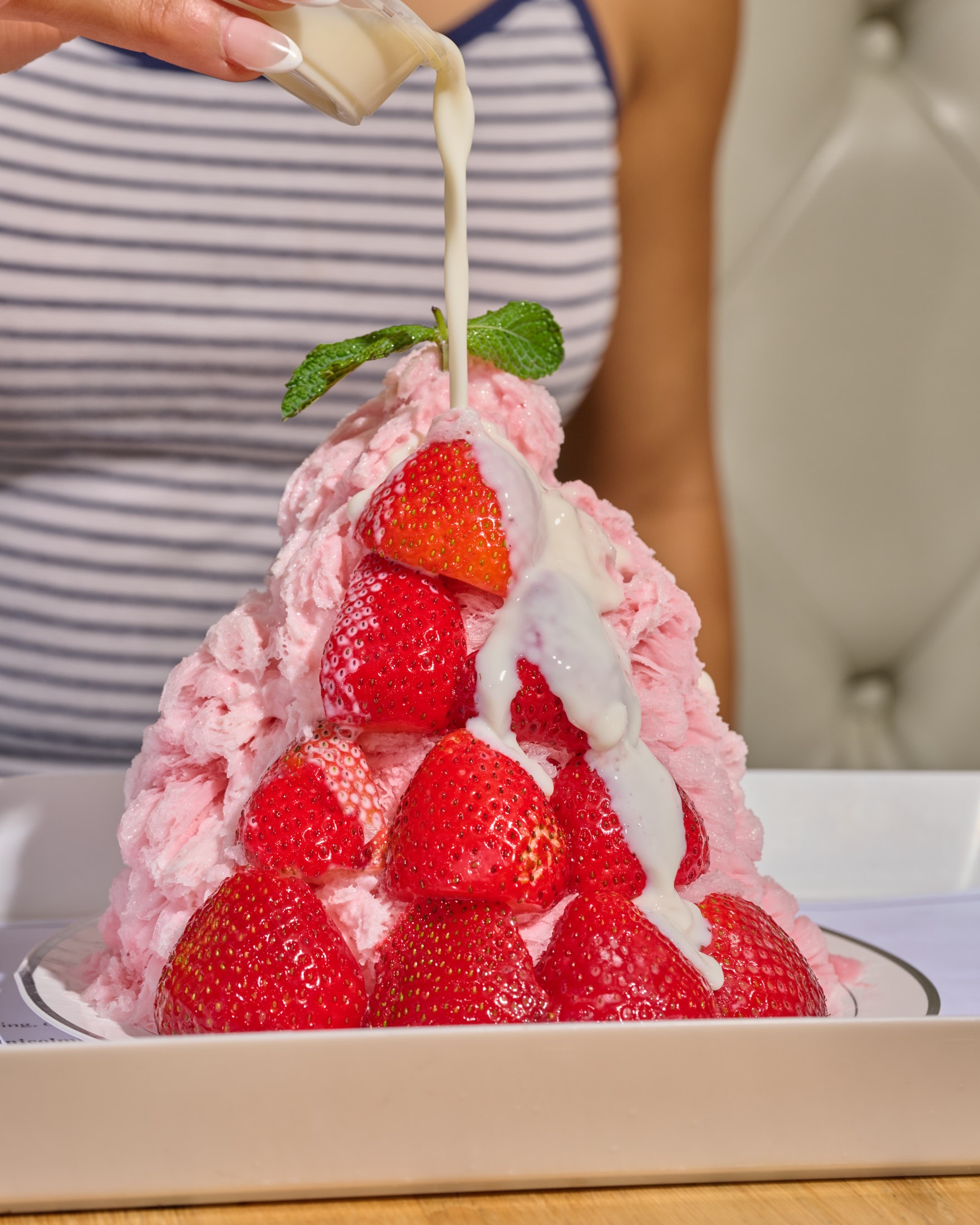
That is a deliberately modern adaptation rather than a recreation of a Joseon-era treat. The full process is in how bingsu is made, and the topping vocabulary - red bean, injeolmi powder, rice cake, fruit, cookie - is in the bingsu toppings guide.
Why Is Bingsu Still Shared?
Because that part never changed. From the snack-bar era to the cafe era, bingsu has been ordered as one bowl for a table, and the size grew rather than shrank as the dessert modernized. A Large at Oakobing is portioned for two to four people.
That continuity is the most interesting thing about the history: the ice, the flavors and the setting have all been replaced at least once, and the social format survived all of it. More on that in why bingsu is shared.
Where you can taste the eras side by side: injeolmi is closest to the older roasted-grain and rice-cake tradition, while the fruit and cookie bowls belong entirely to the modern era. Both are on the board in Koreatown Los Angeles and Old Pasadena - see the locations page. And if the hundred-year arc of a dessert becoming a cafe category reads to you like a business rather than a story, Oakobing is currently franchising in California, and the franchise page explains what that involves.
Frequently Asked Questions
What is the history of bingsu?
Bingsu means ice water in Korean, and the dessert has three clear eras. Korea stored river ice in stone ice houses as far back as the Joseon dynasty, which made iced treats possible for the court long before refrigeration. Shaved ice as a popular dessert arrived in the early twentieth century once mechanical ice production reached the peninsula. Red bean patbingsu became the standard version through the second half of the century, and milk-based snow ice reshaped the dessert again in the 2010s.
How old is bingsu?
The ice-storage culture behind it is centuries old, but bingsu as a dessert people buy is roughly a century old. Stone ice houses called seokbinggo, several of which still stand in Korea, were used to keep winter river ice through the summer during the Joseon dynasty. The shaved ice dessert itself only became widely available after machine-made ice arrived in the early twentieth century, and it became a mass summer dessert later than that.
What was the original bingsu?
Patbingsu, which is shaved ice topped with sweetened red bean paste. In its classic form it also carries chewy rice cake, condensed or evaporated milk, and sometimes fruit or roasted grain powder. It is built on coarse water ice rather than milk ice, which makes it crunchier and less creamy than most bingsu sold today. Patbingsu is still the reference point against which every newer version gets measured.
What changed about bingsu in the 2010s?
The ice. Korean cafes moved from shaving frozen water to shaving frozen milk, producing a much finer, softer snow that melts on contact instead of crunching. That single change made the dessert creamy without adding a scoop of anything, opened it up to flavors beyond red bean, and is the main reason bingsu spread internationally in that decade. The category is often labeled snow ice for exactly this reason.
How is bingsu made today?
Most modern bingsu starts from a frozen milk block that is shaved into fine flakes, then gets built in layers with fruit, cookie crumb, rice cake or roasted grain powder. Oakobing goes one step further and infuses flavor into the ice block itself at its own production facility rather than pouring syrup over the finished bowl, and serves the milk drizzle on the side so the person eating it controls the sweetness.
You might also like...
Stories about Korean desserts, bingsu culture, and more.