
Winter Bingsu: Why Korean Shaved Ice Is a Year-Round Dessert (2026)
Winter bingsu is not a contradiction: in Korea, shaved ice is commonly eaten year-round, and ordering it in cold weather is treated as normal rather than as a novelty. The reason has little to do with toughness and everything to do with format. Bingsu is a seated, shared, indoor dessert, which means the room is warm even when the bowl is not. Here is why the dessert survives the cold, and what changes about how you order it.
Is Bingsu a Winter Dessert in Korea?
Bingsu is a year-round dessert that happens to peak in summer. Korean dessert cafes widely keep it on the menu through the cold months, and it is generally understood as part of the standard cafe lineup rather than a seasonal special that disappears in October.
What makes this work is that bingsu belongs to a place rather than a temperature. The Korean cafe is a heated indoor room where people sit for an hour or more, and the dessert was built for that setting. Ordering a cold bowl in a warm room in January is no stranger than ordering iced coffee in one. The dessert is cold; the context is not.
It is also worth noting that the dessert predates its summer association. Shaved ice in Korea has a long history tied to stored winter ice, and the modern milk-based bowl is a recent reinvention of a much older idea. That history is covered in more detail in the guide to bingsu history. The short version is that bingsu became a summer signature through marketing and habit, not because the dessert requires heat. It belongs to a place more than it is a season.
Why Does Anyone Eat Shaved Ice in Cold Weather?
Three structural reasons, and none of them require anyone to be unusually cold-tolerant.
It is shared, so nobody eats a whole bowl. A Large bingsu is portioned for two to four people. Split four ways, each person is eating a modest amount of something cold, which is a different proposition from finishing a pint alone.
It melts instead of crunching. Modern Korean bingsu is shaved from a block of frozen milk rather than frozen water. The flakes come out thin and snow-soft and collapse on contact with the tongue, so the cold arrives as a quick burst rather than as a hard, lingering chill. Water ice behaves the opposite way, which is why a snow cone feels much colder for much longer.
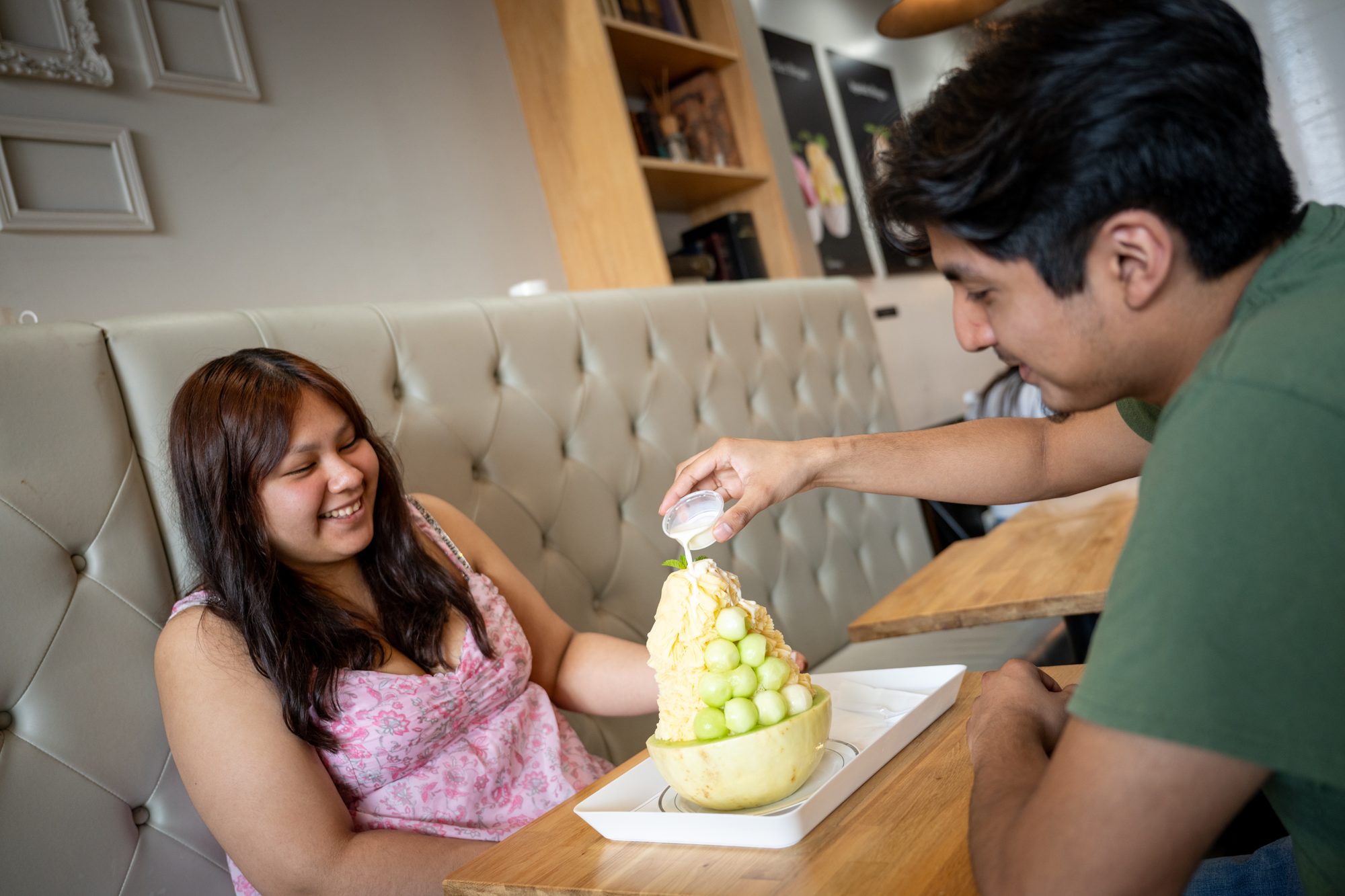
It is eaten slowly, at a table. A bingsu bowl is a thirty-minute dessert, not a three-minute one. People talk between spoonfuls, the drinks stay hot, and the bowl softens as it goes. The pace is what makes it comfortable, and it only works in a room where you can sit for half an hour.
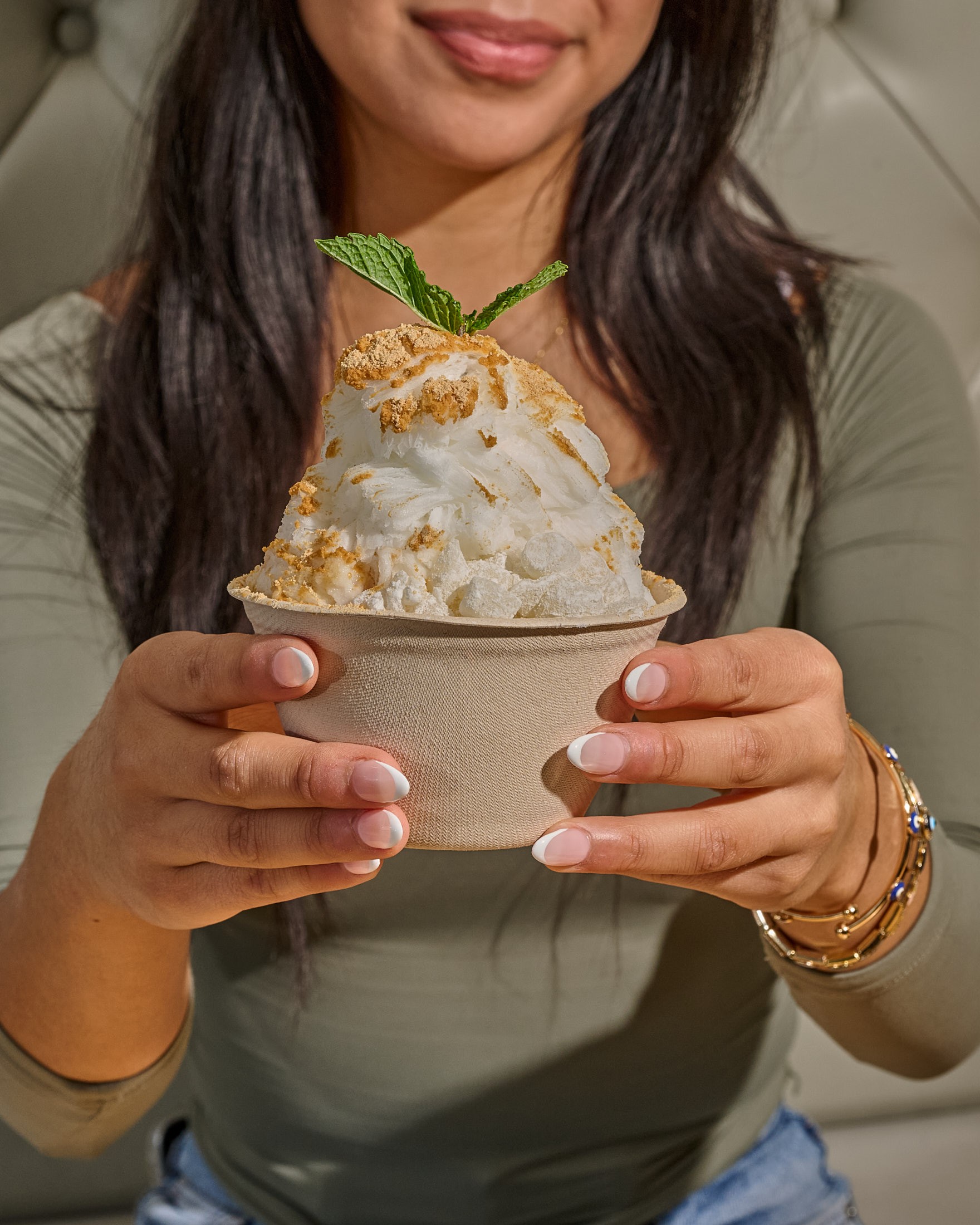
Add those together and the cold-weather objection mostly dissolves. The dessert was never designed to cool you down; it was designed to be eaten with other people in a cafe.
What Should You Order with Winter Bingsu?
Pair a cold bowl with a hot drink and shift the flavor toward the roasted end of the menu. That is the whole cold-weather adjustment.
| Element | Summer version | Cold-weather version |
|---|---|---|
| Drink | Iced americano, strawberry milk | Hot americano, warm latte |
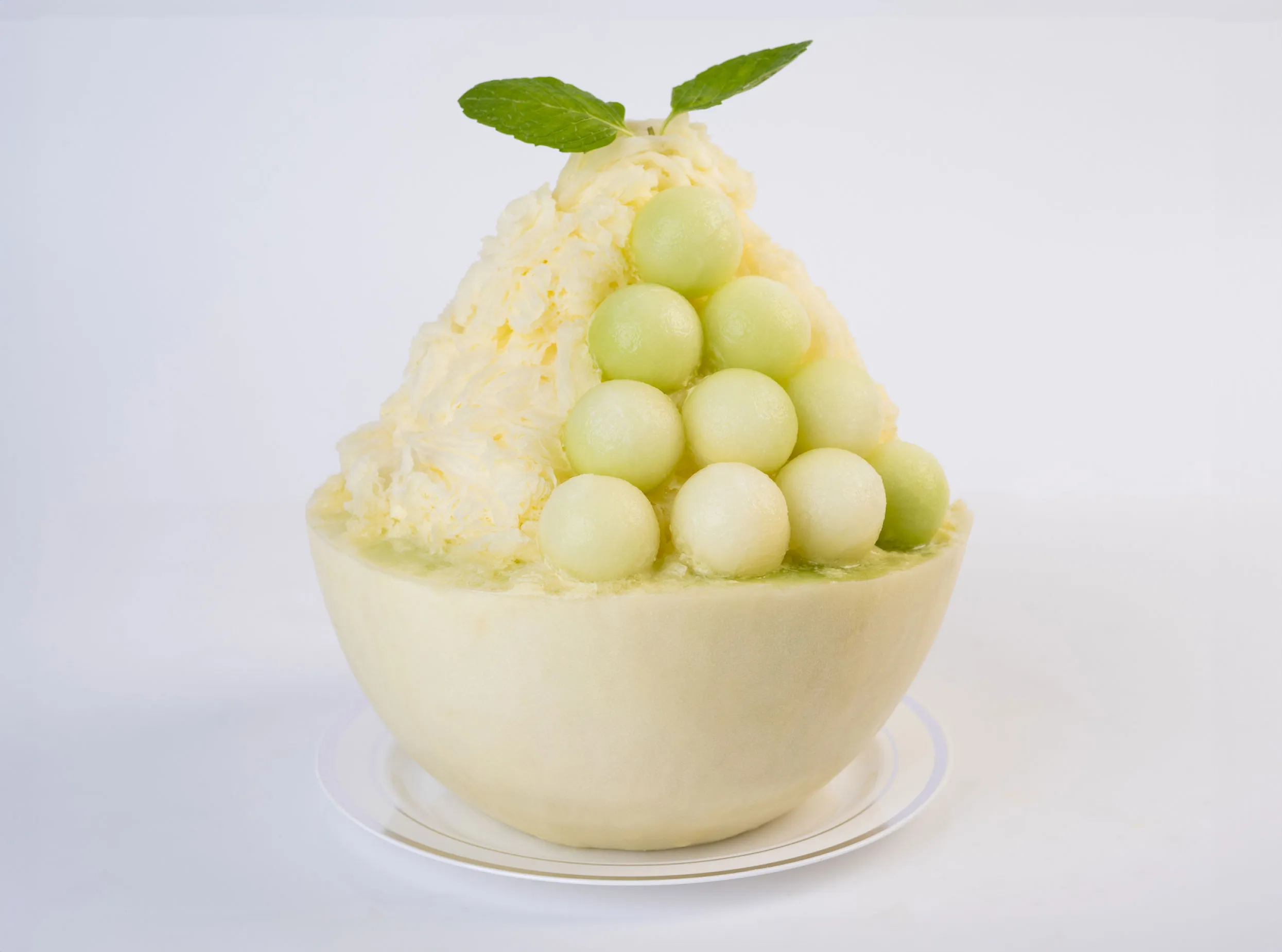
| Flavor | Strawberry, mango melon | Injeolmi, Oreo tiramisu, green tea |
| Size | Large for the group | Large for the group, unchanged |
| Drizzle | Added generously | Added lightly, bowl stays cleaner |
| Setting | Anywhere, indoors or out | Seated, indoors |
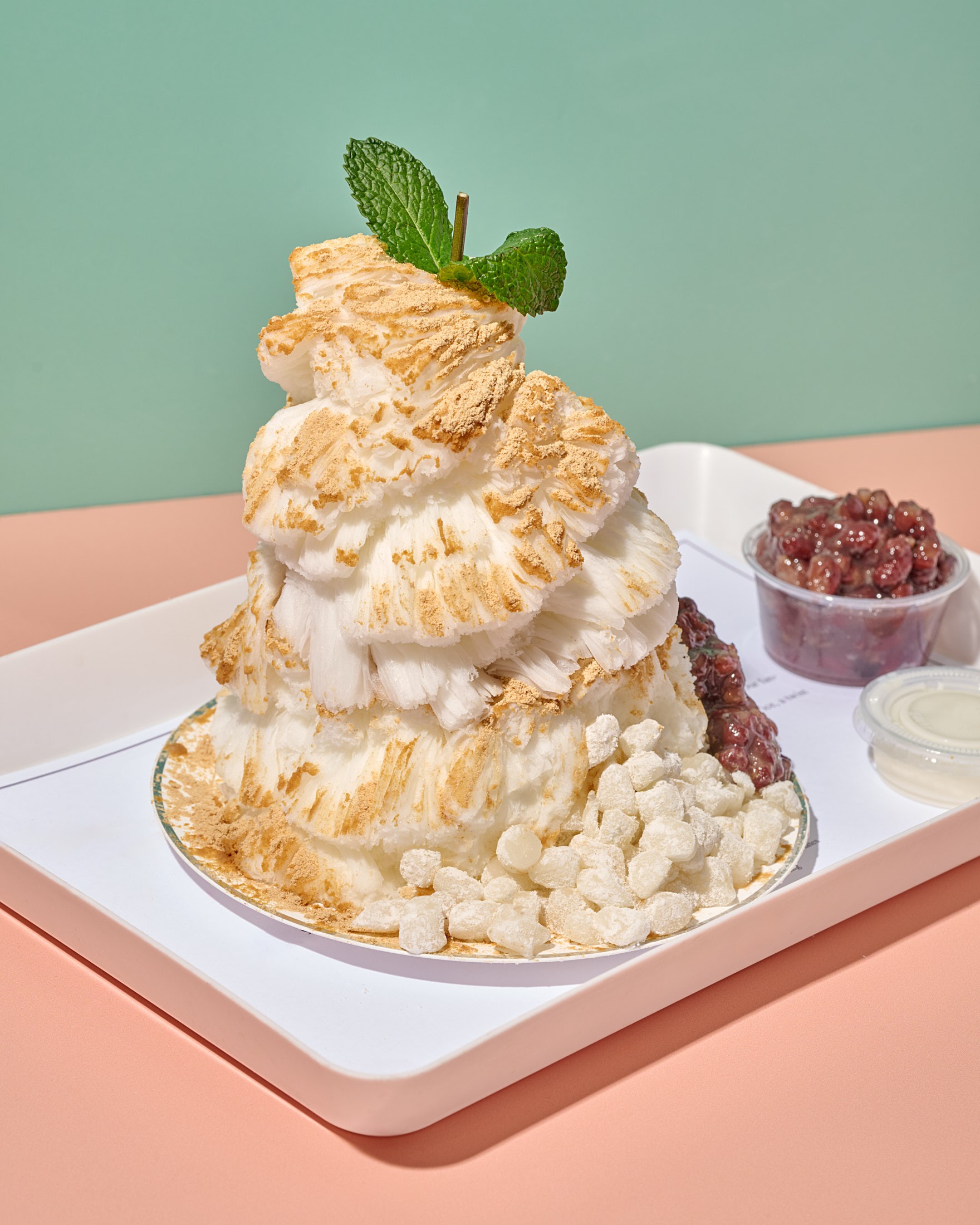
Injeolmi is the most natural cold-weather order. It is finished with roasted soybean powder and chewy Korean rice cake, which gives it a toasted, nutty character that reads as a warm flavor even on a cold base. Cookie and cocoa bowls do the same thing. Fruit-forward bowls stay available year-round, they just belong to a different mood.
On drinks, Oakobing serves a hot americano, a green tea latte and an injeolmi latte, which all sit comfortably next to a shared bowl. There is more on each in the guide to Korean dessert drinks, and the current lineup is on the menu.
Does Winter Bingsu Work in Los Angeles?
Easily, and for a reason Korea does not have: Los Angeles winters are mild. Cold desserts stay comfortable here most of the year, and the handful of genuinely cool evenings are exactly the ones where a hot drink alongside the bowl does the job.
What carries over from Korea is the format rather than the weather. Both Oakobing cafes, in Koreatown Los Angeles and Old Pasadena, are seated indoor rooms rather than takeout windows, which is what makes a cold bowl on a cool evening pleasant instead of unpleasant. The group sits down, one bowl goes in the middle, hot drinks go around the table, and the dessert runs for half an hour. That is the same structure described in why bingsu is shared, and it is the part that determines whether a cold dessert works in cold weather.
The practical takeaway is simple. If you have been treating bingsu as something you order between June and September, you are following an American seasonal habit rather than a Korean one. The bowl is just as good in January, and the room around it matters more than the weather outside it.
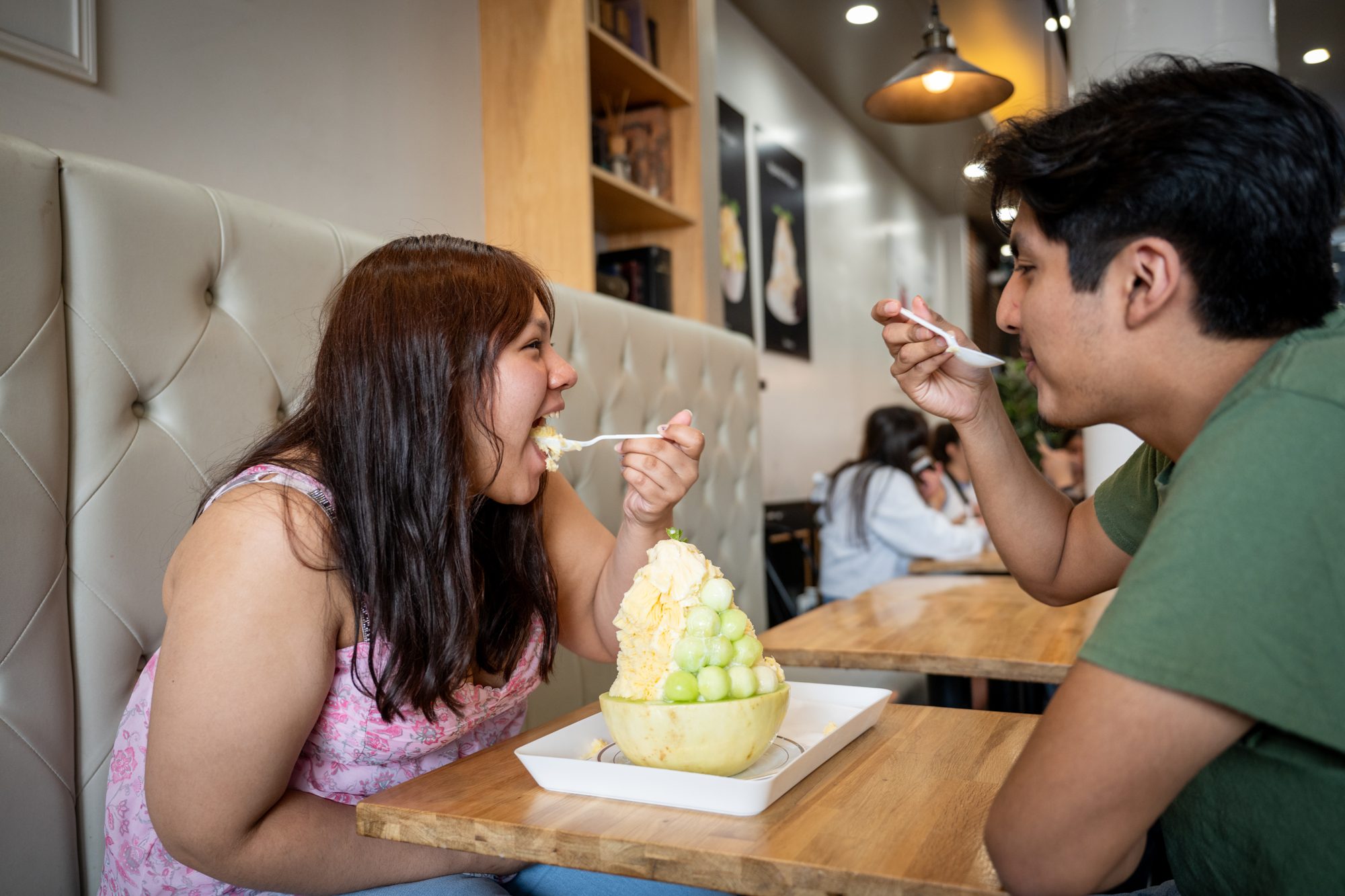
Addresses, directions and current hours for both cafes are on the locations page.
Frequently Asked Questions
Is bingsu a winter dessert in Korea?
Bingsu is widely eaten year-round in Korea rather than being treated as a summer-only dessert. Summer is still the peak season, but cafes serve it through the cold months and people order it in winter without it being considered unusual. The common framing is that the dessert belongs to the cafe rather than to the weather, and cafes are heated indoor spaces where a cold bowl and a hot drink sit on the same table.
Why would anyone eat shaved ice in cold weather?
Because of where it is eaten and how it is shared. Bingsu is ordered in a warm room, at a table, usually by a group that splits one bowl, so no individual is eating a large amount of ice in the cold. Modern bingsu is also shaved from frozen milk rather than frozen water, so the flakes are soft and melt almost immediately rather than staying hard and icy in the mouth. It eats closer to a cold mousse than to a snow cone.
What should you drink with bingsu in winter?
Something hot, which is the standard cold-weather adjustment. A hot americano is the most common pairing because its bitterness cuts the sweetness of the bowl, and a warm latte works for anyone who wants the drink to stay in the same dessert register. At Oakobing the green tea latte and injeolmi latte both pair naturally with a shared bowl, since their flavors already appear on the bingsu side of the menu.
Which bingsu flavors suit cold weather best?
The ones built on roasted, nutty or cocoa flavors rather than bright fruit. Injeolmi bingsu, finished with roasted soybean powder and chewy Korean rice cake, is the classic cold-weather choice because its flavor reads as toasted and warm even though the bowl is cold. Red bean and cookie-based bowls do the same. Fruit-forward bowls like strawberry and mango melon are still available year-round, they just feel more like summer.
Can you order winter bingsu in Los Angeles?
Yes. Oakobing serves bingsu year-round at both of its cafes, in Koreatown Los Angeles and Old Pasadena, and both are seated indoor rooms rather than walk-up windows. Los Angeles winters are mild enough that cold desserts stay comfortable most of the year anyway, and the usual adjustment is simply to order a hot drink alongside the shared bowl. Current hours and directions are on the Oakobing locations page.
You might also like...
Stories about Korean desserts, bingsu culture, and more.