Chuseok Desserts: What Koreans Eat for Korean Thanksgiving (2026)
Chuseok desserts in 2026 center on songpyeon, small half-moon rice cakes filled with sweet sesame, red bean or chestnut and steamed on pine needles, served alongside yakgwa honey cookies, hangwa confections, sweet rice punch and autumn fruit. Chuseok is the Korean harvest festival, often called Korean Thanksgiving, and its sweets reflect the season: rice from the new harvest, honey, nuts and fruit. Here is what each dessert is and how to enjoy Korean flavors in Los Angeles.
What Is Chuseok?
Chuseok is a major Korean harvest holiday held on the 15th day of the 8th lunar month, around the full moon. Because it follows the lunar calendar, it moves on the Western calendar and usually falls in September or early October.
Families traditionally travel home, visit ancestral graves, share a large meal and give thanks for the harvest. Food is central, and many households prepare holiday dishes together the day before. Customs vary by family and region, and many modern households keep a shorter list of foods than older generations did.
What Desserts Do Koreans Eat on Chuseok?
Songpyeon is the signature Chuseok dessert, and it usually shares the table with honey cookies, traditional confections, sweet drinks and autumn fruit.
| Dessert | What it is | Taste and texture |
|---|---|---|
| Songpyeon | Half-moon rice cake steamed on pine needles | Chewy, lightly sweet, faint pine aroma |
| Yakgwa | Fried honey cookie soaked in syrup | Dense, moist, honey and ginger |
| Hangwa | Traditional confections such as yugwa and dasik | Crisp and puffy, or pressed and powdery |
| Sikhye | Sweet fermented rice punch | Cool, mild, grains of rice in the cup |
| Sujeonggwa | Cinnamon and ginger punch | Spicy-sweet, served chilled |
| Autumn fruit | Korean pears, persimmons, jujubes, chestnuts | Juicy, crisp or chewy depending on the fruit |
What Is Songpyeon and Why Is It Shaped Like a Half Moon?
Songpyeon is a bite-size rice cake made from rice flour dough, filled with sweet sesame and honey, red bean or chestnut, and steamed on a bed of pine needles. The name comes from the pine (song) used in steaming.
Its half-moon shape is commonly linked to the full moon of Chuseok and the hope for a good year ahead. A popular family saying holds that whoever shapes the prettiest songpyeon will have a good future or beautiful children, which is part of why making it together is a cherished tradition.
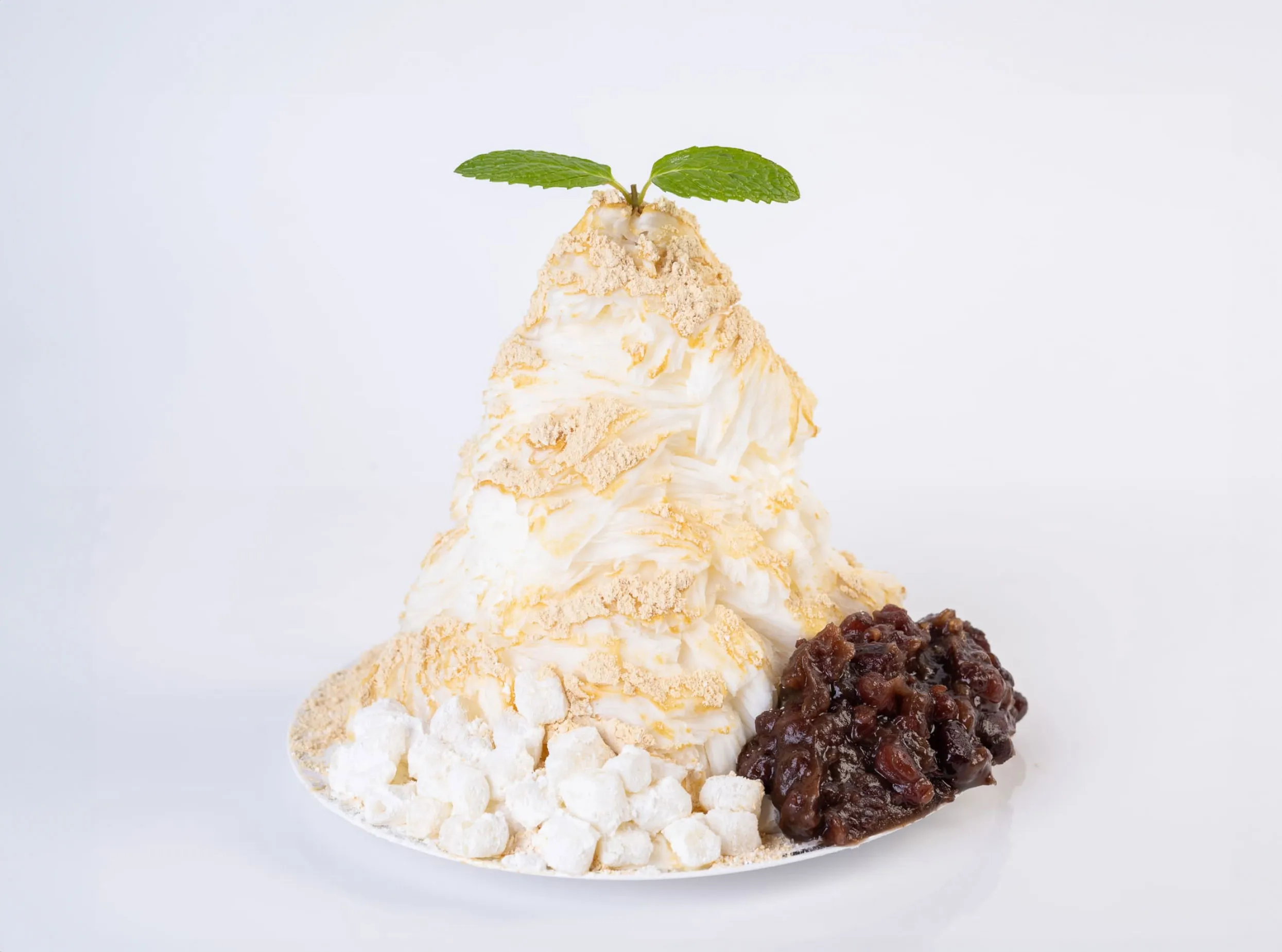
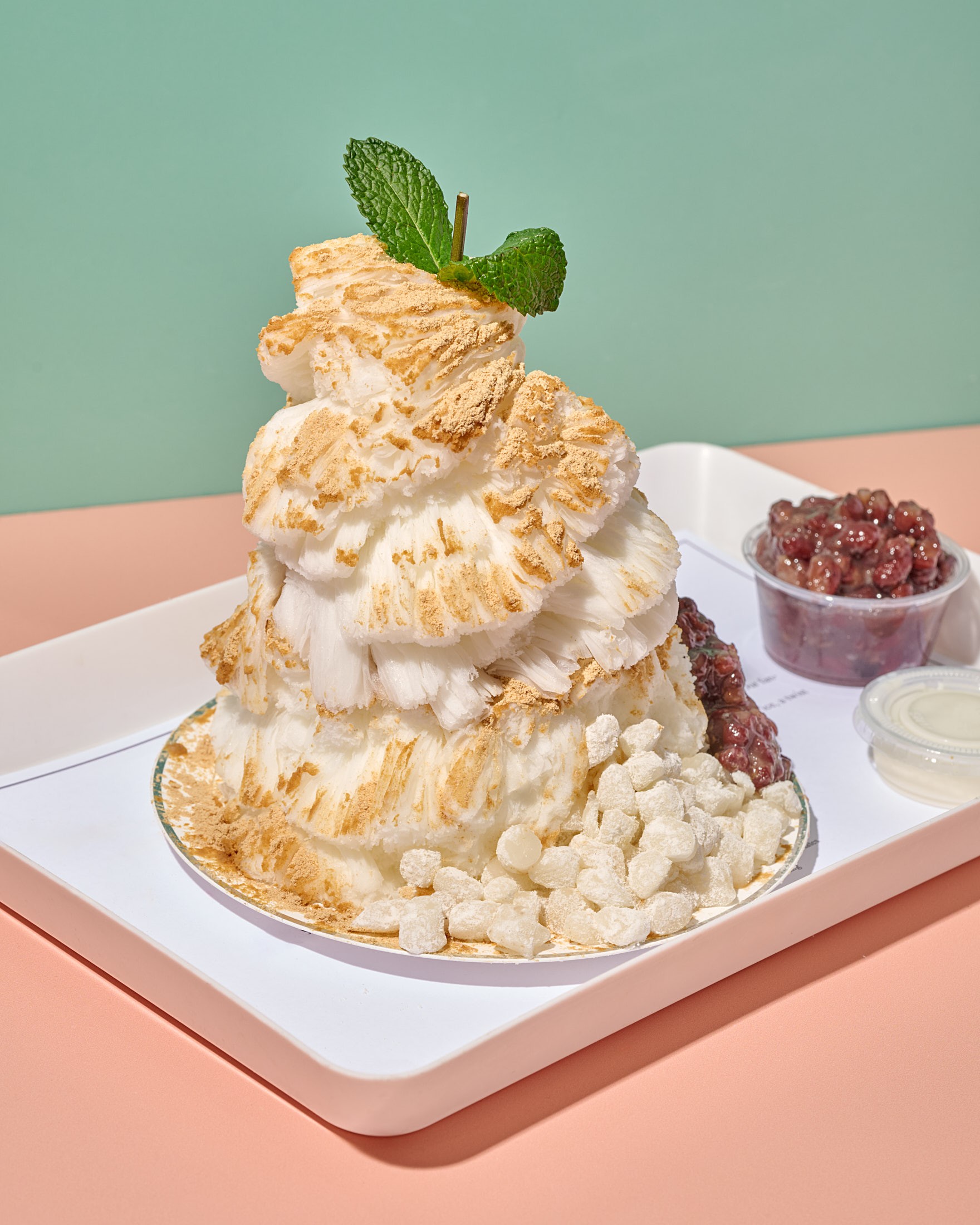
Many Korean rice cakes share the same chewy, toasty character, and some are coated in roasted soybean powder. That nutty flavor is the base of injeolmi, a beloved everyday rice cake. Our what is injeolmi bingsu guide explains how it became one of the most popular modern flavors, showing the toasty, nutty side of Korean sweets.
What Drinks Go with Chuseok Desserts?
Sikhye and sujeonggwa are the classic Chuseok drinks, and both are served cold. Sikhye is a mild, sweet rice punch with soft grains floating in the cup, while sujeonggwa is a cinnamon and ginger punch, often garnished with pine nuts. Both help settle the stomach after a heavy holiday meal.
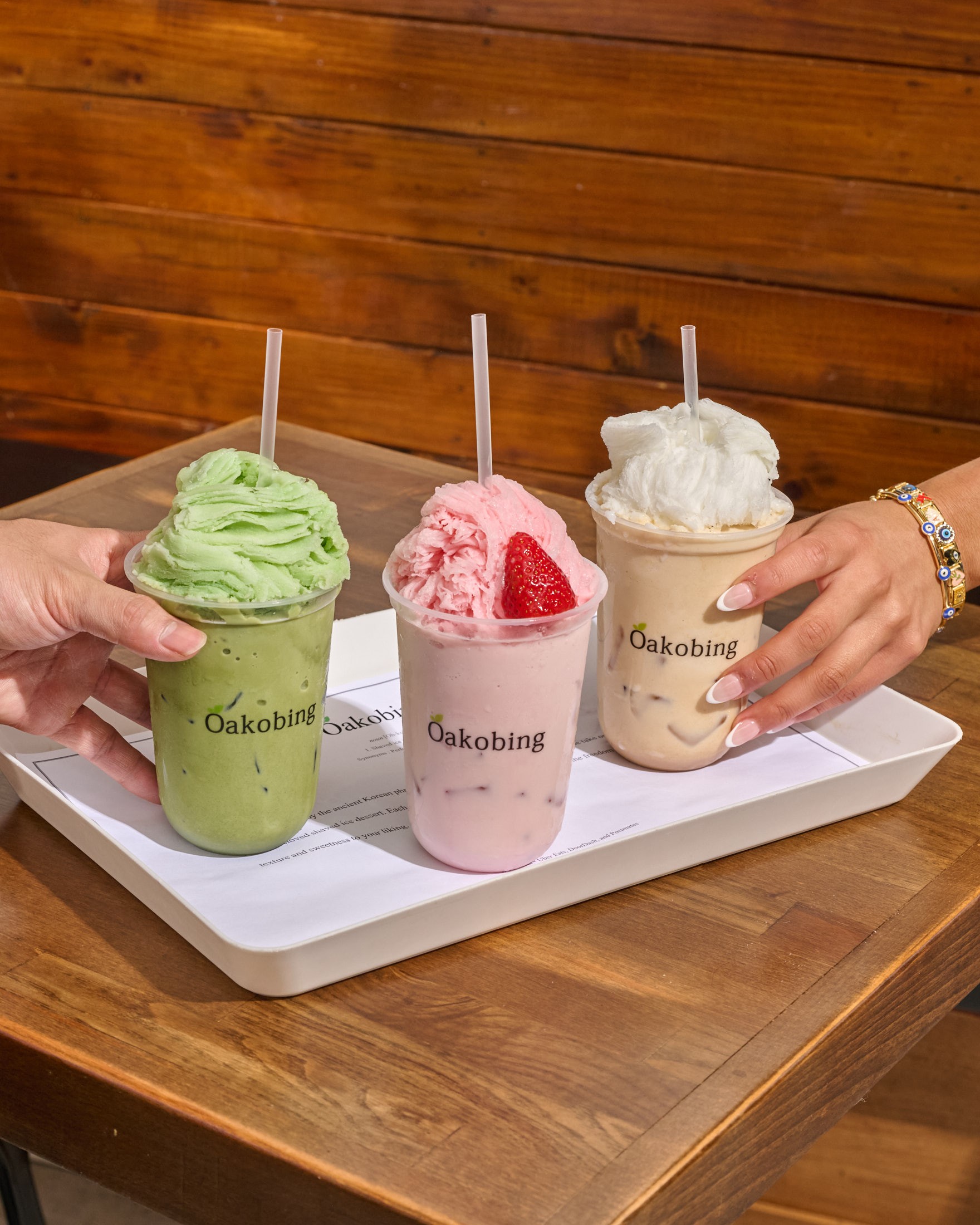
Modern Korean cafes carry the same flavor families into milk-based drinks. An injeolmi latte brings roasted soybean, and a green tea latte brings grassy tea. Our Korean dessert drinks guide covers what each one tastes like.
How Is Chuseok Different from Korean New Year?
Both are major family holidays with ancestral rites, but the foods differ. Chuseok is the autumn harvest festival, with songpyeon as its signature rice cake. Seollal, the Lunar New Year, is the winter holiday, best known for tteokguk, a rice cake soup. For the winter side of the calendar, see Korean New Year desserts, and for a glossary of the names above, read Korean dessert names.
How Can You Celebrate Chuseok in Los Angeles?
Los Angeles has one of the largest Korean American communities in the United States, so Chuseok foods are easier to find here than in most American cities. In the days before the holiday, Korean markets and rice cake shops in and around Koreatown often stock songpyeon, hangwa gift sets, Korean pears and bottled sikhye.
A few simple ways to mark the holiday:
- Share songpyeon. Pick up an assortment of fillings and taste them side by side.
- Bring fruit. A box of Korean pears or persimmons is a classic Chuseok gift.
- Gather for a meal. The heart of the holiday is family and friends at one table.
- End on something cold. After a big meal, a shared dessert keeps the evening going.
Where Can You Enjoy Korean Dessert Flavors in LA?
Oakobing does not sell songpyeon or other traditional Chuseok sweets; for those, a Korean rice cake shop or market is the right stop. What Oakobing serves is a modern adaptation of Korean shaved ice for the American market, including injeolmi bingsu, which pairs snow-soft milk ice with roasted soybean powder and soft rice cake, a cold, modern nod to the nutty rice cake flavors of the holiday table.
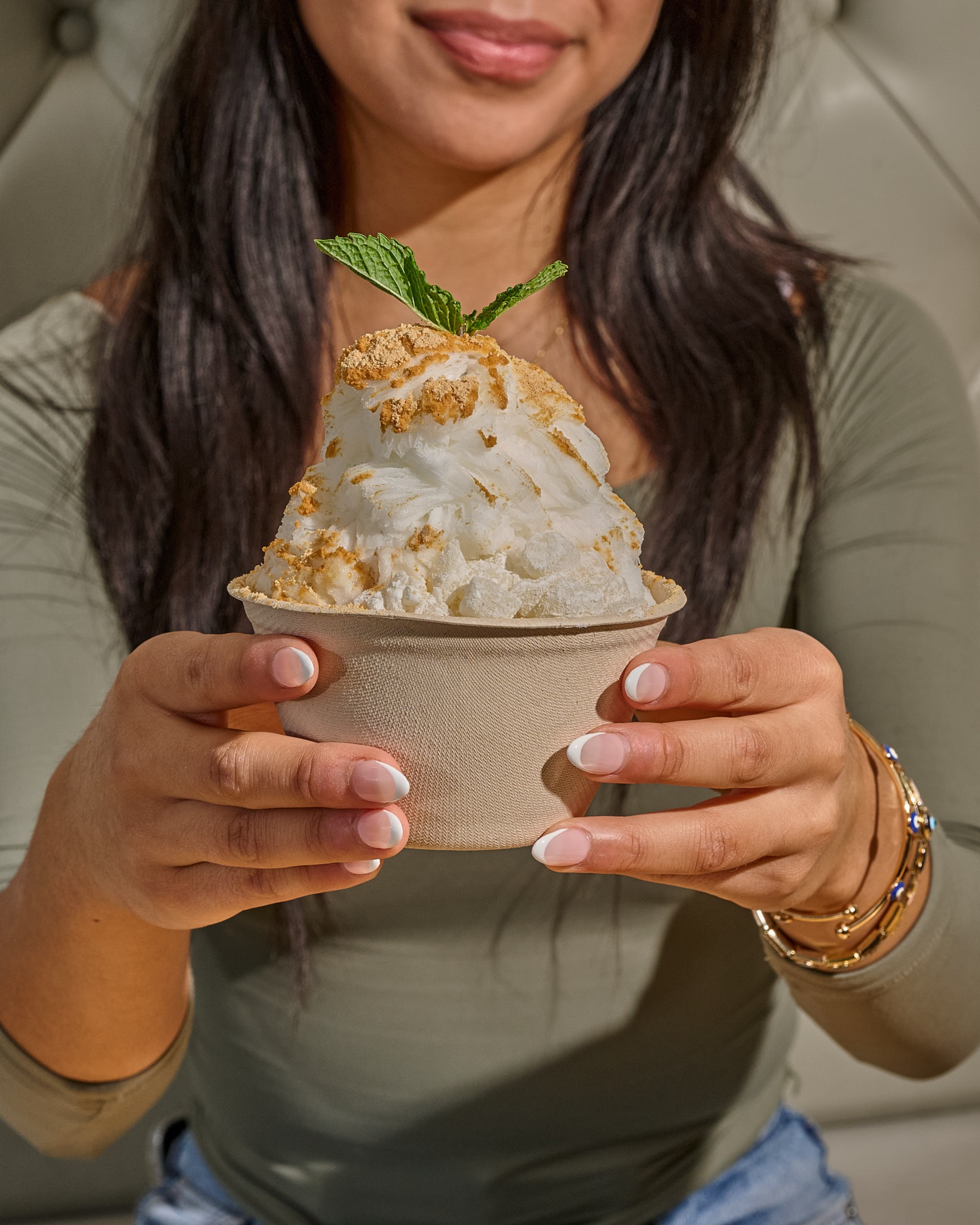
The condensed milk drizzle comes on the side, and a Large bowl is portioned for two to four people, which makes it an easy dessert to share with family. Oakobing has cafes in Koreatown Los Angeles and Old Pasadena. Current flavors are on the Oakobing menu, and addresses and directions are on the locations page.
Frequently Asked Questions
What desserts do Koreans eat on Chuseok?
The most famous Chuseok dessert is songpyeon, a small half-moon rice cake filled with sweet sesame, red bean or chestnut and steamed on pine needles. Families also often serve yakgwa honey cookies, hangwa such as yugwa and dasik, sweet rice punch called sikhye, cinnamon punch called sujeonggwa, and autumn fruit such as Korean pears, persimmons and jujubes.
What is songpyeon?
Songpyeon is a bite-size Korean rice cake shaped like a half moon and closely tied to Chuseok. The dough is made from rice flour and filled with sweet sesame and honey, red bean or chestnut, then steamed on a bed of pine needles, which adds a light pine aroma. Many families make it together the day before the holiday.
When is Chuseok?
Chuseok falls on the 15th day of the 8th month of the lunar calendar, around the full moon, so its date on the Western calendar changes each year. It usually lands in September or early October. The holiday lasts about three days and is one of the biggest family holidays in Korea, often compared to American Thanksgiving.
Is injeolmi a Chuseok dessert?
Injeolmi is a well-loved Korean rice cake coated in roasted soybean powder, and some families serve it during holidays, but songpyeon is the rice cake most strongly linked to Chuseok. Injeolmi is better known as an everyday and celebration rice cake, and its nutty flavor is also the base of modern desserts such as injeolmi bingsu.
Does Oakobing sell songpyeon or other Chuseok desserts?
No. Oakobing does not sell songpyeon, yakgwa, hangwa or other traditional holiday sweets. Its Koreatown Los Angeles and Old Pasadena cafes serve Korean bingsu, including injeolmi bingsu with roasted soybean powder and rice cake, plus Korean dessert drinks such as injeolmi latte. For songpyeon, a Korean rice cake shop or market is the right stop.
You might also like...
Stories about Korean desserts, bingsu culture, and more.